Playbooks · 6 min read
Landscaping DMs: You Cannot Quote What You Cannot See
On this page
- The automation's job is not the quote. It is the four facts.
- The one thing worth adding: society or independent
- Your inbox has seasons, and your automations should expire with them
- What is safe to template, and it is more than you would think
- The routing habit that saves the diary
- Negative keywords worth having
- The edges

A before-and-after reel of a terrace garden does numbers, and the comments are all one sentence. "Kitna lagega?"
There is no honest answer to that comment and there never will be, because the number depends on things nobody can see from a phone. How much area. What the soil is doing. Whether the slope drains or pools. Whether a tempo can get to the gate or everything walks up four floors. Whether there is a water point. What is already growing there and whether it is coming out.
Most businesses can automate their price question. A landscaper cannot, and the useful build starts from accepting that rather than working around it.
The automation's job is not the quote. It is the four facts.
A site visit is expensive — your morning, fuel, and a slot you cannot give to a paying job. So the thing worth automating is not the answer, it is the qualification that decides whether the visit is worth making.
Four facts do almost all of that work, and they fit in one reply:
- Where. Locality, not address. A landscaper's service radius is real and a reel travels well past it. This is the single most useful question and it should be first.
- Roughly how big. People do not know square footage and that is fine. "Terrace ke barabar" or "two car parking size" is enough to know whether this is a weekend job or a month.
- New work or maintenance. Two different businesses wearing one uniform. A person wanting a garden built and a person wanting theirs kept alive want entirely different conversations, and only one of them is recurring revenue.
- Access. Can a vehicle reach it. Is there a lift. Is it a ground-floor plot or a fourth-floor terrace. This is the fact that most often turns a quote into a different quote.
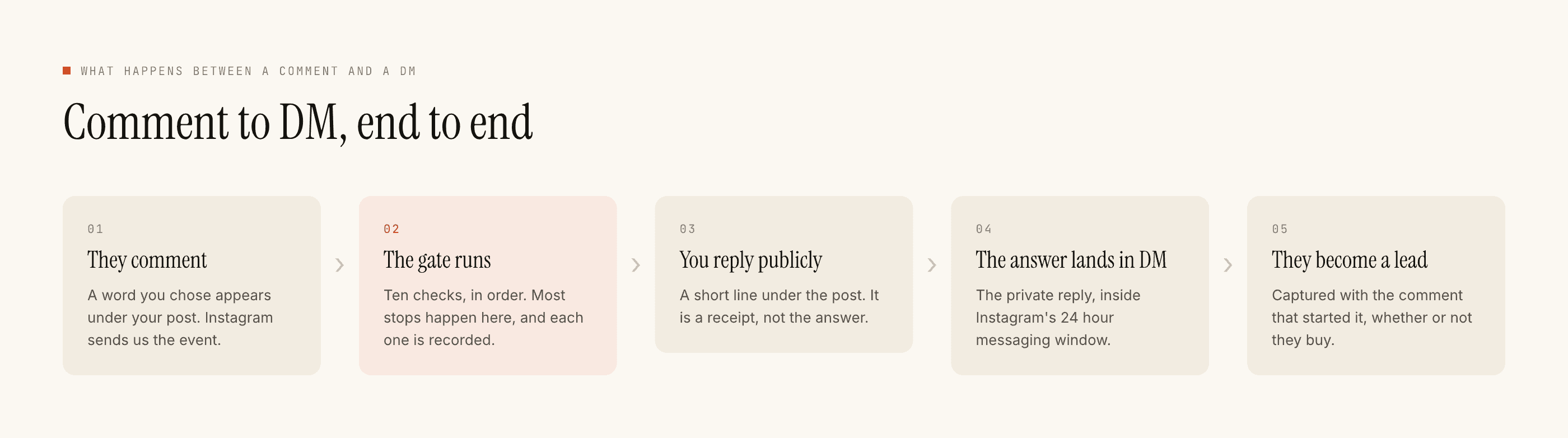
Ask all four in one message, in plain language, and say why: that you need them to know whether to come out and look. People answer questions that have a stated reason.
The one thing worth adding: society or independent
There is a fifth question worth asking in some cities and it is not obvious until you have lost a month to it.
An apartment society terrace, a common area, a clubhouse garden — those are sold to a committee, not to a person. The individual messaging you may be enthusiastic and may have no authority to sign anything. An independent house is one decision.
You do not need to filter those out. You need to know which one you are in before you build a proposal, and a single line in the automated reply gets you there weeks earlier than a site visit would.
Your inbox has seasons, and your automations should expire with them
This is the part that separates landscaping from most of the trades.
A salon's price list is true in March and in October. A landscaper's is not, because what you can actually deliver moves through the year. Planting seasons, monsoon, the weeks when nothing should go into the ground, the pre-festival rush for a garden that looks finished by a specific date, the winter lawn work.
An automation written in June says the wrong thing in November. Not slightly wrong — it will cheerfully invite somebody to start a job you would refuse.
Give every landscaping automation a season rather than a life. A reel from two monsoons ago is still collecting enquiries for work you would not take this month.
Two habits, both boring:
Name automations by season. TERRACE-QUOTE-MONSOON reads as a question by the time it is dry. You will scan the list; you will not open each one.
Keep a graveyard reply for out-of-season posts. Rather than switching an automation off entirely, swap it for one that says what you are and are not taking on right now, and asks them to tell you what they are planning. Somebody enquiring in the wrong month is describing next season's job, and that is worth capturing.
What is safe to template, and it is more than you would think
Everything about how you work, as opposed to what this job costs:
Service areas. Whether you design, execute, or both. Whether you supply plants or work with what the client buys. Whether you do maintenance after the build and on what rhythm. Roughly how long a typical job runs, as a range in weeks. What happens if it rains for three days in the middle of one. Whether you do irrigation, drainage, lighting, hardscaping. Whether you work with architects.
All of that is fixed, identical for every sender, and free. Templated replies are free and unlimited, and a credit is spent only when the AI writes a new reply.
The one to keep out of the template: anything sounding like a rate per square foot. Even as a range, it becomes the number the client remembers, and the site is what decides.
The routing habit that saves the diary
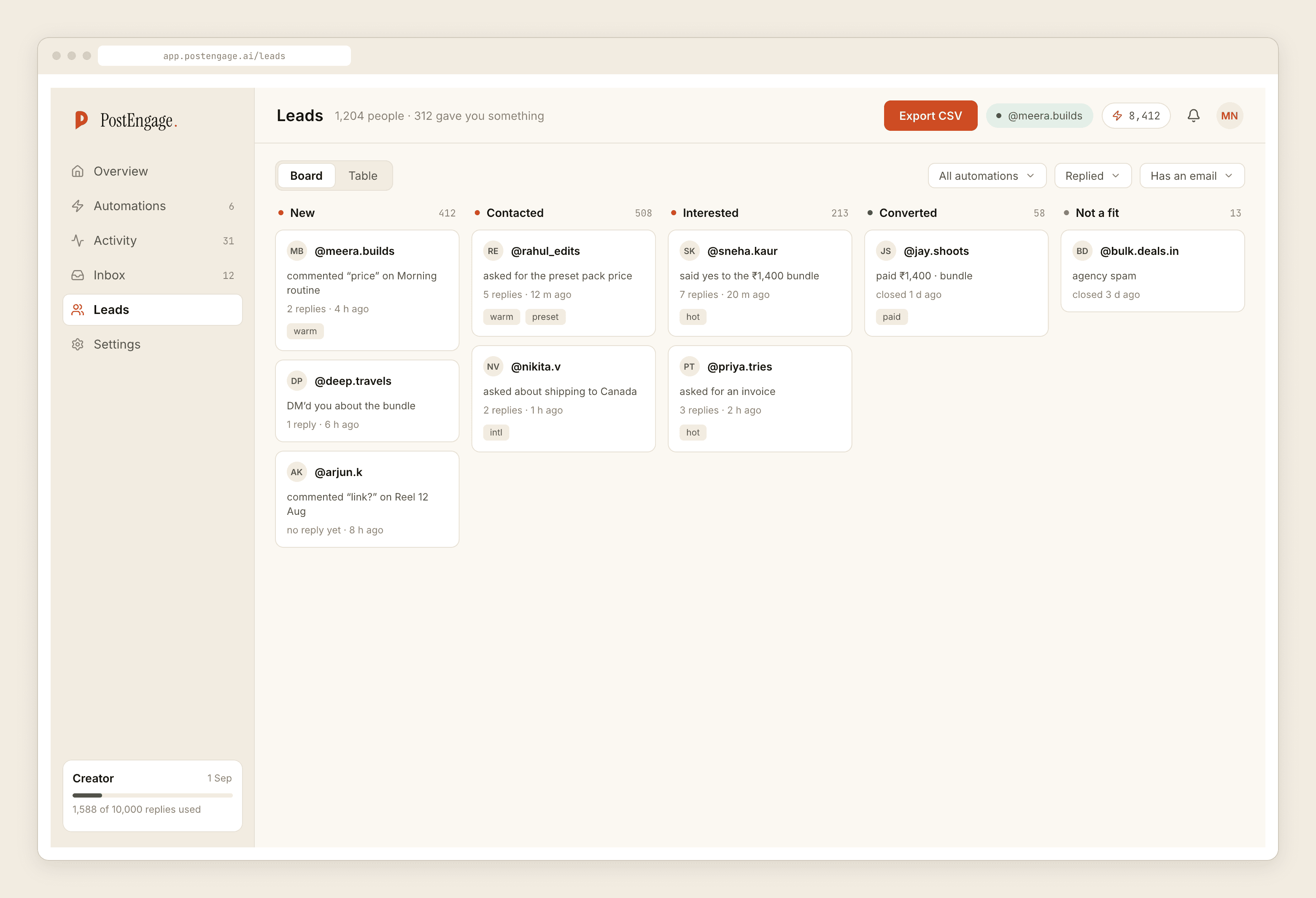
Capture to Leads on every automation, then read the list geographically rather than chronologically. Landscaping is one of the few businesses where clustering site visits by area is the difference between a productive Saturday and a day spent driving.
There is no CRM sync and no mapping. The list exports as a CSV and you sort it yourself, which for a business at this size is genuinely enough.
Negative keywords worth having
job, naukri, hiring, mali, supplier, wholesale, nursery rate — a good garden reel attracts people selling you plants and people looking for work, in volume.
Then the ones that mean an existing client with a problem: dead, dying, sookh, complaint, not growing, warranty. A cheerful new-enquiry template landing under a client whose lawn is failing is the worst message the system can send.
The edges
No calendar, so nothing books or confirms a site visit. No reminders, and no way to tell a client that tomorrow's work is off because of rain — that is a phone call. No CRM sync; leads leave as a CSV. No WhatsApp. It cannot message anyone who has not messaged you first.
Official Graph API only: seven days to reply to a comment, twenty-four hours inside a DM thread, and only their next message restarts that second clock. On days when you are on site with your hands in soil, the seven-day comment window is the one doing the work.
Free tier is 100 credits with no card, packs from ₹499. Built this way — fixed facts templated, quotes refused, four questions asked — a landscaping account spends very little.
Start with one automation on your best before-and-after reel, give it a season in the name, and read what got blocked after a week. If your work is seasonal in the retail sense too, the florist post covers dated demand, and the comment-to-DM flow covers the mechanics of the funnel itself.