Playbooks · 5 min read
You Cannot See Churn in an Instagram Inbox. You Can See This

Let us kill the premise first, because half the tools in this category will not.
There is no churn detection on Instagram. A DM thread does not contain a subscription status, a renewal date, a login record, a plan tier, or a payment that failed. An automation reading your inbox cannot tell you who is about to leave, because the information that would let it know is somewhere else entirely — in your billing system, which does not talk to Instagram, and which nothing here syncs with.
Anything sold as "AI churn prediction for Instagram" is a model reading vibes off a message and returning a number with a decimal point in it. The decimal point is doing the persuading.
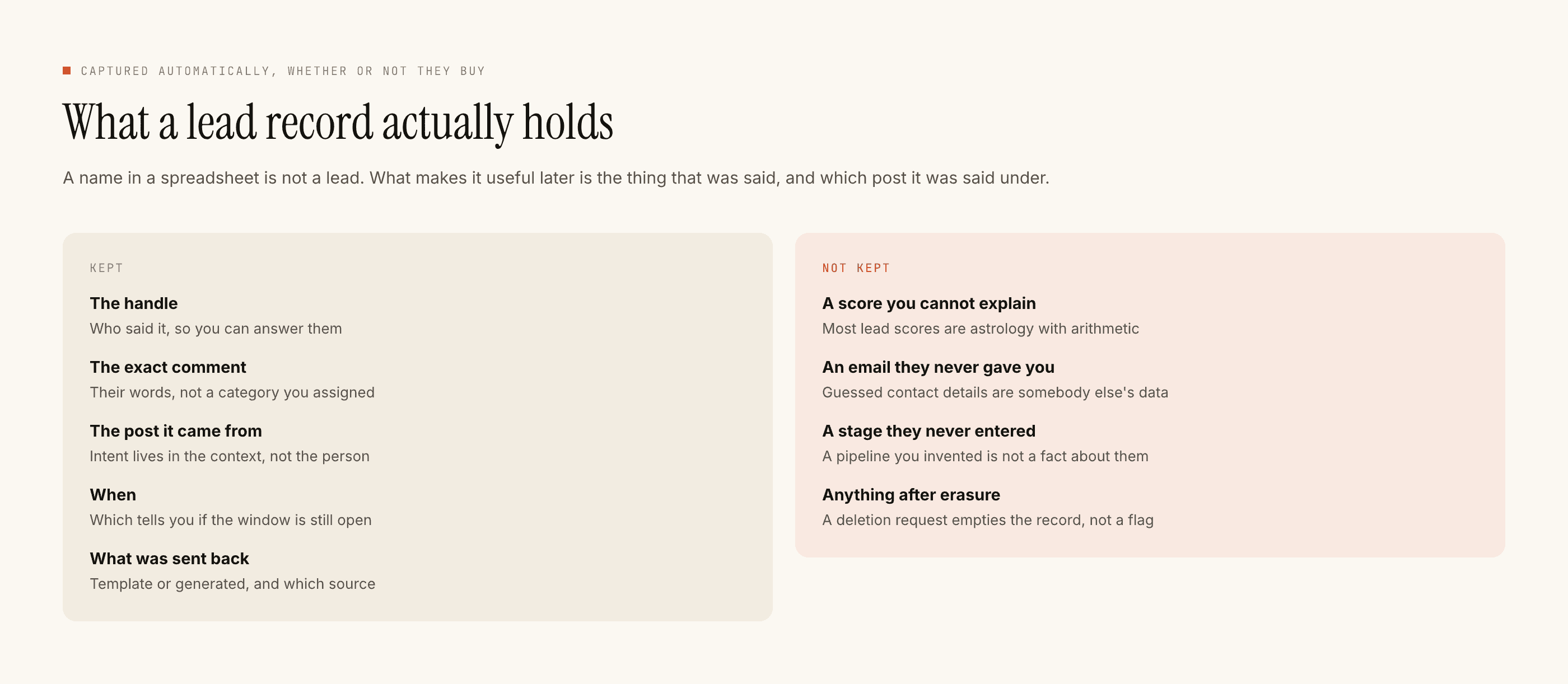
What is left after that demolition is smaller and considerably more useful. An inbox is not a churn model, but it is the only place where certain kinds of trouble show up in writing before they show up in a cancellation.
Signal one: the question that means they are stuck
Most usage questions are not curiosity. They are friction that got bad enough to make somebody type.
"How do I download the workbook again?" "Course ka login nahi ho raha." "Where do I find the tracking?" Nobody sends these for fun. Each one is a person who tried, failed, and spent effort to ask — which is the last thing people do before they stop bothering.
The signal is not the individual message. It is the same message arriving from different people. Three strangers stuck at the same step is not three support tickets, it is one broken step, and the fix is upstream of the inbox entirely.
Signal two: silence after a complaint
This is the one worth building a habit around, because it is invisible by construction. You are looking for an absence.
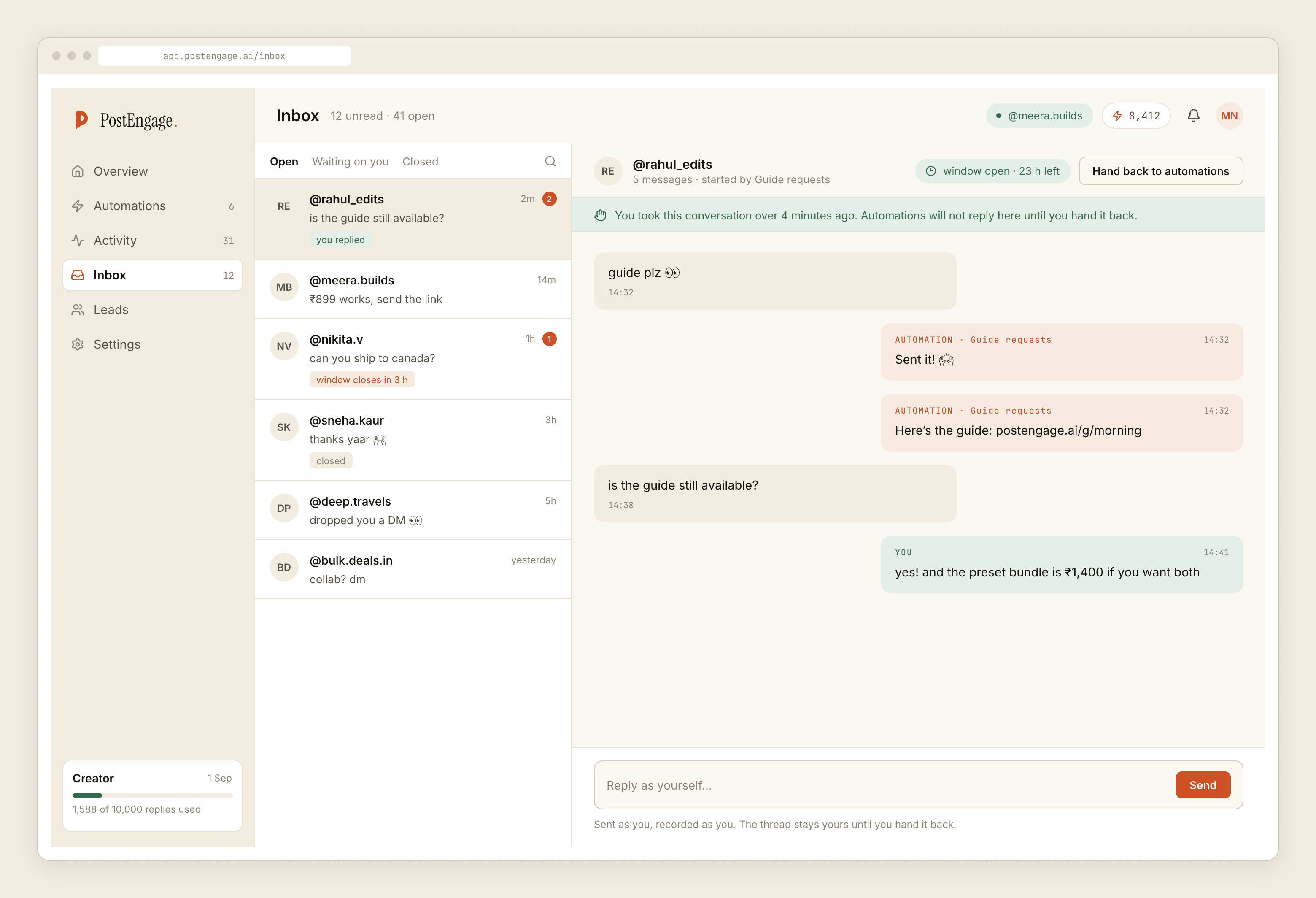
Someone raised a problem. You replied, or an automation did. And then nothing — no thanks, no follow-up, no argument. Most people read that as resolved. It is at least as often the sound of somebody deciding you are not worth another message.
The dangerous thread is not the one full of angry messages. It is the one that stopped.
There is no alert for this. You find it by scrolling your own complaint threads once a week and looking at which ones you were the last to speak in.
Signal three: the cancel-adjacent question
"How do I pause?" "Kaise band karun?" "Is there a smaller plan?"
People rarely announce that they are leaving. They ask a logistics question about leaving, which is the same thing with a doorknob in hand. This one is unambiguous and it is also the one you should absolutely not automate a reply to. A template that answers "how do I cancel" efficiently has done its job and lost the customer in the same second.
Signal four: the repeat asker
The same person asking a near-identical question for the third time means your answer is not landing. Either it was unclear, or it was correct and did not solve their actual problem.
dedupe will stop the automation sending them the same template again, which is the right behaviour and also removes the only visible evidence. So the place to look is Activity, filtered to blocked, where the repeats are recorded rather than swallowed.
What automation should actually do about all this
Very little, and deliberately.
- Answer the stuck question fast and well. This is the one genuinely preventative thing automation does. A person who is blocked at 11pm and gets the right answer at 11pm is not, at that moment, becoming a churn statistic.
- Stay out of the unhappy threads. Negative keywords —
cancel,refund,not working,band,disappointed— mean do not reply. Nobody who is fed up has ever been un-fed-up by a template, and the automated cheerfulness makes the next message worse. - Stand down the moment you step in.
takeoverruns third in the check sequence, before the window check, so from your first hand-typed reply the thread is yours and nothing else goes out on it. - Capture the message, not a score. Leads records what they said and when. It exports as CSV, which is the correct level of ambition: your own reading is the analysis layer.
What you still cannot know, and should stop pretending to
Whether the quiet majority are happy or gone. Most customers never message you at all, in either direction, and the inbox has nothing to say about them.
Whether a signal was real. Somebody asking about pausing might be moving cities. You cannot tell from the text, and a model cannot either — it will just tell you with more confidence.
Whether your fix worked. The person who stopped replying does not come back to confirm they were retained. This is the honest ceiling of inbox-based anything, and it is why the numbers that matter for churn live in your billing data, where they always did.
The complementary post to this one is retention as a function of answering well the first time — that is the prevention side, where this one is the noticing side. For the wider question of what a thread genuinely contains before any model touches it, an honest inventory of DM signal covers the same scepticism applied to buying rather than leaving. And the routing rule underneath all of this is set out in what a support bot should answer.