Playbooks · 5 min read
Hair Salon Instagram DMs: Your Bot Cannot See the Diary
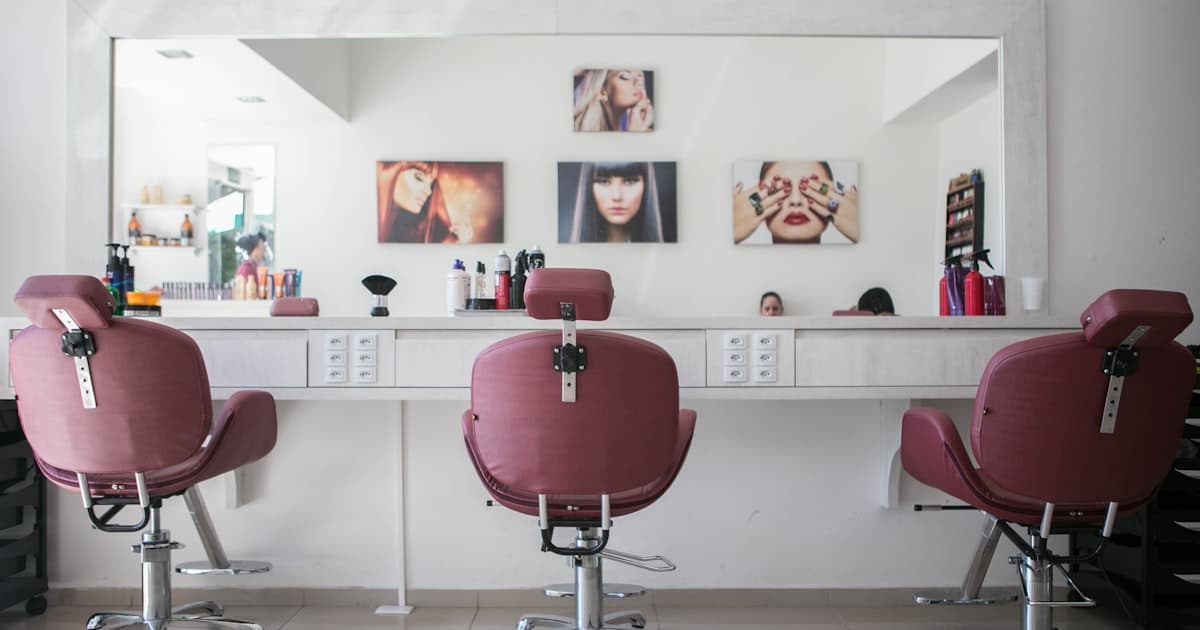
Read a hundred DMs from a salon account and you will notice something slightly deflating. They are almost all the same message. "Kal 11 baje slot hai?" "Do you do balayage?" "Smoothening ka rate kya hai?" "Open on Sunday?"
High volume, low value each, and every one of them expiring within about a day. That combination is unusual and it changes what a good automation looks like.
The thing to be honest about first
An Instagram automation cannot see your appointment book.
It does not know that your senior stylist called in sick, that the 11am moved to 11:30, or that you have three colour clients back to back and a global colour takes two and a half hours. It knows what words arrived in a comment or a DM. That is the entire input.
So the reply "yes, 11am is free" is a reply your automation is guessing at, and the cost of guessing wrong is a specific, familiar scene: somebody turns up, having been told by your account that they had a slot, and stands at the desk while a receptionist who has never heard of them tries to fix it.
A confirmation your system cannot verify is not a booking. It is a promise made by a machine that will not be there when it is broken.
The fix is not clever. It is to never let the automation confirm. Have it do the thing it is genuinely good at instead, which is removing every step before the confirmation.
What a slot question should actually get back
- Confirm you have the message and name the service. "Balayage — yes, we do that."
- Give the fixed facts. Roughly how long it takes, whether it needs a patch test or a consultation first, whether it is a two-visit job. None of this depends on the diary.
- Route to the booking surface that does know. Your booking link, your reservations number, a WhatsApp line if that is where your desk lives. One tap.
- Capture the lead. Even if they book elsewhere, you now know that somebody asked about balayage on a Tuesday.
Nothing in there is a promise. All of it is faster than the fourteen minutes it currently takes for someone to look at their phone between clients, and it goes out at 10pm on a Sunday.
Quiet hours are the one default you should argue with
Most accounts set quiet hours around 9pm to 8am and never think about it again. For a salon that default can quietly cost you the booking.
The reason is that a salon question has a shelf life measured in hours. Somebody deciding at 10:40pm whether to get their hair done before a wedding on Saturday is deciding now, with four salon accounts open in four tabs. A reply that lands at 8:03am arrives after the decision was made somewhere else.
The counter-argument is real too: nobody wants a business messaging them at 2am, and it reads as spam. So the sensible shape for a salon is a narrower window than the default — late night genuinely off, but the evening left open, because the evening is when people book hair.
The economics are the reason this works for a salon at all
Here is the part that decides whether automation is sensible for a small salon rather than merely fashionable.
Templated replies are free and unlimited. A credit is spent only when the AI writes a new reply.
Now look back at the inbox. Hours, services, rates for standard services, do you take walk-ins, is parking available, do you do bridal packages, where exactly are you — those are fixed answers. They do not vary by sender. Which means the enormous, repetitive, low-value-per-message part of a salon inbox costs nothing to automate, forever.
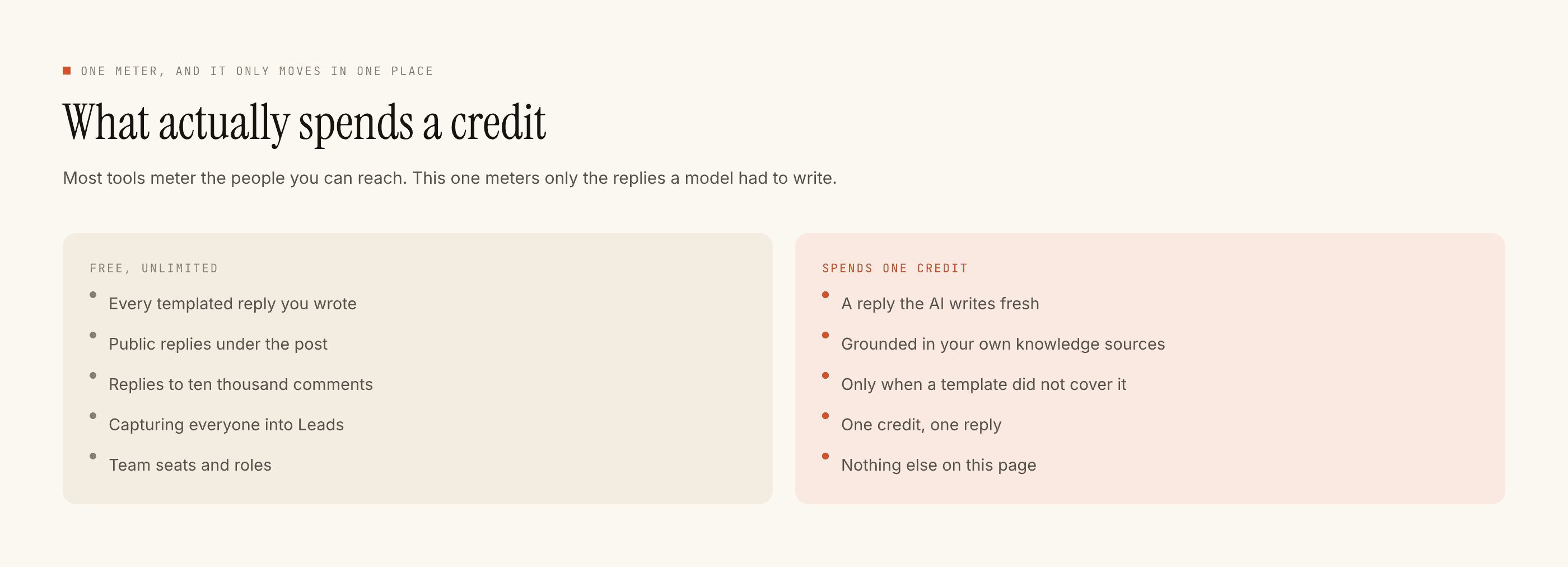
The free tier is 100 credits with no card, and packs start at ₹499. A single-location salon that writes six good templates may genuinely never need a pack. The credits get spent on the odd message that is actually unlike the others — someone describing a colour correction on hair that was boxed-dyed at home, which is not a template and should probably reach a human anyway.
Two settings that stop it feeling robotic
Takeover. The moment anyone at the desk replies by hand, the automation is out of that thread. This matters more in a salon than almost anywhere, because your staff will jump in, mid-thread, between clients. Without takeover the customer gets your receptionist's warm reply followed by a template forty seconds later, which reads as though nobody is home.
Voice. Salon accounts have a register, and it is not corporate. If your desk would say "haan ma'am, patch test 48 ghante pehle karwana padega", write that. A polished template in an accent nobody at your salon has is worse than a slow human reply. Voice DNA is built from replies you actually wrote, which is the only version of this that works.
What it will not do
It cannot check or hold a slot, because it has no access to your diary. It cannot take a deposit. It cannot message someone who has not messaged you first. It does not do WhatsApp.
And it runs on the official Instagram API, which means a comment can be replied to for seven days and a DM thread for twenty-four hours. For a salon the DM clock is the one that bites: a question left overnight from a Friday is frequently unanswerable by Sunday, which is a very good argument for letting a free template answer it at 10pm.
If you are starting from nothing, the comment-to-DM flow is the one salon automation worth building first — a rate question under a reel, answered publicly in four words and privately in full. Everything else can wait until you have watched that one run for a week.