Playbooks · 6 min read
Where Is This: Automating a Travel Creator's Comment Section

A reel of a blue-tiled café in Georgia gets four thousand comments and about nine hundred of them say the same thing.
"Where is this?"
That is the travel creator's whole inbox problem in three words, and unlike almost every question in this blog's other verticals, it has a fixed, correct, unchanging answer that you already know. Which makes it one of the genuinely good automation cases on this site — provided you build it per post and are honest about the part involving money.
An agency has a different set of problems entirely, and that post covers quotes, visas and consultations. This one is about being a creator.
We do not track your links. Say it out loud.
Before designing anything, know what you are not getting.
There is no link tracking. No click counts, no affiliate attribution, no UTM handling, no per-post revenue, no conversion reporting, no analytics of any kind. If somebody books a hotel through a link an automation sent them, the only place that shows up is your affiliate dashboard, and nothing here will ever tell you which reel it came from.
That matters because a creator's instinct is to treat DM automation as a channel to measure. It is not. It is a way of answering nine hundred people at once. The measurement lives where it always did.
The automation sends the link. What happens after it leaves is between the reader and the network, and nothing in this product watches it.
Disclosure belongs in the template, not in the caption
If the link in that automated reply earns you money, the reply has to say so.
The caption disclosure does not cover it. The person receiving that DM may never have read the caption — they typed a word under a reel and got a private message. As far as they are concerned, a creator they follow just recommended a hotel to them personally. Whether that recommendation is paid is information they are entitled to have in the message that carries it.
The same applies to gifted stays and press trips. If the answer to "where is this" is a place that hosted you, the template should say that, in your normal words. It costs nothing and it is the difference between a recommendation and an advertisement people did not know they were reading.
The location automation, built per post
- One automation per location post. The trigger is the specific reel; there is no universal
WHEREthat could possibly know which place you mean. - Use the words people actually type.
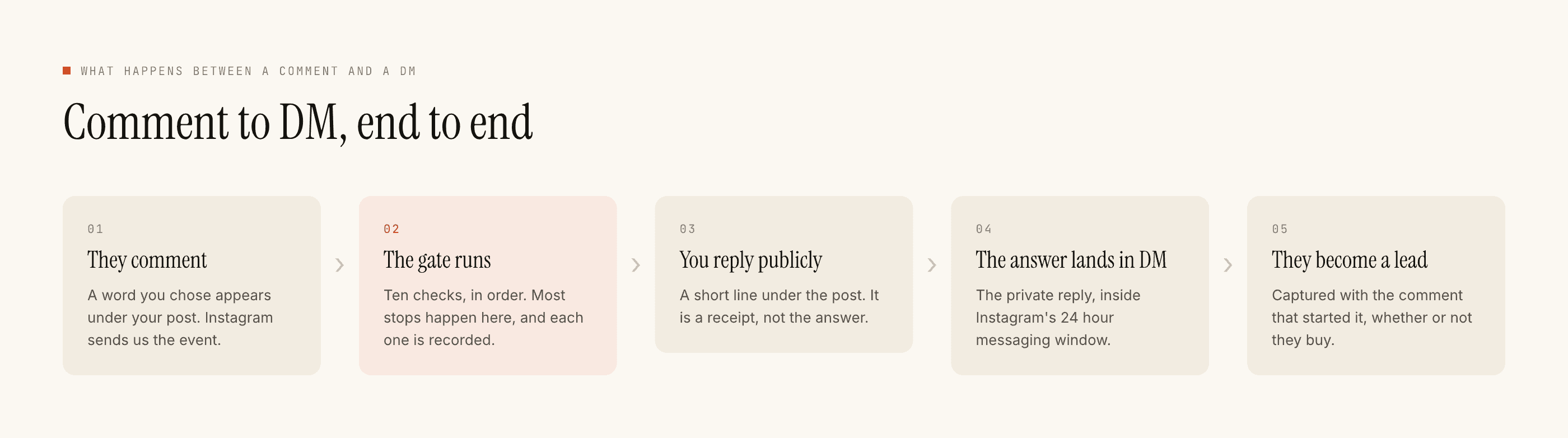
where,location,place,kahan,kaha,kahan hai,spot,which city,name, plus the place name itself. Matching folds case and punctuation, and it folds Latin accents — socafeandcaféreach the same trigger. It does not fold Indic vowel signs:कहाँandकहाare separate words to the matcher and both have to be listed if your audience writes in Devanagari. - Answer publicly in four words and privately in full. The comment reply names the place; the DM carries the map link, the practical detail and the disclosure. Everybody scrolling reads the public one, which is most of the value.
- Put the caveat in. Whether it needs booking ahead, whether it closes in winter, whether the road is shut in monsoon.
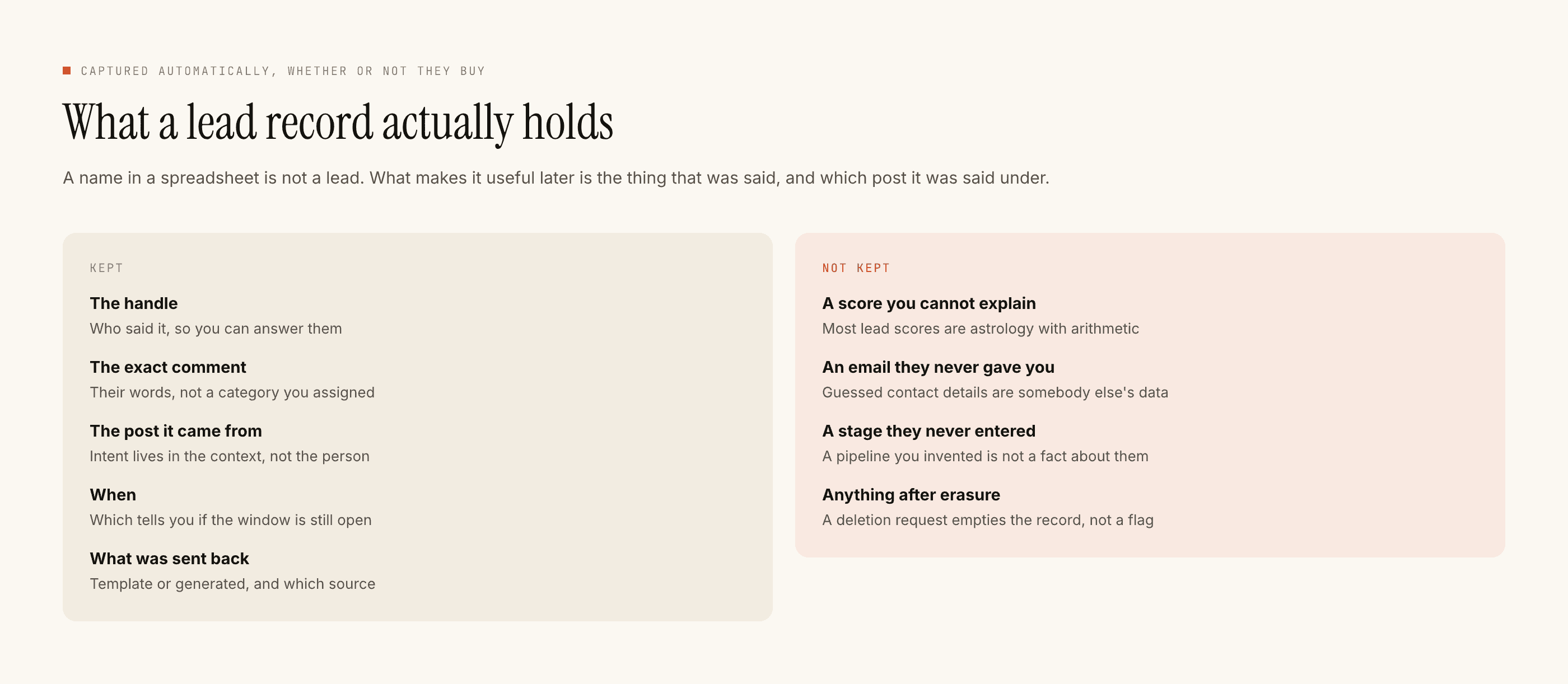
- Capture the enquiry if you run a newsletter or a guide. Leads leave as a CSV. There is no email tool here and no sync to one.
Your best reel will still be asking that question in two years
This is the creator-specific problem and nobody plans for it.
A location reel is evergreen in a way a salon post never is. It gets resurfaced, saved, reshared, sent into group chats, and it produces "where is this" comments for years. Which means the automation attached to it is a sentence you wrote in March 2026 still being sent, by you, to strangers, in 2028.
Cafés close. Homestays change hands. A trek route gets restricted. A beach gets a permit requirement. An affiliate link expires or starts pointing at a redirect chain nobody controls.
So write location templates the way you would write a sign: durable, and pointing at something you maintain. "Here's the place, and my full Georgia guide is in the bio link" survives a café closing, because you update the guide. A paragraph of specifics baked into a template does not, and there is no reminder that will make you remember it exists.
Set a diary reminder to audit your live automations once a quarter, and start the audit with your oldest reel rather than your newest.
Two things to keep out of the templates
Anything about entry requirements. Visas, permits, e-visas, which passport gets what. These change with no notice, vary by nationality, and being wrong costs a reader the trip. One sentence that points at the destination's official source and states nothing is always correct.
Prices. Room rates, entry fees, what a taxi should cost. All of them move, and a figure in a template keeps being quoted long after it stopped being true.
Cost, clocks, and limits
Templated replies are free and unlimited; a credit is spent only when the AI writes a new reply. For a creator that is decisive — the nine-hundred-comment flood is one template and costs nothing. Free tier is 100 credits with no card; packs start at ₹499. Set a rate budget before you post something you think will travel.
Official Graph API. A comment stays answerable for seven days, a DM thread for twenty-four hours from their last message, restarted only when they write again. There are no sequences, no broadcasts, no scheduled messages, no WhatsApp, and nothing that lets you message people who have not messaged you.
Build one location automation on your best-performing reel, put the disclosure line in it, and read what got blocked after a week. If you also take brand work, how a creator inbox handles enquiries covers the never-quote-automatically rule that applies to it.