Playbooks · 5 min read
Selling Originals on Instagram When Stock Is Quantity One
A painting sells on a Thursday. On Saturday the reel of you working on it does numbers, and four people comment PRICE under a canvas that is already wrapped and waiting for a courier.
Nothing in any automation tool knows that. The trigger matches, the checks pass, the message goes out, and now four strangers have a price for something they cannot buy. One of them will screenshot it. One of them will be annoyed with you specifically.
Every artist selling work through Instagram hits this, and the fix is not a better template. It is noticing that you are running two different shops out of one account.
Two shops, one inbox
The first shop sells prints, stickers, zines, workshop seats, digital packs. Fixed price, unlimited stock, identical answer every time. That shop is boringly automatable and should be automated completely, because the questions repeat forever: sizes, paper, shipping, framing, whether you post to Kochi.
The second shop sells the thing that exists once — the original on the wall, and the commission that does not exist yet. That shop has stock of one, a price that is a judgement, and a customer who needs to speak to you.
The automation is allowed to run the print shop. It is allowed to open the door of the other one and nothing else.
The practical consequence is that a single PRICE trigger across your whole account is wrong on day one. Prints get their own automation with their own words — PRINTS, SHOP, SIZE — and originals get a different one that never quotes a number.
Retire the automation when the work sells, not when you remember
Treat a sold-work automation the way a gallery treats a red dot. It comes off the moment the piece goes, and it goes into the same checklist as packing and invoicing.
For the post itself, do not delete it. That reel is portfolio and it will keep being found. Swap the automation instead: the same trigger, a different reply, one that says the piece has gone and asks what they were drawn to. Somebody who watched three minutes of you painting a sold canvas is telling you exactly what they would commission, and that is a better conversation than the one you would have had about the original.
A commission enquiry is an intake, never a quote
The single worst thing an automated reply can do in an artist's inbox is answer "how much for a portrait?" with a number.
The number depends on the size, the medium, whether it is one face or four, the deadline, whether it will be reproduced, and whether the reference photograph is usable. Quote before you know those and you have either underpriced yourself in writing or set an expectation you will spend three messages walking back.
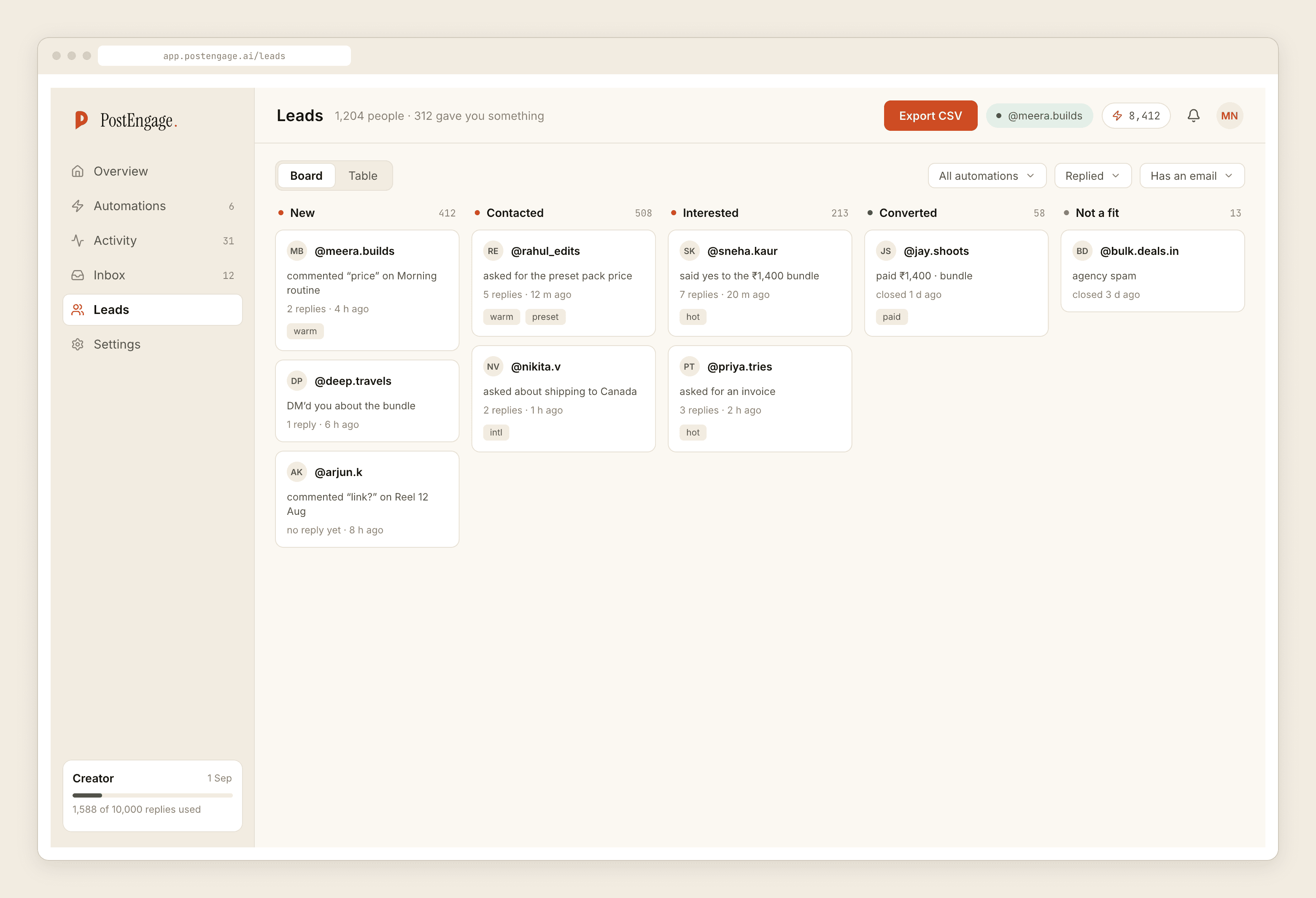
So the automation collects. Five things, asked as a short human message rather than a form, and captured to Leads:
- What it is of, in their words. "My dad" and "our shop front" are different jobs and different weights.
- Rough size, or where it is going to hang. People who cannot name a size can always describe a wall.
- When they need it. This one filter alone removes most of the enquiries you would have regretted taking.
- Whether it is a gift, and for what. A wedding, a farewell, a first anniversary. It changes the deadline honesty and the register of everything you send afterwards.
- Where they are. Shipping a framed original to another country is a different conversation from a metro handover.
Then you answer. Actually you, with a number, once you have read the five answers. The automation has saved you the four messages it takes to get there and has not committed you to anything.
The other messages that must never be automatic
Three kinds arrive in an artist's DMs and none of them should meet a template.
Licensing and usage requests. A brand asking to use an image, a publisher asking about a cover, a cafe asking to print your work on a wall. Every one of these is a rights negotiation and the automated answer is always wrong.
Repost and credit complaints. Somebody telling you your work is on a print-on-demand site. That needs a person reading carefully, immediately.
The long ones. People write to artists about what a piece meant to them, sometimes at length, sometimes about a death. A generated reply to that is worse than no reply. Put the vocabulary you can catch on the negative-keyword list, and accept that the real filter is you reading the inbox.
Sounding like the person who made the thing
Buyers of original work are buying a hand. A reply in generic shop-assistant English breaks that, and it breaks it at the exact moment somebody is deciding to spend real money.
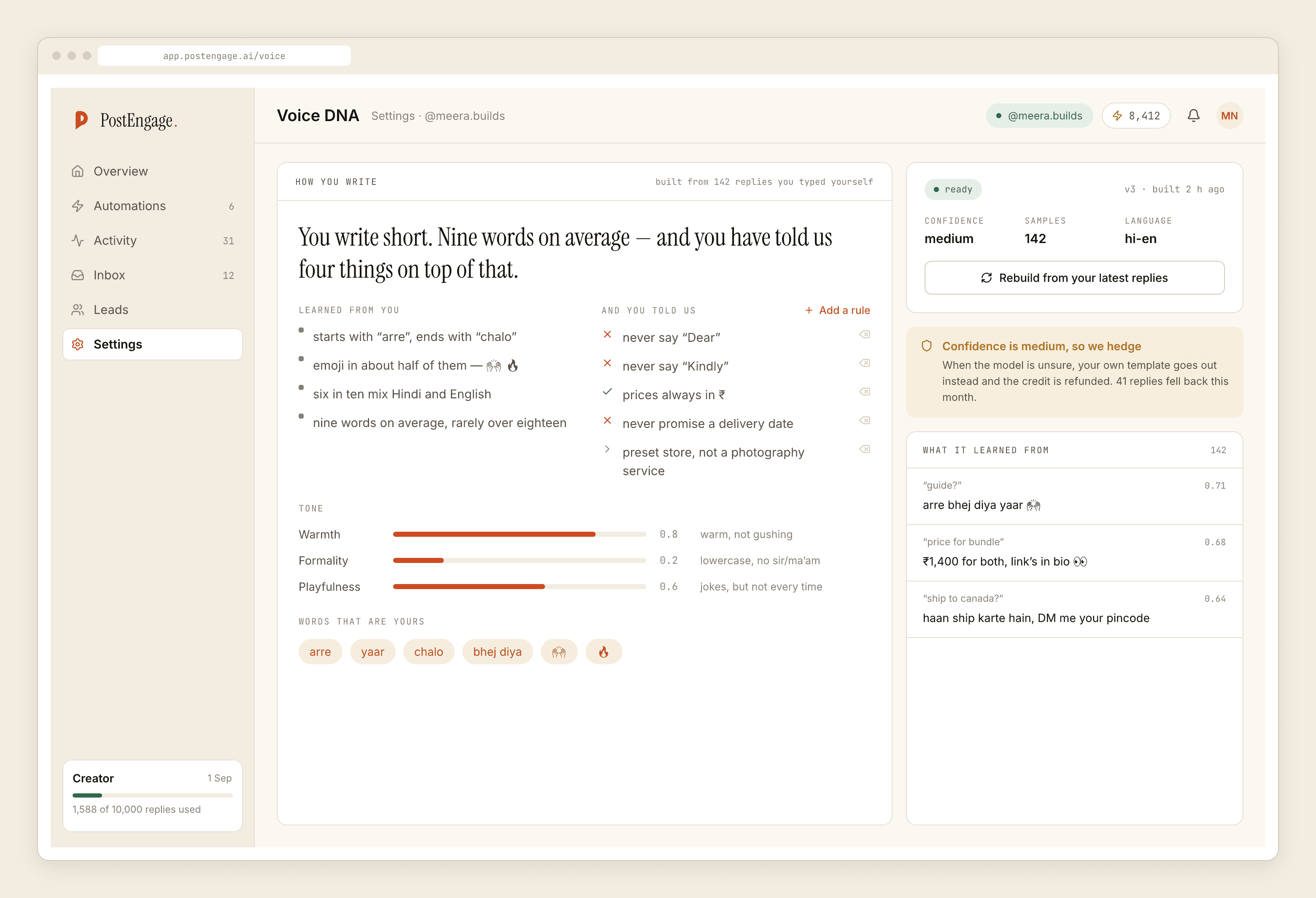
How the voice profile is built matters more here than in most verticals, because your buyer has been reading your captions for months and knows what you sound like.
Clocks and cost
Official Graph API, so: seven days to reply to a comment, twenty-four hours inside a DM thread, and that DM clock restarts only when they write again. Somebody who asks about a commission on Sunday and goes quiet until Wednesday is outside your reach until they message. Put whatever they need — the commission page, the print shop link — in the first reply rather than planning a follow-up you are not permitted to send.
Templated replies are free and unlimited, which is why the print shop costs nothing at any volume. Credits are spent only when the AI writes a new reply, one credit per reply, and in an artist's inbox that is the small pile of genuinely unusual questions. Free tier is 100 credits, no card; packs start at ₹499.
It cannot see your stock, mark anything sold, take payment, or message someone who has not messaged you first. It does not do WhatsApp and it does not post anything. Start with one automation and watch it for a week — make it the print one, because a mistake there costs you nothing.