Playbooks · 5 min read
Freelancers: The Enquiry That Costs an Hour to Turn Down

"Hi, saw your work. Can you make a logo for us?"
You reply. They ask for examples. You send three. They ask what you would charge. You ask about scope. They describe something considerably larger than a logo. You quote. They say "budget thoda kam hai bhai, 2000 mein ho jayega?"
Forty minutes, spread across a working afternoon in six interruptions, on a job that was never going to happen. The reply itself took four minutes. The rest was the context switching, which is the part that does not show up in anybody's time log and is the actual cost.
Your time is the product, so the inbox is not free
This is the difference between a freelancer and every business these guides are usually written for. A shop replying to a bad enquiry loses a reply. You lose the twenty minutes of focus on either side of it, and you were going to bill that focus to somebody.
Which reframes what the automation is for. It is not there to reply faster or to sound more professional. It is there to make the disqualifying fact arrive before you have spent attention on the conversation.
Most bad enquiries would have identified themselves in the first exchange if anybody had asked the right question first. The automation asks it, every time, at three in the morning, without getting tired of asking.
Put the awkward question in the first reply
The instinct is to be warm and get to money later. That instinct is what produces the forty-minute afternoon.
The version that works is warm and specific: acknowledge the person, then name the two or three things you need to know before you can say anything useful. Type of work, rough timeline, and whether they have a budget in mind. Not as a form — you have no forms here, and a link to a Google Form in the first reply reads as a brush-off. As one sentence in your own voice.
Automate this
Keep this yourself
Everything in the left column is a template, and templated replies are free and unlimited. A rate-card reply written once costs nothing for as long as you keep freelancing. Credits move only when the AI writes a new reply; free tier is 100 credits with no card, packs from ₹499.
Your account is you, which changes the tone problem
An agency can hide behind a house voice. A brand can sound like a brand. You cannot, because the thing being bought is your judgement and taste, and a first message that reads like a chatbot is direct evidence against both.
This is the strongest argument for keeping templates short. Two sentences you would genuinely type survive scrutiny; a polished paragraph does not. If you use generated replies at all, they have to be trained on things you actually wrote — Voice DNA is built from your own replies, not from a tone setting, and for a one-person business that distinction is the whole game.
Three surfaces, and the one freelancers actually get
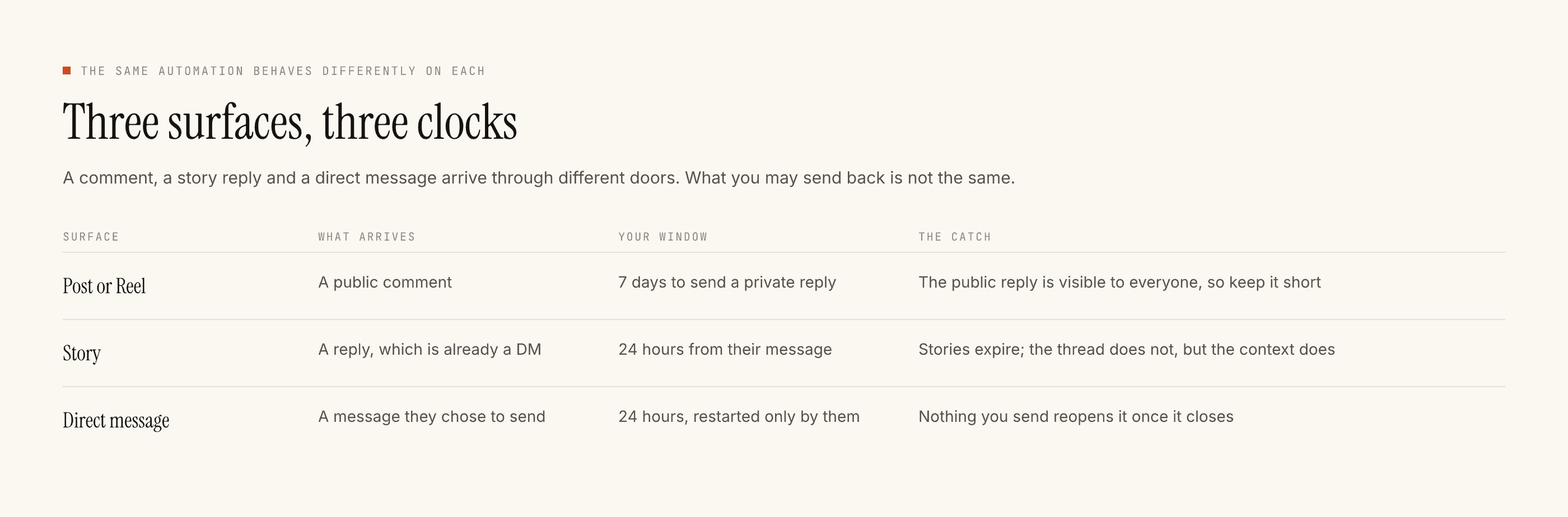
Seven days to reply to a comment. Twenty-four hours to reply inside a DM thread, and only their next message restarts it. For a freelancer the second clock is the one that bites, because enquiries frequently arrive while you are heads-down on a deadline and the reply you meant to write on Thursday is out of window by Friday morning.
The automation's real value is here, and it is unromantic: something true and human goes out inside the window, so that when you surface on Friday the thread is still alive and the person has not gone to whoever answered.
There is no one to hand over to, so handover means you
Takeover works the way you need it to: the moment you reply by hand, the automation stands down for that conversation. No template lands on top of your considered answer, no follow-up contradicts what you just quoted.
That matters more for a solo operator than for a team, because you will absolutely reply from your phone mid-conversation without checking what the automation said. It is designed for exactly that.
What it will not do
It cannot write a proposal, send an invoice, take a payment, or book a call. There is no calendar, no payment links, no CRM sync, no WhatsApp. It will not do cold outreach — messaging people who have not messaged you first is not permitted on the official API, so no tool built on it can pitch strangers for you.
It also will not make you say no. That part stays manual, and it is still the highest-leverage thing in a freelance business.
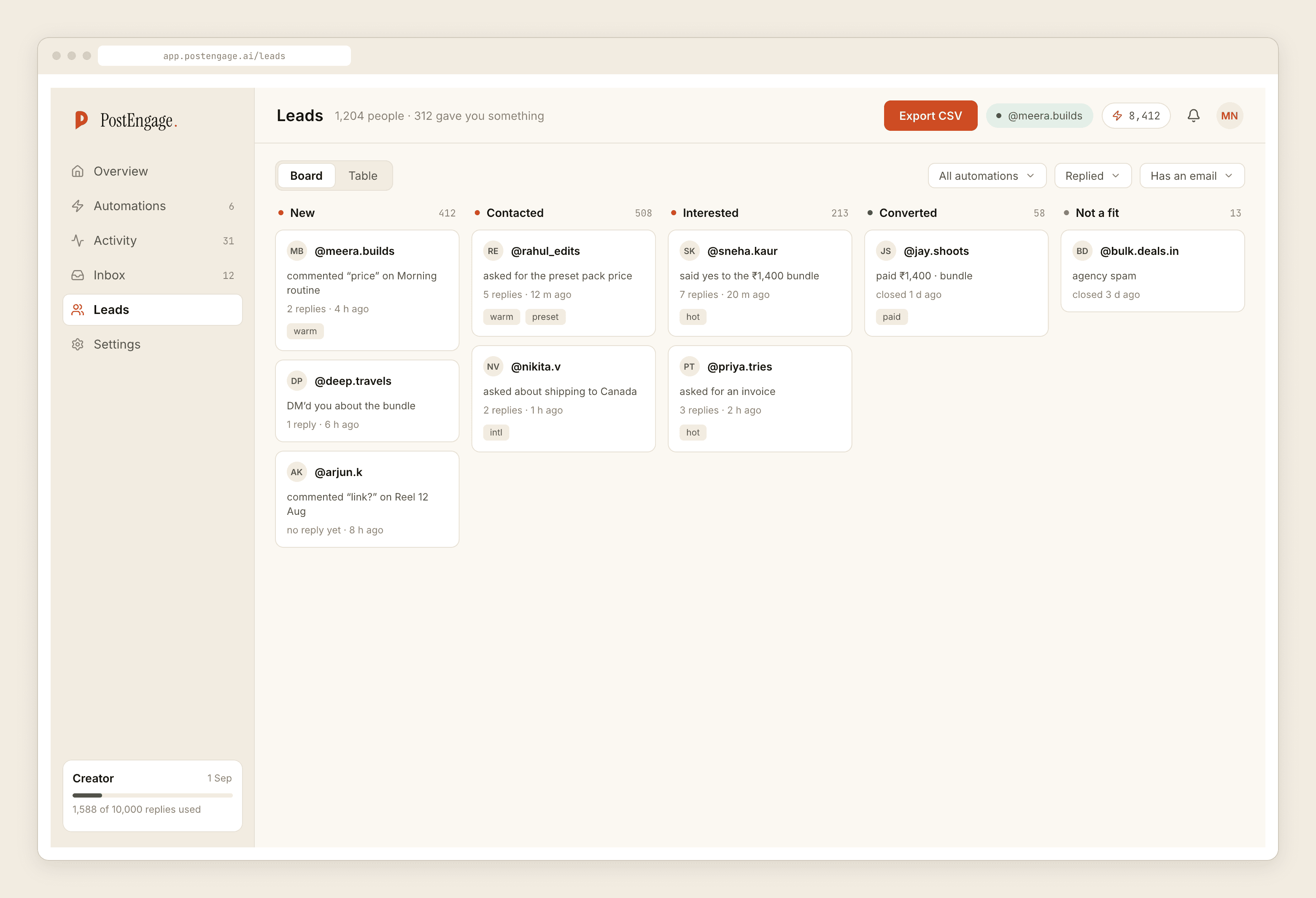
If you are weighing this against paying somebody to manage the inbox, the VA comparison is the honest breakdown, and what a hot lead actually looks like is more useful than any scoring model when the pipeline is one person deep.