Playbooks · 4 min read
WhatsApp vs Instagram Automation: Two Different Jobs

Declare the bias first: PostEngage runs Instagram comments and DMs. There is no WhatsApp in the product, so this comparison is written by someone who sells one half of it. Read it with that in mind, and if it starts sounding like Instagram wins on every axis, stop trusting it — because it does not.
The two channels are genuinely different jobs, and the differences are structural rather than a matter of preference.
Who starts the conversation
This is the deepest difference and most of the others follow from it.
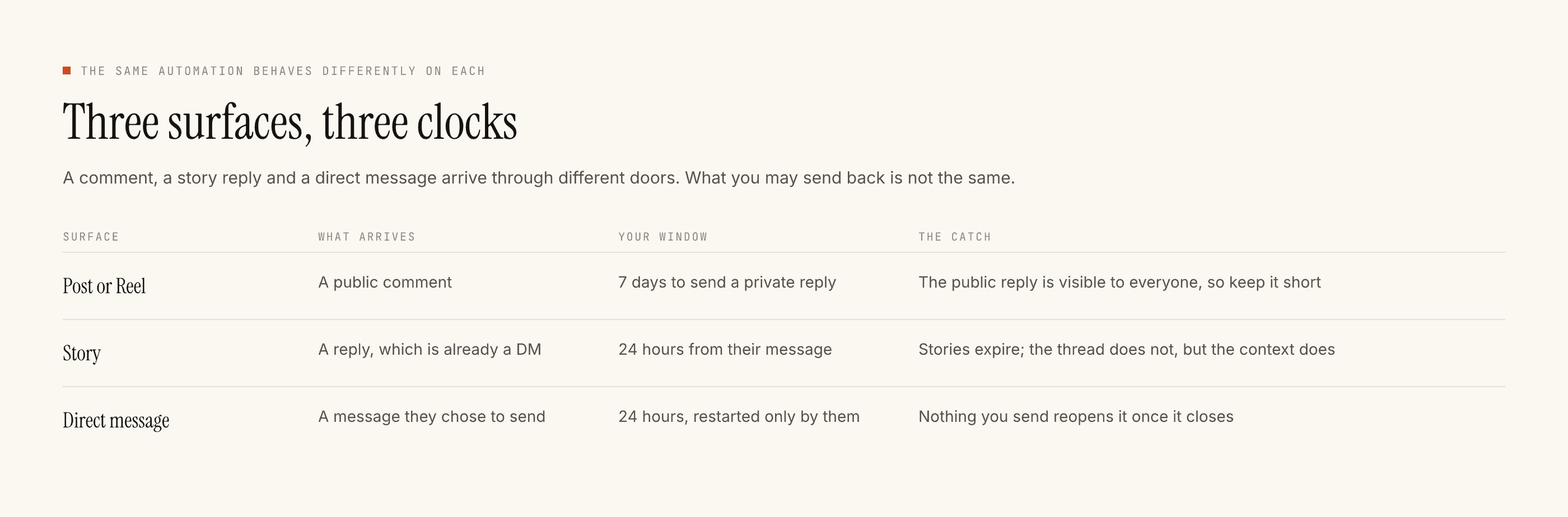
Instagram automation begins with something public. Somebody comments on a post and that comment is the trigger, the consent signal and the reason to reply, all at once. You cannot message a stranger — not with a tool, not by hand, not ever. The public act is what opens the private door.
WhatsApp has no public surface. Nothing is a comment section; every message is one-to-one. So a conversation either begins because the customer wrote to you, or because you initiated it — and initiating is where template approvals, message categories and Meta's own charge enter the picture.
The public reply is underrated
On Instagram, the reply other people can see is often worth more than the private one. Twenty people read the answer to "price kya hai" under a Reel and never have to ask it. On a post that travels, that compounds.
WhatsApp cannot do that at all. Every answer is delivered once, to one person, and helps nobody else.
That is a real Instagram advantage and it is also narrow: it only matters if your content gets comments. A distributor whose customers are shopkeepers with your number saved has no use for a public reply whatsoever.
What a bad message costs
Not the same on both, and this is the axis where WhatsApp is harder.
An unwanted Instagram DM is ignored or deleted. An unwanted WhatsApp message arrives on the same screen as somebody's family group and their landlord, in the middle of their day, and the response is a block. Blocks are the thing that damages a business number, and the damage is not confined to that one customer.
So the same automation, ported unchanged, is riskier on WhatsApp. The refusal machinery — quiet hours, deduplication, a never-send list — matters more there, not less.
On Instagram an unwanted reply is scrolled past. On WhatsApp it is reported by somebody who was busy.
Which to prioritise
There is no general answer, but there are two clean tests.
Where do people already ask you things? Not where you have followers. Where the questions arrive. Open both inboxes and count a fortnight of real messages. Whichever number is larger is where automation pays back fastest, because you are removing work that exists rather than creating a channel that does not.
What is the next thing after the question? If the answer is a payment, a delivery address, a photograph of a damaged item — that conversation belongs wherever your operations already live, which in India is usually WhatsApp. If the answer is a link and a decision, Instagram handles it fine.
- Do one channel properly before adding a second. A second channel is not a checkbox — it is another set of answers to maintain, another inbox to watch and another thing to be wrong on. The honest cost of that is here.
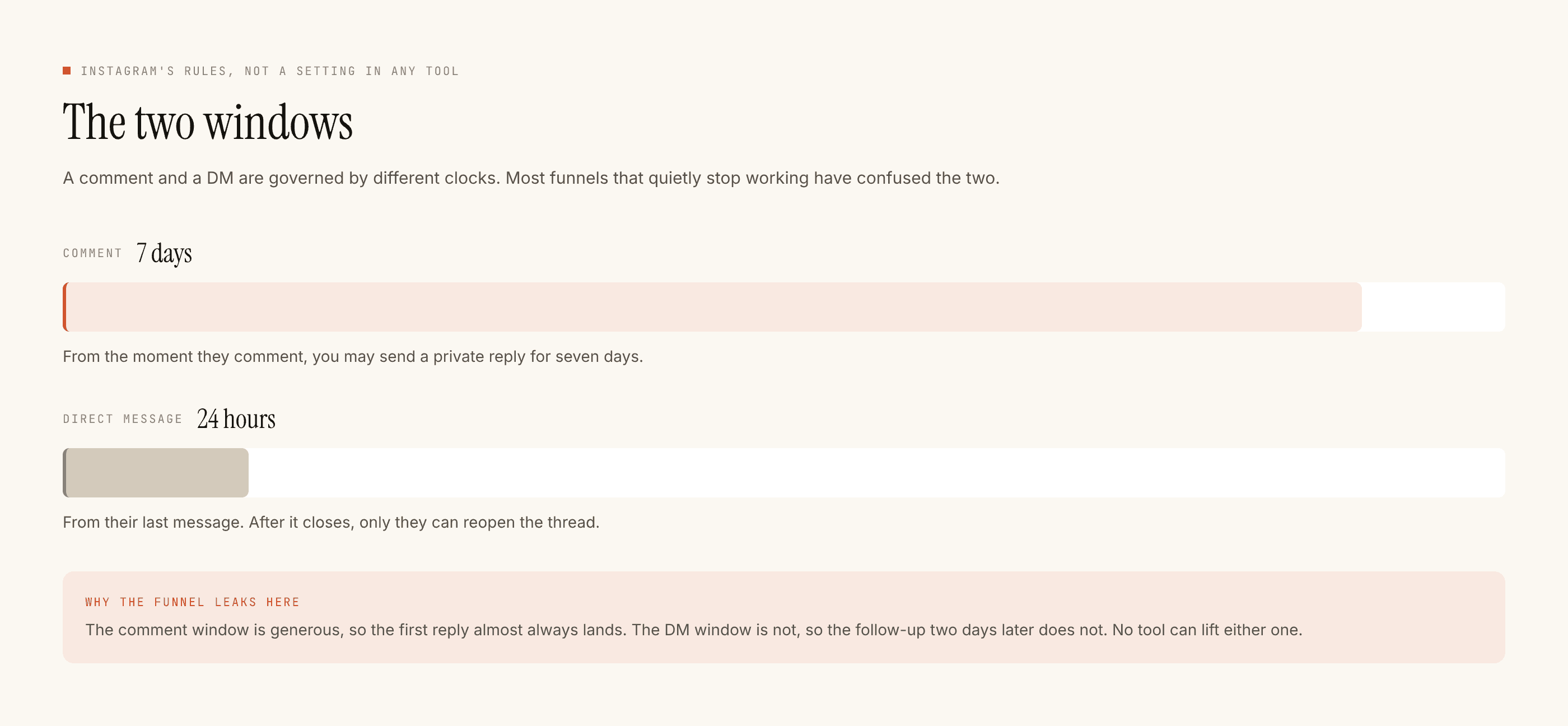
- Do not port the automations. Different triggers, different clocks, different consent. What transfers is your wording, not your configuration.
- Keep one never-send list. The topics that need a human are identical on both. Two separate lists means somebody gets a template on one channel because you only blocked them on the other.
- Test as a recipient on each. Read the messages on a phone, in the app they actually arrive in. They read differently, and the WhatsApp one reads more intimately than you expect.
What we can honestly claim
Instagram comments and DMs on the official Graph API, a public reply and a private one, ten named checks before every send and a recorded reason for every refusal. Takeover stands the automation down the moment you reply by hand. Templated replies are free and unlimited, a credit is spent only when the model writes something new, the free tier is 100 credits with no card, and packs start at ₹499.
If WhatsApp is where the revenue actually arrives, the honest recommendation is to buy a WhatsApp tool for it — and the Indian specifics of running that channel are here. If you are weighing one tool for both, what genuinely shares and what cannot is here.