Playbooks · 4 min read
WhatsApp Automation in India: What Actually Governs It

In India, WhatsApp is not a marketing channel a business chooses. It is where the conversation already happens — the number on the shop board, the group the order goes into, the thread where a customer sends a photograph of the thing that arrived broken. Automation arrives into an established habit rather than creating one, which is a genuinely different starting position from most countries.
That changes what is worth automating, and it changes what going wrong costs.
The message is going somewhere personal
This is the fact underneath everything else. An Instagram DM lands in an app people open to be entertained. A WhatsApp message lands next to their mother, their landlord, and their child's school group.
The tolerance for a message that was not wanted is therefore much lower, and the penalty is not a scroll past — it is a block, and blocks are the thing that damages a business number.
On Instagram an unwanted reply is ignored. On WhatsApp it is reported by somebody who was in the middle of their day.
Meta's rules, not the tool's
Two things people conflate, and separating them is most of understanding this channel.
The Business API has published rules about what may be sent, when, and after what kind of approval. Those are Meta's, they apply to every vendor equally, and no tool grants an exception to them. A vendor promising to send whatever you like whenever you like is describing either a rule they do not control or a route they should not be using.
The tool decides what it refuses on top of that. That is the only part where products genuinely differ, and it is worth more than the feature list.
DPDP is a real consideration, and not one we can advise on
India's Digital Personal Data Protection Act applies to a business handling customers' personal data, and a WhatsApp number is personal data. So is the conversation.
What that means in practice for your business — notice, consent, retention, who inside your company may read a thread — depends on facts about your business that no blog post knows. We are not lawyers, this is not legal advice, and a vendor telling you their product "makes you DPDP compliant" is selling something nobody can sell. Take your own advice.
What a tool can honestly offer is the mechanics: a way to export what you hold, a way to delete it properly, and a record of who accessed what.
What is genuinely worth automating here
The Indian inbox has a shape, and it is not the one marketing decks assume.
Automate
Never automate
The one worth emphasising is the payment case. "Paisa kat gaya but order nahi dikha" is the highest-stakes message a small business receives, it arrives constantly, and an automated reassurance on top of it is the fastest way to turn a worried customer into a public one.
Hinglish is the default, not an edge case
Keyword matching compares strings. It does not translate, and it does not know
that price, kitna and कीमत are one question.
Case and punctuation fold away, so Price? and price are the same thing. But
spelling, script and transliteration do not: kitna is not kitne, daam is
not dam, and दाम is not दम — a matra is a vowel rather than an accent, so
those stay distinct words rather than collapsing together.
The technique that works is harvesting rather than inventing. Read fifty real messages, write down the exact strings people typed, and use those. The list will have eleven entries for one question and every one of them will come from a real customer.
What exists today
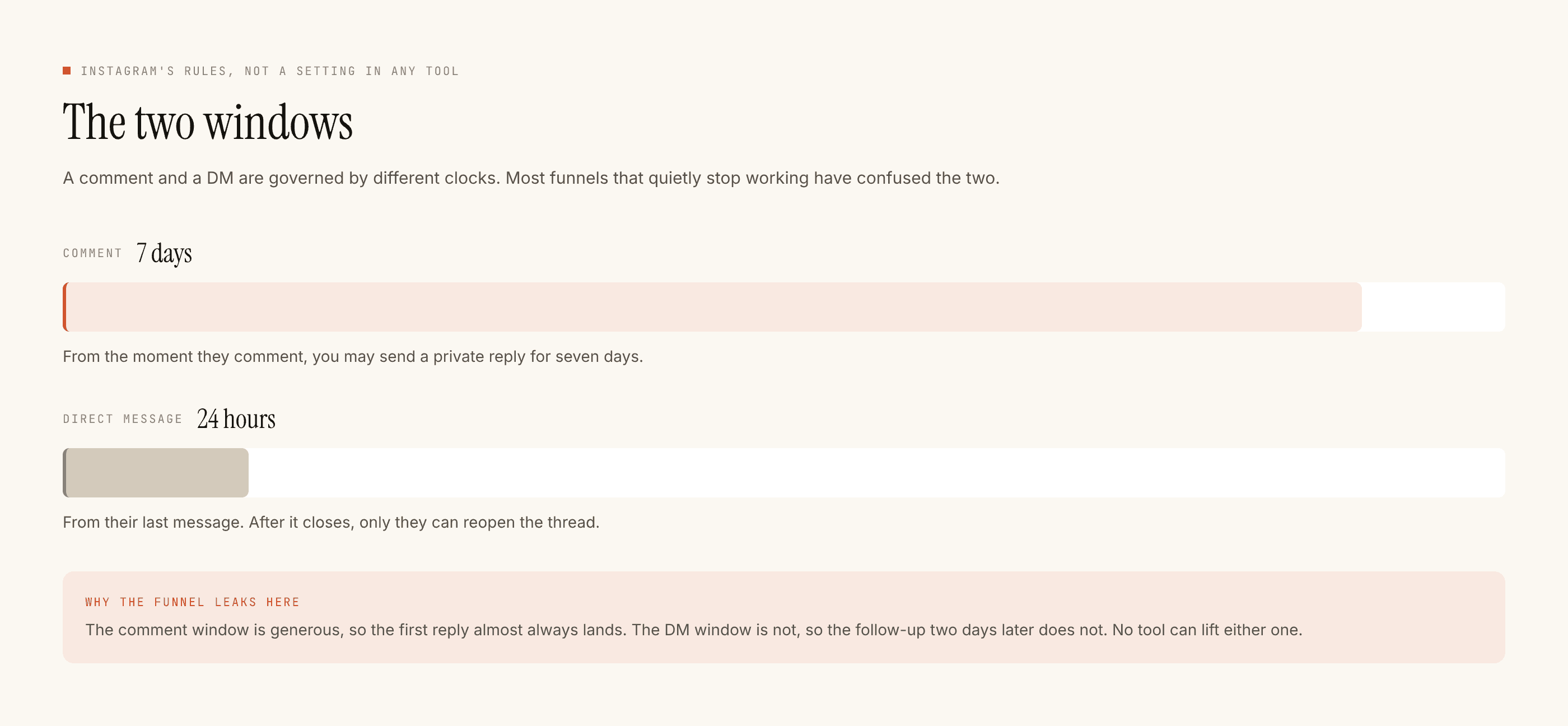
PostEngage answers Instagram comments and DMs. There is no WhatsApp in the product — not on a plan, not in a beta, not behind a flag. Everything above is how the channel works and how we think it should be handled, written because these pages get found and a reader deserves the real state of things rather than a signup that disappoints.
If Instagram is also where your customers ask you things, the setup guide covers that side. If you want the argument about running two channels at once before committing to either, that is here.