
Two honest statements before anything else. We have no analytics product — no reach numbers, no engagement rate, no graph that would tell you whether the drop is real. And nothing here influences how far a post travels; no tool outside Meta does.
So this post cannot diagnose a distribution problem. What it can do is describe the one cause of falling engagement that lives in the part of Instagram this product touches, and how to tell whether it is yours.
First, check whether it is a real drop
Engagement rate is a ratio, and both halves move. An account whose follower count grew while comments stayed flat has a falling engagement rate and exactly the same number of conversations as before.
If the absolute count of questions is steady, there may be nothing to fix.
The cause that is visible from here
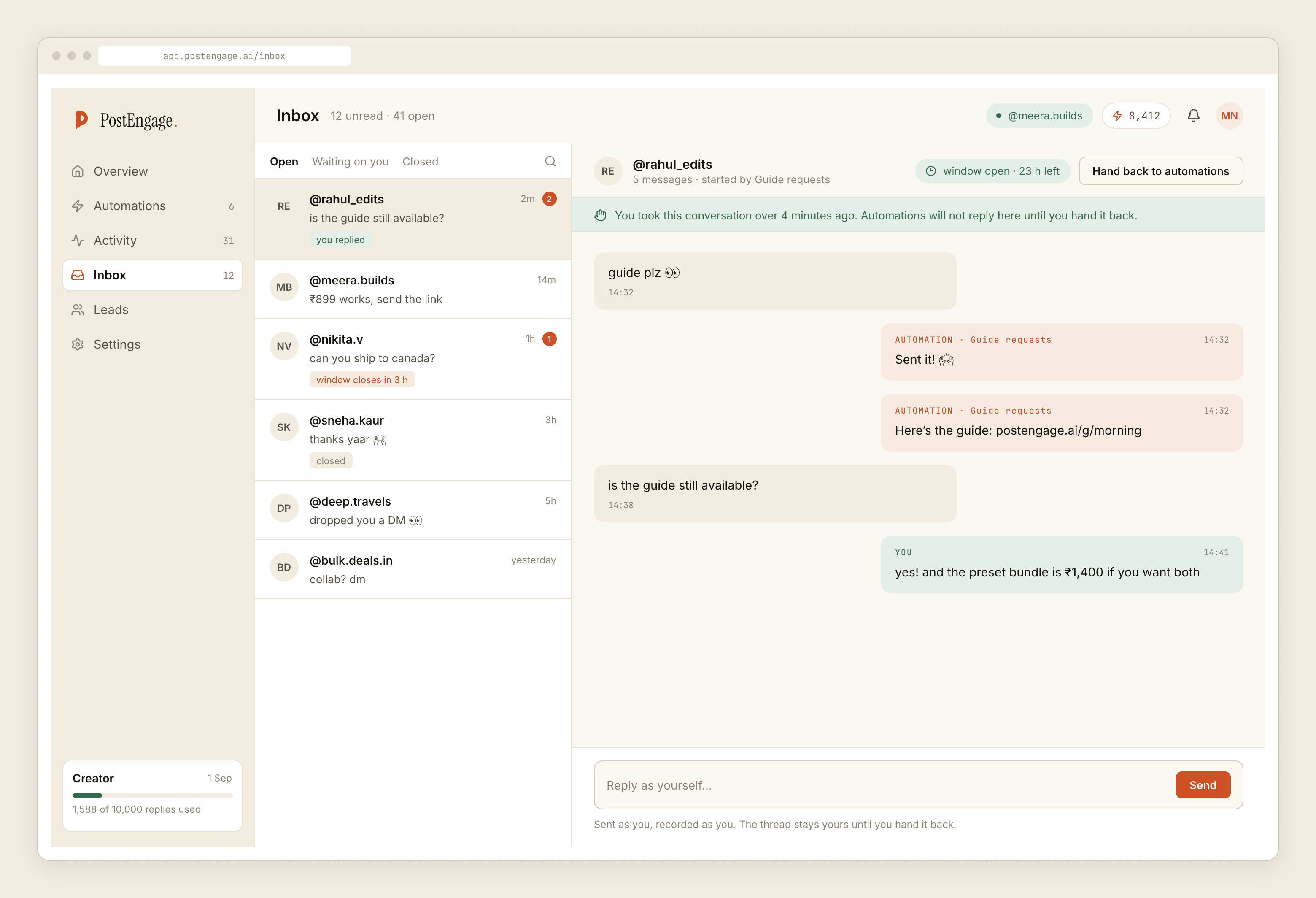
A comment section where the last several questions went unanswered.
This compounds in a way people underestimate. Somebody scrolling your comments is reading a record of what happens when you ask this account something. Four unanswered questions in a row is a clear answer, and the reasonable response is not to bother.
That effect is slow, invisible in any dashboard, and entirely self-inflicted.
Why questions go unanswered even when you mean to answer
Almost never indifference. Usually the clock.
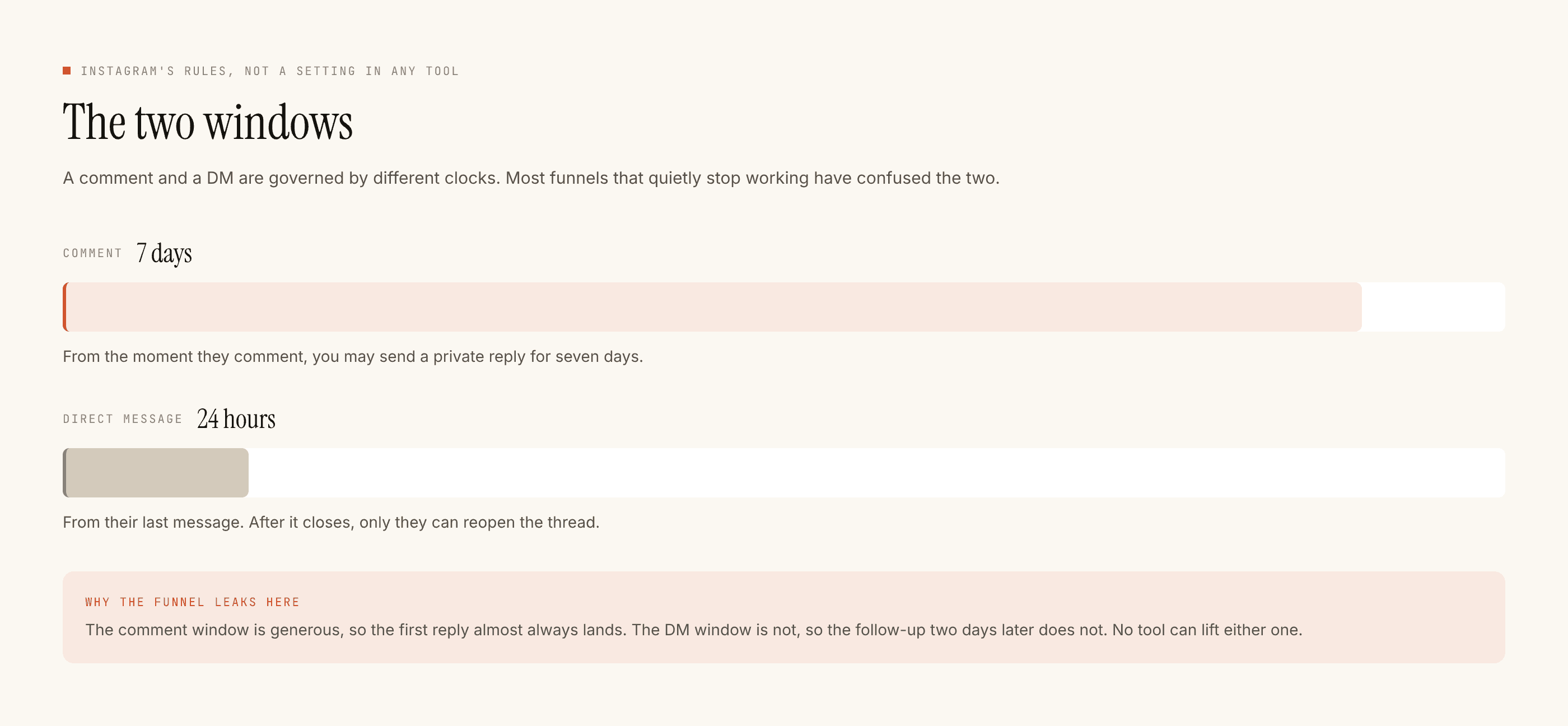
You may reply to a direct message for twenty-four hours from their last message, and only another message from them restarts it. A question that arrived on Friday night and got attention on Sunday was not answered late — the platform refused the send.
A comment is more forgiving: seven days, counted per comment, so an older post that resurfaces still works.
What to actually do
- Answer the backlog by hand. Go to your last few posts and answer the questions still sitting there. The comment window is seven days per comment, so recent ones are still live.
- Template the four that repeat. Price, availability, delivery, and the "will this work for me" variant. Templated replies are free and unlimited here, so this costs nothing to run.
- Ask for something specific in captions. A post that asks for nothing gets reactions rather than questions, and reactions are not conversations.
- Check quiet hours are in your audience's timezone. A window set to yours when your buyers are elsewhere switches you off during their day.
The second cause worth ruling out
Not every drop is about reach or about answering. Sometimes the account changed what it asks for and did not notice.
An account that spent a year posting "comment PRICE" and then switched to "link in bio" will see comments fall, because it stopped requesting them. The reach may be identical. The instruction changed, and instructions are most of what determines whether somebody types anything.
Go back through six months of captions and check what you were asking for then versus now. This is a two-minute check and it explains a surprising share of "engagement is down" reports.
Where automation genuinely moves the number
Only in one place, and it is worth being precise so you can judge whether it applies.
If people are asking and not being answered inside the window, every one of those is a conversation you had earned and lost. Automating the four repeated questions means those get answered in seconds, at any hour, and the remaining inbox is small enough to reach by hand before the clock runs out.
That does not change how many people see your posts. It changes what fraction of the ones who reached out end up talking to you, which is the number closest to revenue and the one nobody reports on.
What this will not fix
If the drop is in reach — fewer people seeing the posts at all — none of the above touches it. That is a content and distribution problem, and the honest answer is that it belongs to whoever makes your posts, not to a reply tool.
Two things people try that make it worse:
Makes it worse
Actually helps
What you can measure without analytics
Four numbers, counted by hand once a fortnight, no dashboard required:
- Questions received.
- Questions answered at all.
- Sends refused because a window had closed — visible directly in the blocked list.
- Conversations you personally took over.
If the third number is meaningful, you have found a real, fixable loss. If it is near zero and the first number is falling, the problem is upstream of anything here, and it is better to know that than to buy tooling for it.
If you want the fuller diagnosis of a comment section that produces nothing, that post is here. If the issue is that followers are not converting at all, the honest version of that is here.