
Before anything else: if nobody is buying, a reply tool is unlikely to be the purchase that changes it. This post exists because the honest version of that sentence is more useful than a sales pitch, and because one of the four causes below genuinely is a reply problem.
Work out which one is yours first.
One: the audience was never buyers
The most common and the least comfortable.
A following accumulated through giveaways, follow-for-follow, viral non-commercial content, or a pod is an audience assembled by a mechanism unrelated to what you sell. They followed for the free thing, or because following was the price of entry, and there is no reason they would buy.
Two: nobody was ever asked
Also very common, and much easier to fix.
Accounts post product photos with captions that describe the product and then ask for nothing. The reader has no instruction, so they do the default thing, which is scroll.
The fix is not a funnel. It is a sentence. "Comment PRICE and I'll send the list" gives somebody a specific, low-effort action attached to the thing they are currently looking at. "Link in bio" gives them a chore.
Three: they asked and nobody answered in time
This is the one where a reply tool genuinely helps, and it is worth checking before dismissing.
Go back through two weeks of comments and DMs and count the questions that never got an answer, or got one two days later. If that number is meaningful, you have been losing people who put their hand up — which is a completely different problem from the first two, and a much better one to have.
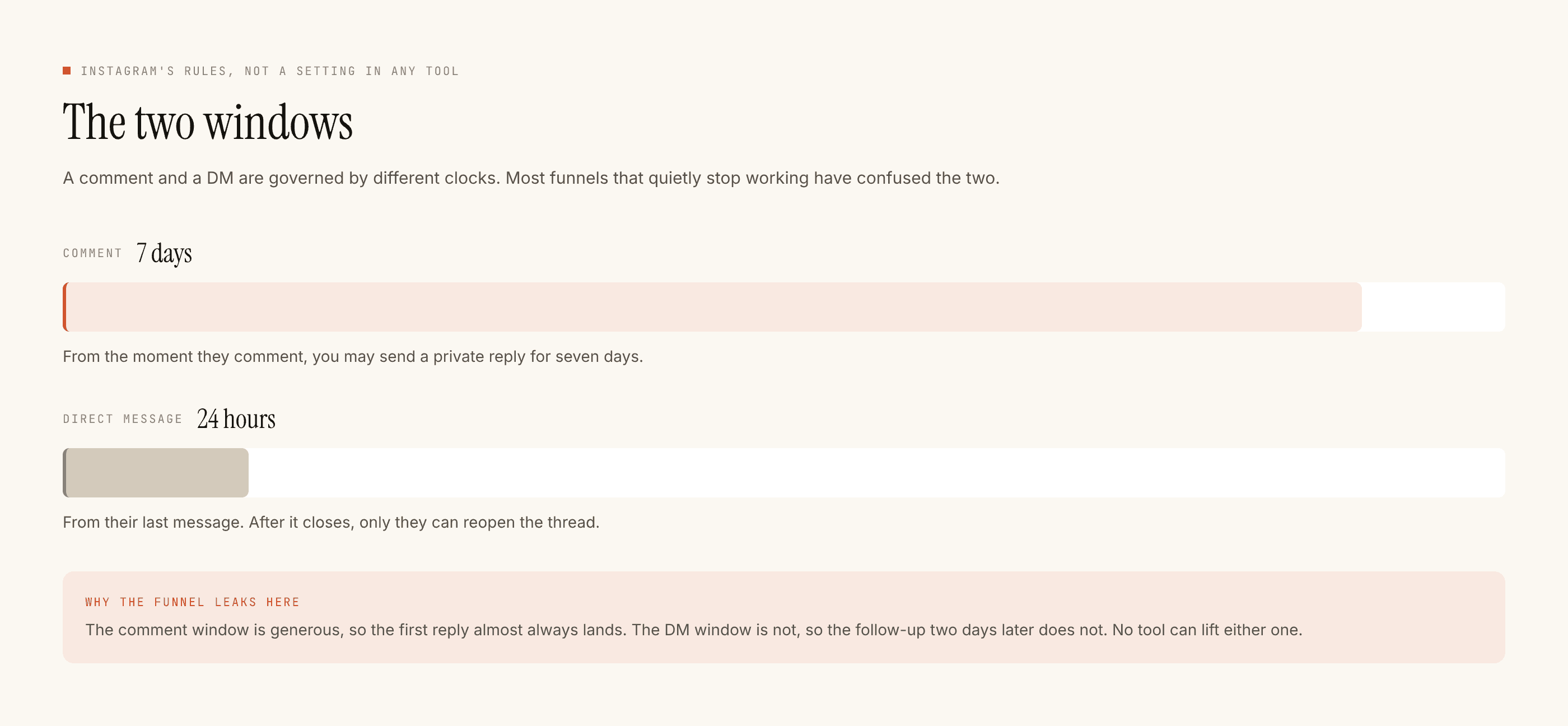
The clock makes it worse than it looks. A direct message can be answered for twenty-four hours from their last message, and only another message from them restarts it. Somebody who wrote at 11pm on Friday and got an answer on Sunday did not get a slow reply. The platform refused the send.
Four: the answer they got did not help
Subtler, and visible only by reading your own replies as a stranger would.
Somebody asks whether something comes in navy and receives a paragraph about your brand's commitment to quality. Somebody asks the price and gets "DM me for pricing" — inside a DM. Somebody asks about delivery and gets a link to a policies page.
Ends the conversation
Continues it
Their reply is the only thing that restarts the window, so a message with nothing to answer has ended the conversation however polite it was.
How to tell which one you have
Twenty minutes, in this order:
- Read two weeks of comments. Are there questions in them at all? If not, it is cause one or two, and no tool applies yet.
- Count unanswered or late questions. If that number is large, it is cause three.
- Read your last twenty replies as a customer. If they deflect, hedge, or end without a question, it is cause four.
- Only then consider tooling, and only for causes three and four.
What automation actually changes
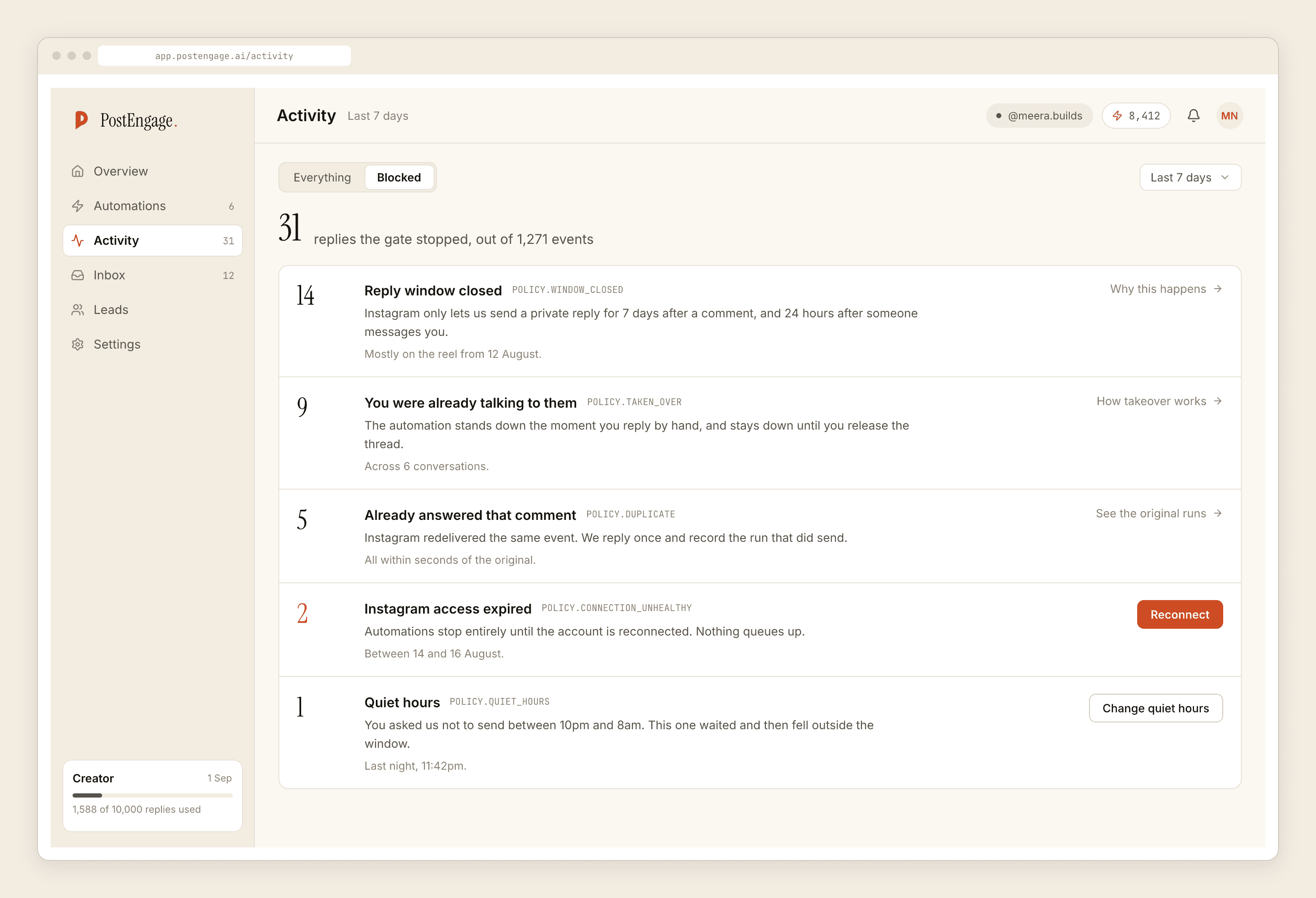
Cause three, almost completely: the questions that repeat get answered immediately, at any hour, in your words, and nothing waits overnight.
Cause four, partially: writing four good templates forces you to decide what the answer actually is, which is most of the work. The tool does not make the reply good; it makes a good reply arrive reliably.
Causes one and two, not at all. An empty comment section automated is an automated empty comment section, and an audience assembled by giveaways is still that audience after you install anything.
The uncomfortable arithmetic
A smaller audience that asks questions is worth more than a large one that does not, and the second is much easier to build.
If the diagnosis lands on cause one, the honest recommendation is that the work ahead is content and positioning rather than software — figuring out who this is for and saying so, then accepting a slower follower count in exchange for an audience where the questions come from people who might buy.
That is not a thing we sell, and pretending otherwise would waste your month.
If the diagnosis landed on three or four, the setup guide is here, and the reply craft post covers the writing.