Playbooks · 5 min read
Influencer ROI With No Tracking: What You Can Count
The usual advice for measuring a collaboration is unique links and unique discount codes. Half of that is genuinely good advice. None of it is something this product does.
There is no link tracking here. No shortened URLs we generate, no click counting, no UTM handling, no conversion events, no attribution, and no join between somebody in your leads list and a payment anywhere. If a comparison table implies otherwise, it is wrong, and it is worth knowing before you plan a campaign around a number that will not exist.
What does exist is three stores you read yourself: Activity, Leads, and the credit ledger. This post is about what those can honestly tell you after a collaboration, and about the one instrument that does work — which lives in your checkout, not on Instagram.
Count things, in order of how defensible they are
Comments that matched a trigger, on the collaboration post. The rawest demand signal available. Somebody watched, wanted the thing enough to type a word, and typed it. That number belongs to that post and nothing else.
Automation runs, and refusals by reason. How many people got an answer. And, in the blocked list, why the others did not. A stack of window refusals weeks later is genuinely interesting: it means the post is still circulating and still generating comments, past the seven days in which a comment can be replied to. That is information about the collaboration nobody usually collects.
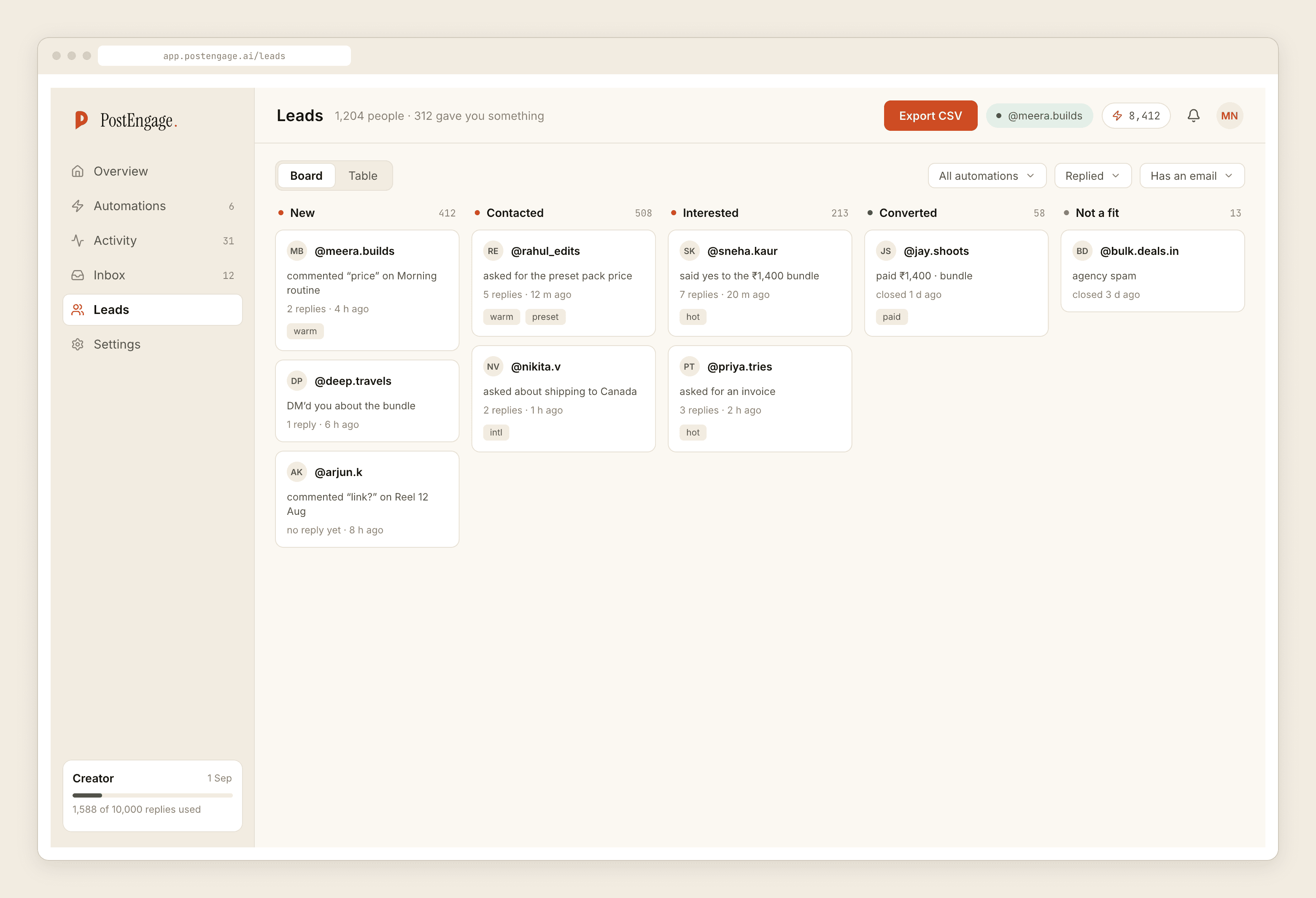
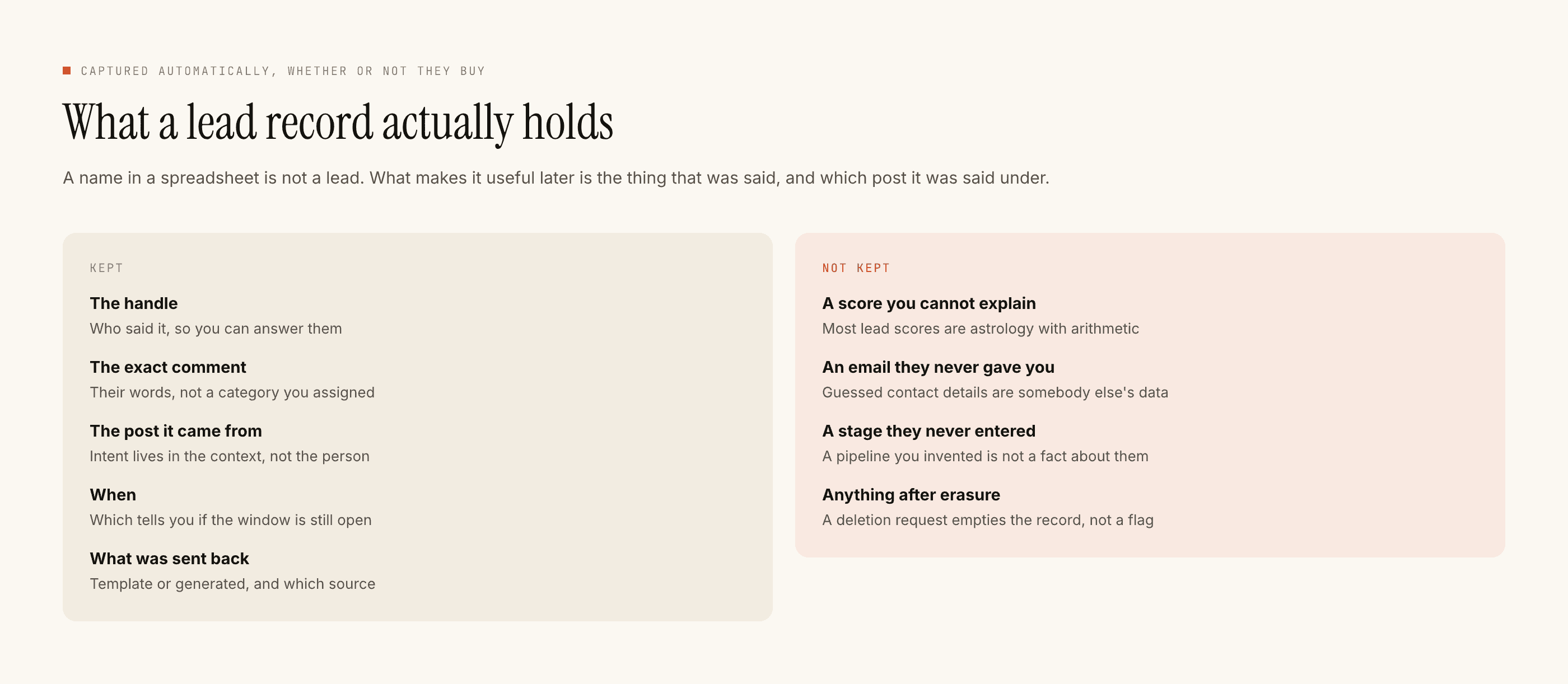
Leads captured, with the post that captured them. This is the closest thing to a per-collaboration count in the product, and it is clean if you set it up right, which is the next section.
People who replied to the automated message. The least ambiguous signal here. A human writing back is proof a real person read it and engaged. Not proof of a sale.
What it cost. Exactly, to the rupee. Templated replies are free and unlimited; a credit moves only when the AI writes something new, one credit per reply. The free tier is 100 credits with no card and packs start at ₹499. Add your own hours and say that you estimated them.
The setup that makes the count unambiguous
Do this before the collaboration goes live, not after, because there is no way to reconstruct it later.
- Give the collaboration its own keyword. Not
linkorprice, which you already use. Something specific to that campaign and easy to spell, and put it in the caption or the creator's script: comment that word and you get sent the thing. - Scope the automation to that specific post. Under Advanced, restrict it to the collaboration post only. Now every run of that automation belongs to that post by construction, and nothing else can leak into the count.
- Turn capture-to-Leads on for it. So the people are written down with what they said, rather than only being replied to.
- Add negative keywords anyway.
job,collab,not interested. A post with unusual reach brings unusual comments. - Write down the date range you will count. The comment window is seven days, so activity attributable to that post has a natural boundary and it is shorter than most campaign reports assume.
The instrument that actually works, and where it lives
Discount codes. But notice where they operate: a code is redeemed in your store, and your store records the redemption. Instagram is not involved and neither are we. The same is true of a "how did you hear about us" field on your own checkout or intake form.
That is not a limitation to apologise for, it is the correct architecture. The measurement should sit at the point where money changes hands, because that is the only place both halves of the question exist at once. What Instagram gives you is the top of the funnel; what your checkout gives you is the bottom; nothing joins them automatically and you should be suspicious of a tool that claims to. The argument for asking instead of inferring goes further into why self-reported beats invented.
The code works because it is redeemed somewhere you control. The link that "tracks" is usually the one nobody checked.
Four things that will break your numbers regardless
Worth saying out loud in any report, because whoever receives it will eventually think of them.
People who bought without commenting. They saw the post, went to your profile, and bought. They exist, they are invisible here, and they are frequently the largest group.
People who DM'd instead of commenting. They land in a different flow and may not be captured under that post at all.
Codes that travel. A code posted in a group chat stops belonging to the creator who introduced it.
The delay. Somebody discovers you in one month and buys in another. Nothing in this product remembers that they arrived through a collaboration, because nothing here holds a customer history.
What to put in the deliverable
Three sections, and label the third honestly. Cost, exactly. Counts, exactly — matches, runs, captures, replies, refusals by reason. Then evidence: two or three real conversations by handle, with what the person said, verbatim.
Do not multiply across the gap between the counts and the money. One invented conversion figure contaminates the credibility of the honest counts sitting next to it, and the person reading it will remember which number you could not defend. The full shape of an honest report is written out separately, and it is the template to use here.
When you want the lead data somewhere else to work with it, it leaves as a CSV — no integration, no push, no sync. Which is also the right expectation to set with a brand partner before the campaign rather than during the wrap-up call.