Playbooks · 5 min read
Zero-Click on Instagram Means Answering in the DM

We do not make content. No caption tool, no carousel generator, no scheduling, no publishing. If you came here for a system that produces zero-click posts, this is not it and we are not building toward it.
What we do is the second half of zero-click, and it is the half most articles skip. Keeping the answer on the platform is easy to say and awkward to do, because the answer usually lives somewhere else — a Linktree, a product page, a PDF, a form. Zero-click is only real if there is a mechanism that delivers the thing without sending the person away. On Instagram that mechanism is the direct message.
What zero-click actually means here
The phrase comes from search, where it describes a query answered on the results page so the user never clicks through. Imported to social, it means something adjacent: content that delivers its value inside the feed instead of functioning as a trailer for a link.
The reason it gets talked about is that links are expensive on Instagram, in two separate currencies.
What a link costs you
What a link costs them
So the useful version of zero-click is not "never link". It is: the first exchange should complete without leaving Instagram. Whatever needs a link can happen on the second exchange, with somebody who has already engaged.
The comment-to-DM flow is a zero-click mechanism
Strip it of the marketing language and a comment-to-DM automation is a way of putting the answer where the person is standing.
Somebody comments price. A public reply appears under the post. A direct message arrives with the actual price, the sizes, and whatever else the answer needs. They read it in the app they were already in, in the inbox they already check, without touching a browser.
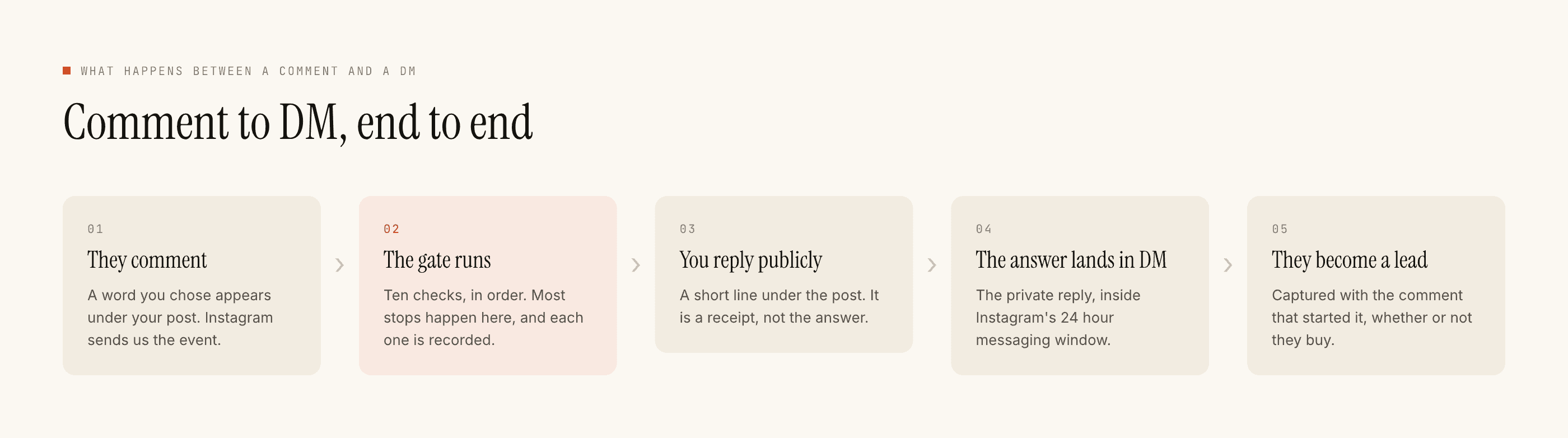
The thing to notice is that the content of the DM is a choice, and most people choose badly. Given a working private-reply channel, the temptation is to send the link anyway — here you go: [link] — which reintroduces the click you were avoiding and adds a step. If the answer fits in a message, put the answer in the message. Price, availability, timings, the address, the three-line version of the how-to. A link goes in only when what you are delivering genuinely cannot travel as text.
The clock nobody plans around
Zero-click writing tends to be discussed as a content aesthetic. Operationally it is a timing problem, and this is where the honest version diverges from the blog-post version.
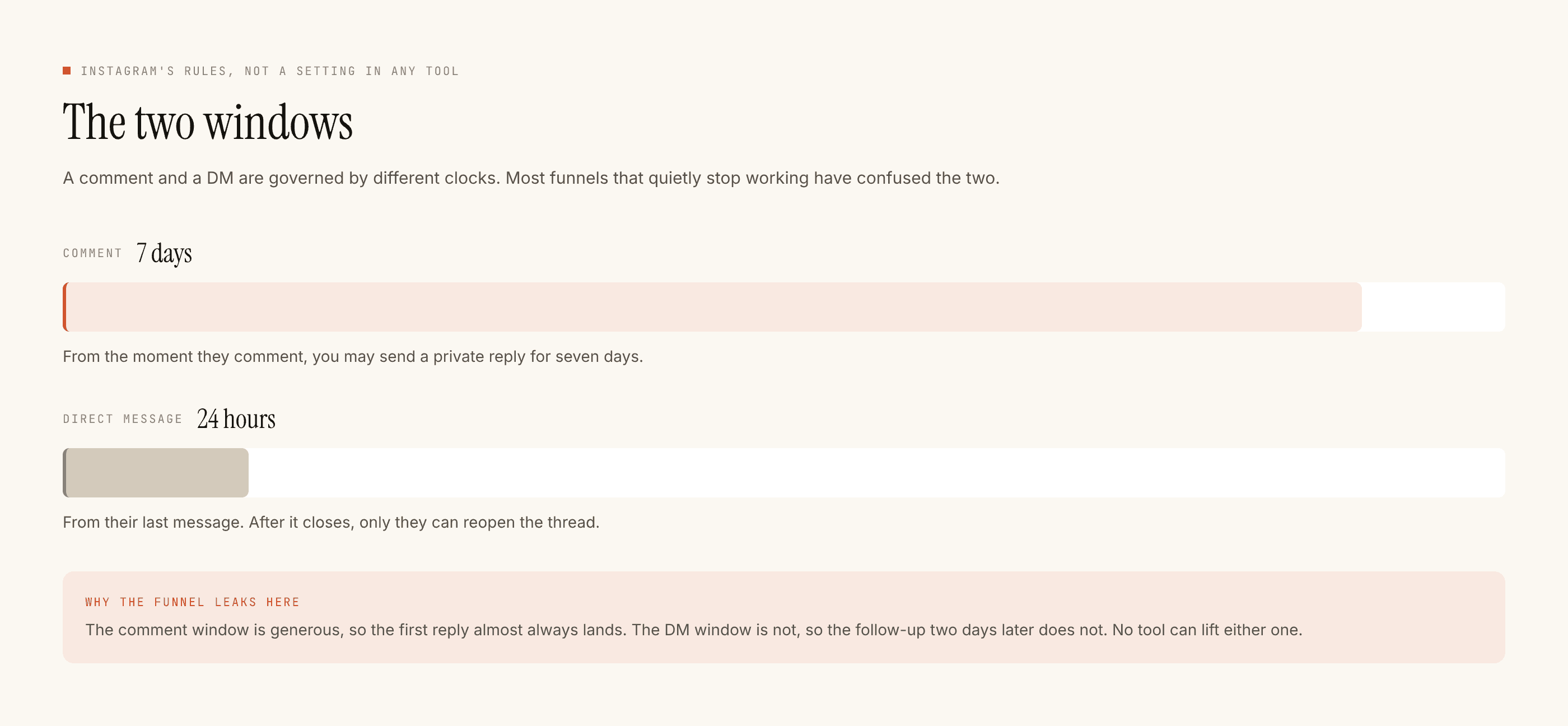
Two windows govern everything.
- Seven days on the comment. A comment can be replied to for a week after it lands. Posts keep collecting comments long after you have stopped thinking about them, which is why an automation left running on an old post still does useful work.
- Twenty-four hours on the message. Once somebody has interacted, there is a day-long window to message them. It restarts only when they send something. Not when you post, not when they like a Story, not when you decide it is time for a follow-up.
The consequence is blunt: whatever you were going to send has to be sent in the first exchange. There is no drip, no sequence, no nurture ladder — we do not build those and the platform's clock would break them anyway. One good message beats a planned five that never get sent.
That constraint is actually why zero-click works well here. You are forced to make the first message complete.
Writing the message that ends the question
A zero-click reply has a specific shape. It answers, it anticipates the obvious follow-up, and it leaves an opening.
Compare two versions of the same private reply to price kya hai:
Weak: Hi! Thanks for your interest. Please check the link in our bio for pricing. Two clicks, no answer, and a tone that belongs to a different company.
Better: ₹1,290 including shipping. Sizes S to XL in stock, XXL comes back next week. Want me to hold one? Answered, pre-empted, and it invites a reply — which, incidentally, is the only thing that reopens the messaging window.
That last part matters more than it looks. A message that ends in a question keeps the conversation alive on the platform's terms as well as the reader's. A message that ends in a link ends the conversation, in the app at least, and if they do not come back you have no second turn.
Where automation stops and you start
Not everything is answerable in one message, and pretending otherwise is how automated inboxes get a bad name.
Refunds, complaints, anything about somebody's specific order that went wrong — these should reach a person. The moment you reply by hand, the automation stands down for that conversation and stays down. That is the intended behaviour, not a fallback.
The reasonable split is: repeated questions with a stable answer get a templated reply, which costs nothing and can run all day. Anything with a person's specific situation in it gets you. Zero-click is a good goal for the first category and a bad goal for the second, because some questions should cost somebody's attention.
If you want the flow end to end rather than the philosophy, the comment-to-DM funnel post walks through building one, and the lead magnet post covers the case where the thing you are delivering is a file and a link is unavoidable.