Lead generation · 4 min read
Link in Bio Is a Detour. Here Is What It Costs You.

"Link in bio" is a workaround that became a convention. It exists because Instagram does not make captions clickable, and it has survived because everybody does it — not because it works well.
Count what it asks of somebody who wants the thing you mentioned.
- Read the caption and register that a link exists somewhere else.
- Leave the post, which they were engaged with, and go to your profile.
- Find the link, which is often a link-aggregator page with eleven other links on it.
- Pick the right one, from a list where yours may not be the top item any more.
- Load a page in an in-app browser, which handles some sites badly.
Every step loses people, and the loss is not evenly distributed: the ones who drop are the mildly interested, which is most of them.
A link asks a person to leave. A DM asks them to type one word and stay where they were.
What the DM route asks instead
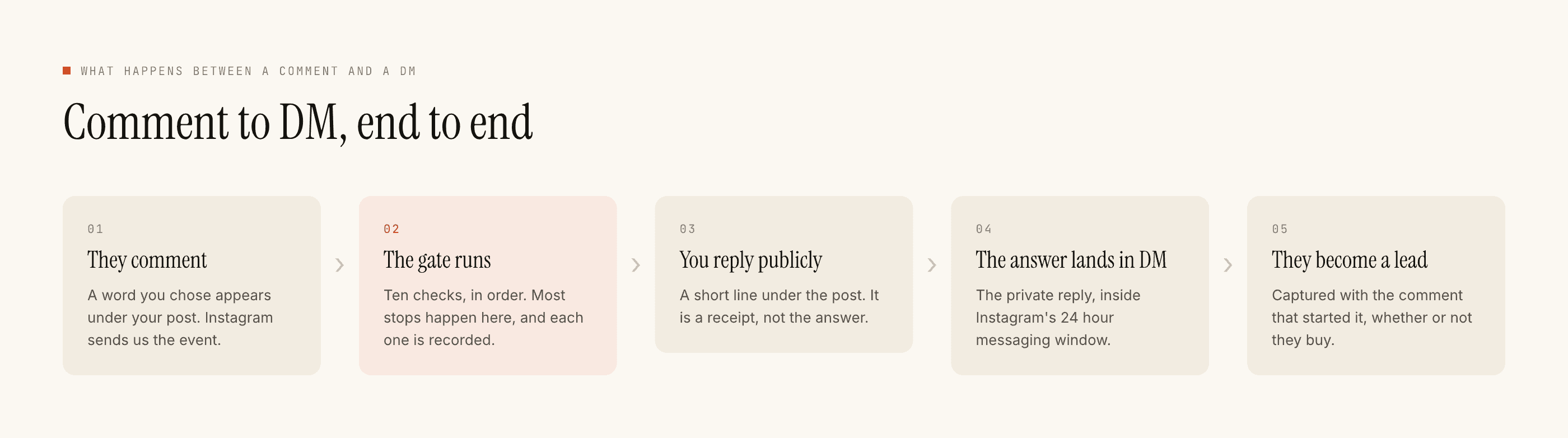
One word in the comments, and the thing arrives in their inbox. They never leave the app, never see an aggregator page, and never have to identify which of eleven links is the one you meant.
There is a second effect people underestimate. A comment is public, so forty
people typing GUIDE under a Reel is visible to everyone who scrolls past —
which does more for the next person's willingness to ask than any caption could.
A bio link tap is invisible to everybody.
The reach argument, stated honestly
A reply containing a link may travel less far than one without. That is a real consideration and it is why the recommended shape is: link in the DM, not in the public reply.
The public reply is a receipt — "sent it" — and the link goes privately to the person who asked. You get the visible comment section and the link delivery, without putting a URL in the place where it costs you.
What you get that a link never gives you
A link tap is anonymous. Somebody visited a page, and unless you have analytics wired up elsewhere you know nothing else.
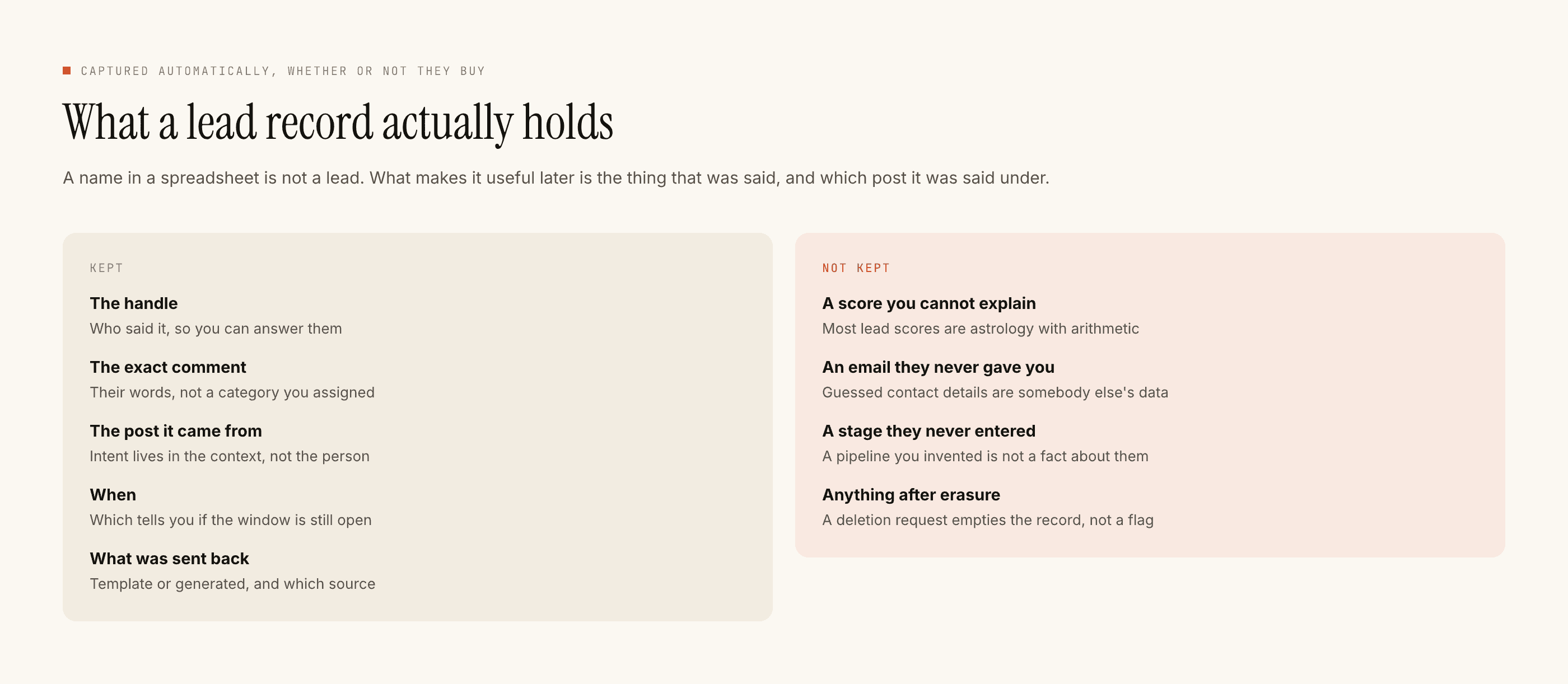
A DM is a conversation with a person attached. You know who asked, what they typed, and which post they were looking at when they asked. That capture happens automatically and the person stays in a list you can export, which is worth having even for the ones who never buy.
When a link is still the right answer
This is not an argument for abolishing the bio link, and three cases genuinely favour it.
Use the DM
Use the link
The bio link is a destination. The DM is a response. Trying to make the bio link do the job of a response is the actual mistake, not the existence of the link.
The rule that decides it
If the thing you want somebody to do is tied to the post they are currently looking at, ask for a comment. If it is true regardless of which post they saw, put it in the bio.
Most accounts have this backwards: a permanent link in the bio that changes every week to match the latest post, so anybody arriving from an older post lands on something irrelevant.
The honest limits
You cannot message somebody who has not written to you, so this only works when you have asked and they have responded. It is not a way to reach people; it is a better way to answer the ones who put their hand up.
And a link inside a template has no expiry. If the destination moves or the offer ends, the automation keeps sending the old URL cheerfully and forever. Nothing here checks what is on the other end of a link you wrote, so retiring it is a diary entry, not a feature.
If you want the mechanics of the ask, the setup guide covers them. If you want the argument for moving people to email rather than to a page, that is here.