Playbooks · 5 min read
Release Week DMs: Automating Around Dates You Do Not Own

The announcement post goes up on a Tuesday. By Wednesday night the comment section has four hundred LINK in it, the DMs have people asking which platforms it is on, and somewhere in that pile is a booking enquiry for a college fest and a message from someone at a distributor about a takedown.
Release week is the only time most artists have an inbox problem, and it is a severe one for about six days. Then it goes quiet until the next single. That shape — enormous spike, long flat, repeat — is what an artist's automation has to be built for.
Three kinds of message, and only one is yours to answer
Automate this
This is not yours to answer
The right-hand column is the one worth being strict about, and it is the column artists automate by accident, because those messages arrive using words your triggers already match. Somebody typing "can I use your song" hits the same SONG keyword as a fan asking where to hear it.
The reason it matters is that a reply from your account is a reply from you. If a manager, a label, a publisher or a distributor handles that side of your work, an automated answer has just made a statement on their behalf that they will have to walk back, and they will find out about it from a screenshot.
Never let a template state a date you did not announce
The second artist-specific trap is dates, and it is subtler than it sounds because the dates are usually not yours.
A release date moves. A festival adds you to a lineup that has not been made public. A venue changes a set time on the afternoon of the show. A video drops a week late because a colourist got sick. In every one of those cases the date lives with somebody else — a label, a promoter, a distributor — and your automation is holding whatever you typed into it three weeks ago.
So write templates that point rather than state. "Everything current is in the bio link" survives a moved date. "Out on the 12th" does not, and will keep saying so on the 13th, to strangers, from your account.
Release week is a spike, and the spike needs a cap
An announcement reel behaves nothing like the rest of your grid. It gets shared into group chats, it gets reposted, and the comments arrive in bursts rather than a trickle.
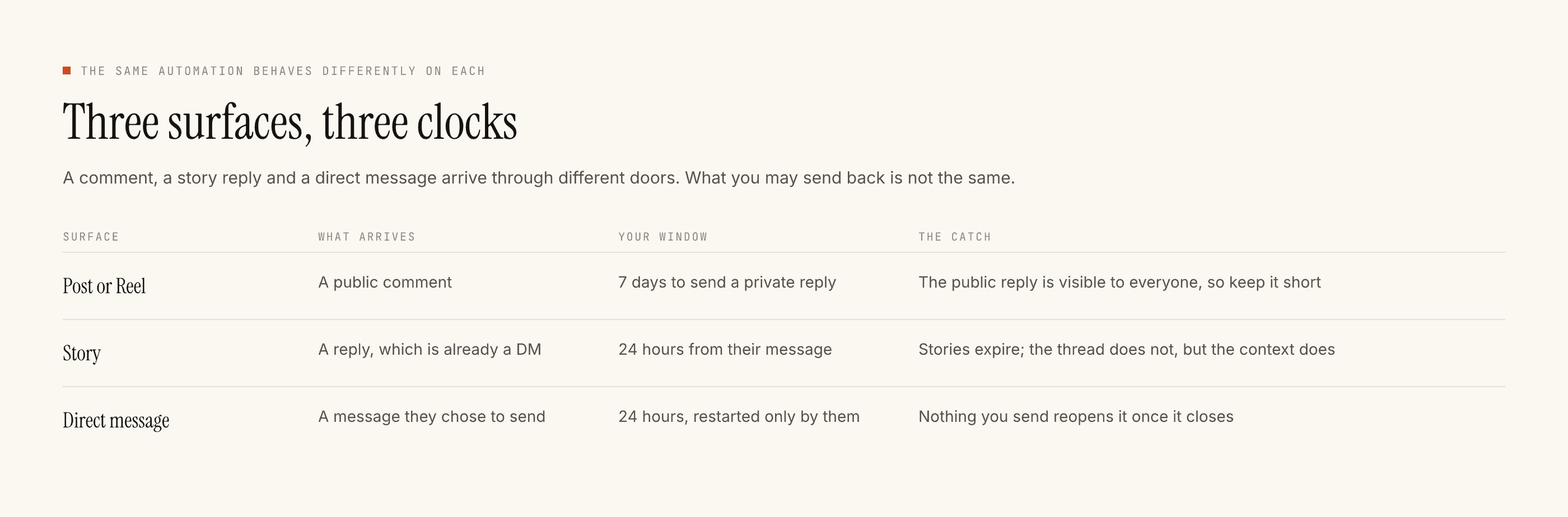
Set a rate budget before the post goes up. An uncapped automation firing at a thousand comments an hour is how an ordinary good release starts looking like coordinated spam, and the account it happens to is yours. The cap does not lose you anything: a comment stays answerable for seven days, which is longer than release week, so the queue drains well inside the window.
The DM side is tighter. Twenty-four hours from their last message, restarted only when they write again. A fan who asks on Friday and goes quiet until Tuesday is out of reach until they write. There are no sequences here and no broadcasts — you cannot message your listeners on your own schedule, whatever any tool implies. So the link goes in the first reply, always.
The public reply is the one people actually read
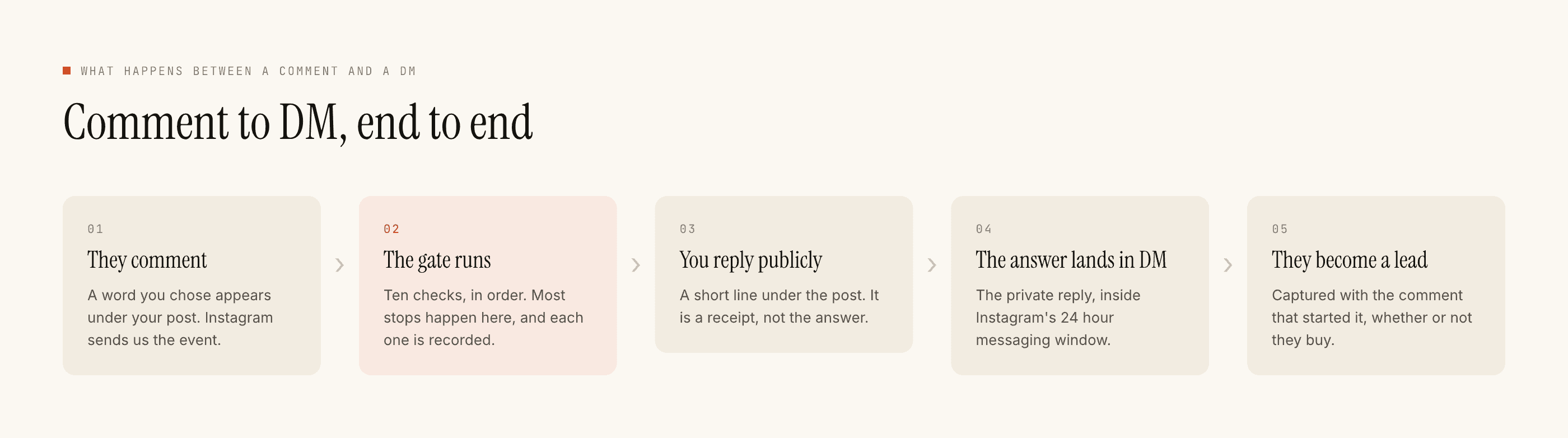
Under a release post the private DM is the delivery mechanism and the public comment reply is the marketing. Four hundred people scrolling that comment section see your replies; only the sender sees the DM.
Which means the public reply is worth writing properly. Not "check your DMs 📩" four hundred times, which reads as a bot and looks like a wall. Short, varied, in your voice, and specific to the song. The same automation carries both.
Sounding like you
Fans know how you type. They have been reading your captions for years, and half the reason they messaged is that you seem reachable. A reply in polished label English breaks that in one line.
Voice DNA is built from replies you actually wrote, not from a tone slider — the longer version of how that works is worth reading before you write templates, because in music the mismatch between the automated reply and your own reply the next morning is unusually obvious.
Cost, and what it will not do
Templated replies are free and unlimited. A credit is spent only when the AI writes a new reply, one credit per reply. For an artist that maps neatly: the release-week flood is four templates and costs nothing at any volume, and credits go on the small pile of genuinely unusual messages. Free tier is 100 credits, no card; packs start at ₹499.
It does not post, schedule or caption anything, so it will not put your release out. It cannot message anyone who has not messaged you first, cannot follow or comment on other accounts, and does not do WhatsApp. It has no analytics — which reel drove listens is a question for your distributor's dashboard, not for us.
If you make beats and take custom work rather than releasing under your own name, the enquiries are a different animal and get their own post. Otherwise start with the refusal list, then one comment-to-DM automation on the announcement post, then read what got blocked after the week is over.