Playbooks · 5 min read
Cart Recovery on Instagram: Building the Version That Works

The abandoned cart DM cannot be built. Instagram has no cart event, no way to match a browsing session to a handle, and no permission to message someone who has not messaged you. If that is news, the three walls are laid out in full here and this post will make more sense afterwards.
This one assumes you have accepted it and want to know what to build with the afternoon you were going to spend on the impossible version. There are three recoveries that are real, and together they cover more lost sales than most stores expect.
The clock you are building against
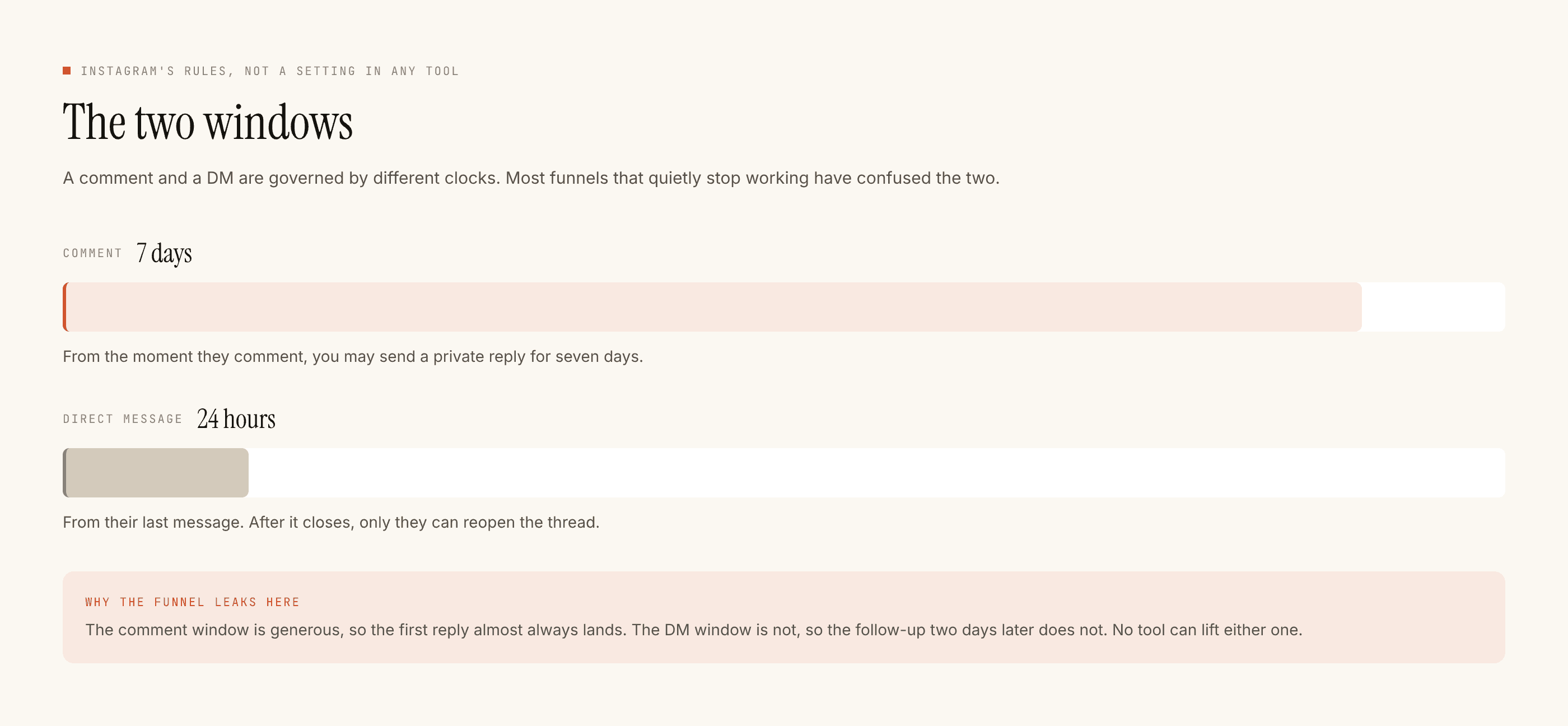
Seven days from a comment. Twenty-four hours from their last DM, restarted every time they send another one. Design against those and everything works. Design against a five-day drip and nothing does.
Recovery one: the thread that went quiet
This is the closest thing to real cart recovery, and it is the one almost nobody sets up.
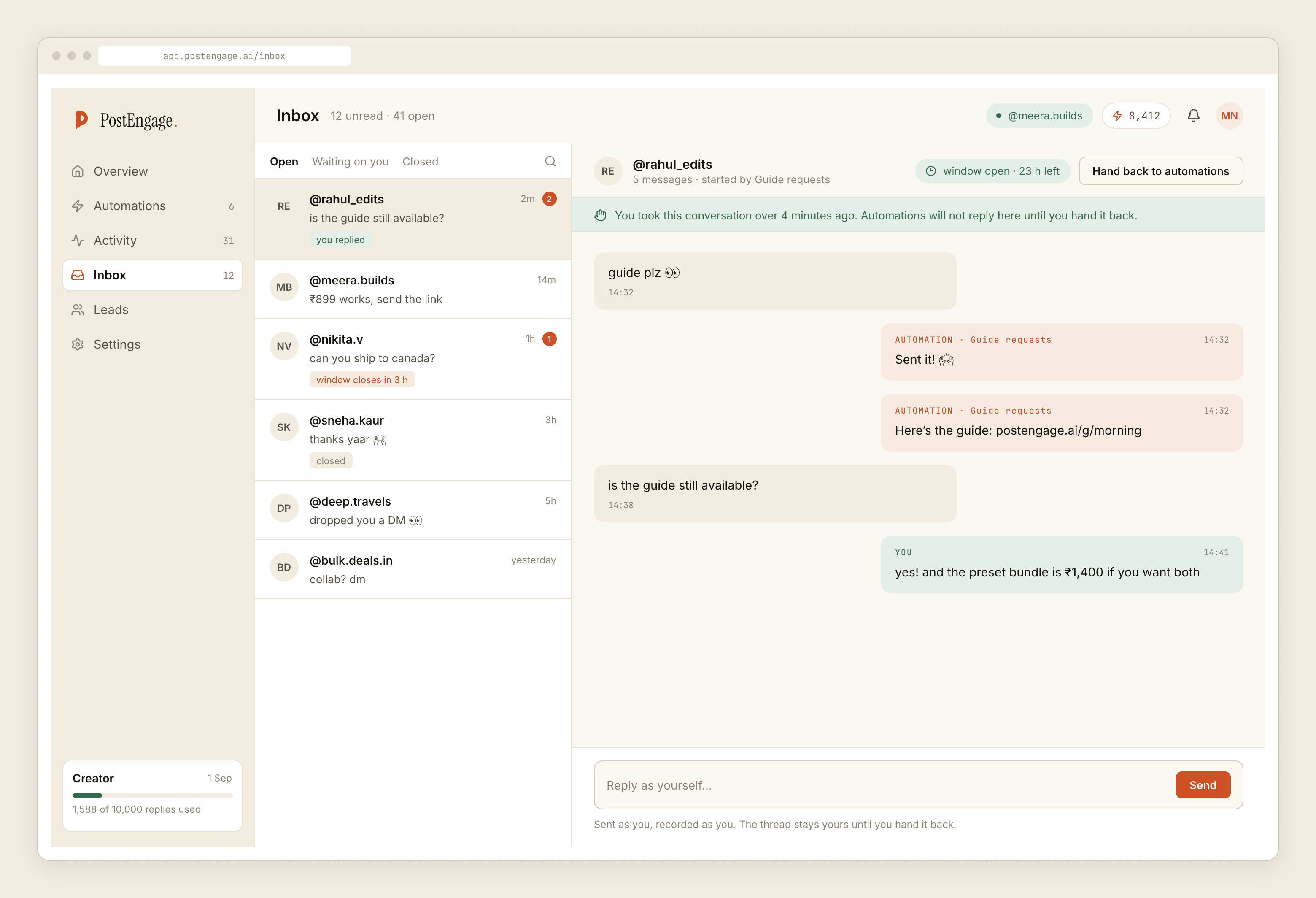
A customer DMs asking about a product. You answer — price, sizing, delivery. They read it. They do not reply. Somewhere in the next few hours they either buy or forget, and you have until twenty-four hours after their message to influence which.
- End the first reply with a question. Not a link. "Kaunsa size chahiye, M ya L?" A question gets a reply, and a reply restarts your clock. A link gets a tap and silence, which closes it.
- Set the follow-up several hours out, not several minutes. Ten minutes after your answer reads as pressure. Four to six hours later reads as someone remembering.
- Make the follow-up carry something new. A fit note, a photo on a real person, the returns policy. "Just following up!" is a message about you.
- Send exactly one. You have one window and the cooldown check exists to stop you spending it three times.
- Respect quiet hours. A recovery message at 2am converts nobody and marks you as a machine.
Recovery two: the comment nobody chased
A comment on a product post gives you seven days. That is a generous window and most stores burn six of them.
The obvious use is the immediate one — comment a keyword, get a DM. The recovery use is the second pass, and it works because a comment is a public statement of interest that outlives the post's traffic spike.
Practically: leave your product-post triggers running rather than switching them off when a post stops trending. A Reel from last Tuesday still catches the person who found it on Sunday, and their reply lands in the same inbox. The window check will refuse anything older than seven days on its own, so there is nothing for you to police.
The wording matters here more than in the first-day rush. Somebody arriving late is often comparing, not browsing, and a reply that answers the comparison — what the fabric is, why the price is what it is — does more than a discount code.
Recovery three: the handoff, which is where the money usually is
Everyone who triggered an automation is in Leads with the keyword that caught them. That is a segment: people who asked about one specific product by name.
Export it. Put it in your email tool, your ad audience, your restock list. This is manual — a CSV out and a CSV in, no pipe between the two — and it is still the highest-value ten minutes in the week, because these people identified their own interest in writing.
Instagram is good at
Email and retargeting are good at
Trying to make DMs do the right-hand column is exactly the mistake that produced the abandoned-cart pitch in the first place.
Instagram wins the first hour. Email wins the following week. A store that runs both stops trying to make either do the other one's job.
What to build, in order, this week
- The question at the end of your product replies. Costs nothing, changes the most, and it is a wording change rather than a build.
- One follow-up automation on stalled product threads, several hours out, one message, quiet hours on.
- Leave your product triggers live past the trending window instead of switching them off.
- A weekly CSV export into whatever already sends your email.
Steps one and three are free — templated replies are unlimited and cost no credits, and step three is you not doing something. Step two spends a credit only if you let the model write the follow-up rather than templating it, and for a first version a template is better anyway, because you want to read the same words a hundred times before you let them vary.
What to measure
Not recovered revenue, which you cannot attribute honestly from an Instagram thread. Watch instead how many first replies got an answer back, because a reply is a restarted window and a restarted window is the only asset this whole design produces.
If that number is low, the problem is the first message rather than the follow-up, and the tactics that survive the window are worth an afternoon before you touch anything else. If comment volume is the constraint instead, the funnel leaks in six identifiable places and most of them are the ask in the post.