Comparison · 4 min read
Evaluating a Gupshup Alternative: Look at the Exit First
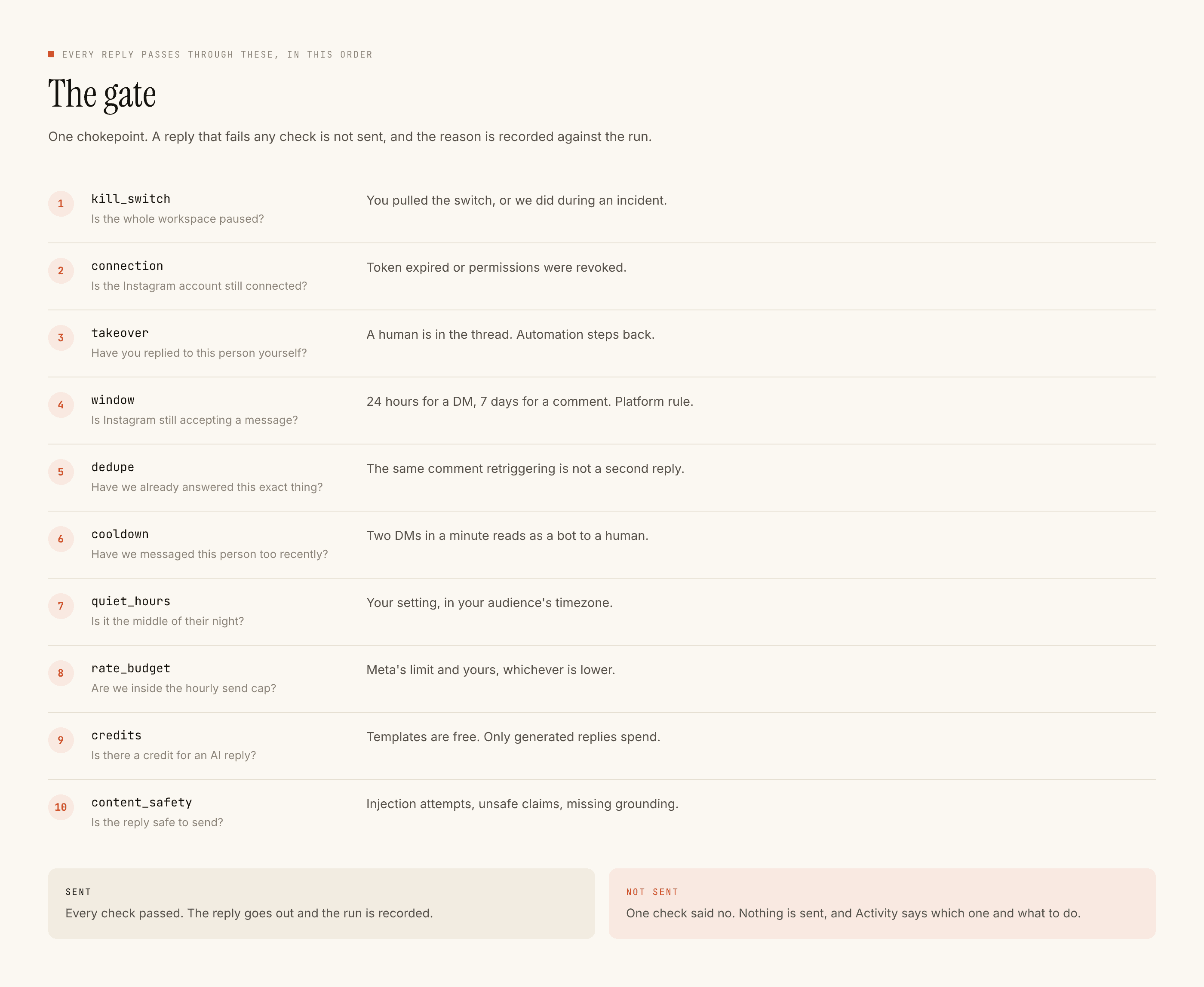
PostEngage does not ship WhatsApp. Gupshup does. There is no comparison to make on that channel and we are not going to manufacture one.
Here is the question we would want asked of any vendor in this category, including of us, and it is reliably the last thing anyone checks: what does leaving look like?
The exit is a feature, and it is built or it is not
Everything else in an evaluation is about the good case. The exit is the only question about the bad one, which is why it gets postponed — nobody buying a tool on Tuesday wants to think about leaving it.
But an easy exit is engineering work. Someone has to build the export, keep it current as the schema changes, and decide it should not require a support ticket. That work only happens where a buyer insisted, and the only moment you have leverage to insist is before you sign.
Ask about the exit while you are still a prospect. Afterwards you are asking a favour.
What "get my data out" actually has to mean
The phrase is vague enough that almost any vendor can say yes to it. Break it into parts that have verifiable answers.
- Which data? Contacts, conversation history, consent records, template wording, automation configuration, cost detail. These are six separate things and a tool can be excellent at one and have no answer for another.
- In what format? Something a spreadsheet or a script can read. A PDF of conversations is technically an export and practically a filing cabinet.
- Triggered by whom? If you can run it yourself from a settings screen, it exists. If it requires an email to support, it is a service, and services get slower exactly when relationships get worse.
- How current? An export that lags by a week is fine for archiving and useless during a migration.
- And the deletion side. Can you delete what you hold, properly, on request? That is the same mechanism viewed from the other end, and it is the one your compliance obligations care about.
The consent record is the part people forget
Contacts export easily. Phone numbers are simple data.
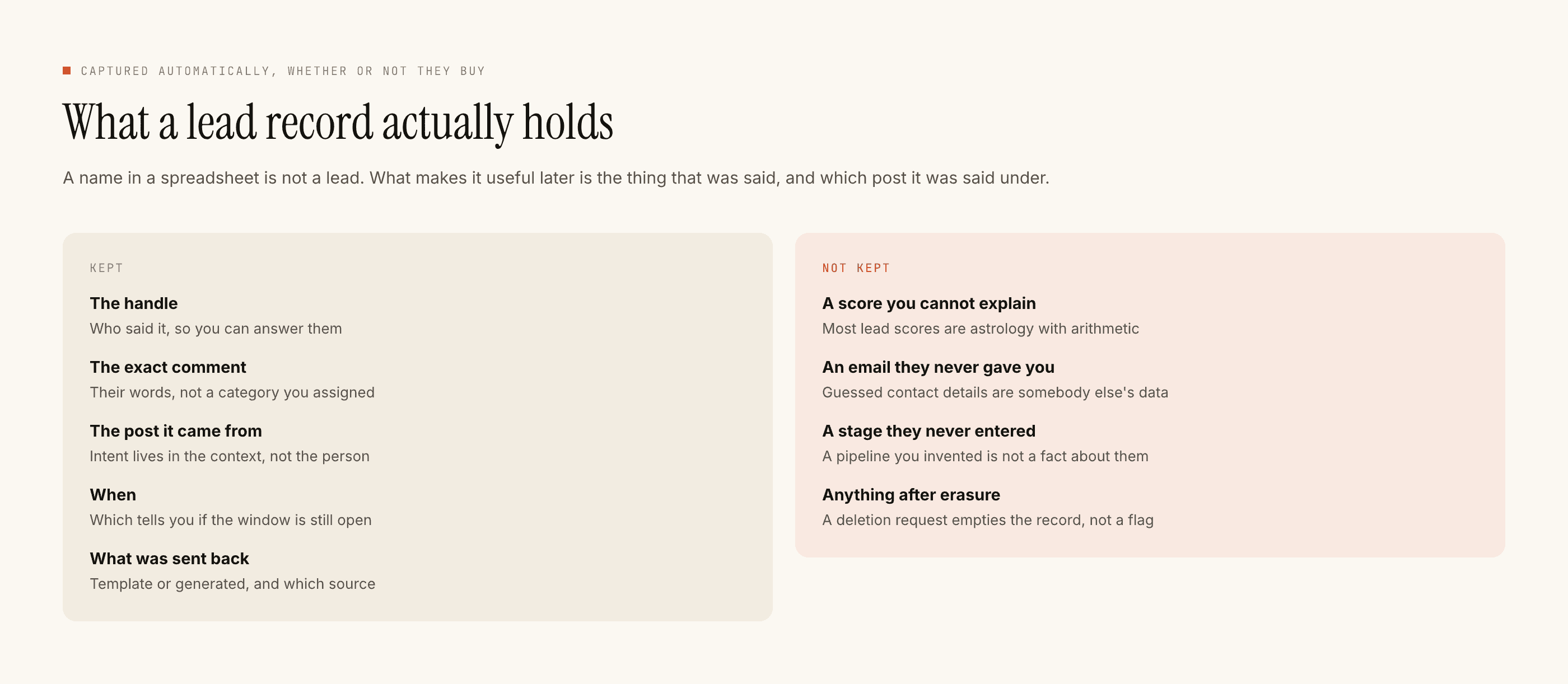
What is harder, and much more valuable, is the record of who agreed to be messaged, in what words, on what date, through what mechanism. That record is what makes your list legitimate. Without it you have a list of numbers, which is a different and much weaker asset — and rebuilding consent from scratch after a migration is not a thing you can do quietly.
Ask specifically whether consent records export. It is a narrow question and the answer is very revealing.
Lock-in is not always deliberate
It is easy to read a hard exit as a trap. Usually it is not.
Data models get complicated, conversation history is large and awkward, consent is often stored as a side-effect of some other feature rather than as a first-class record. A team with limited time builds the things buyers ask about, and almost nobody asks about this.
Which is the practical takeaway: asking changes the answer. Vendors build what customers make a condition of purchase, and this is a cheap thing to make a condition of purchase.
Our own answer, without dressing it up
PostEngage runs on Instagram: comments and DMs, official Graph API, a seven-day comment window and a twenty-four-hour messaging window that only the other person's message restarts.
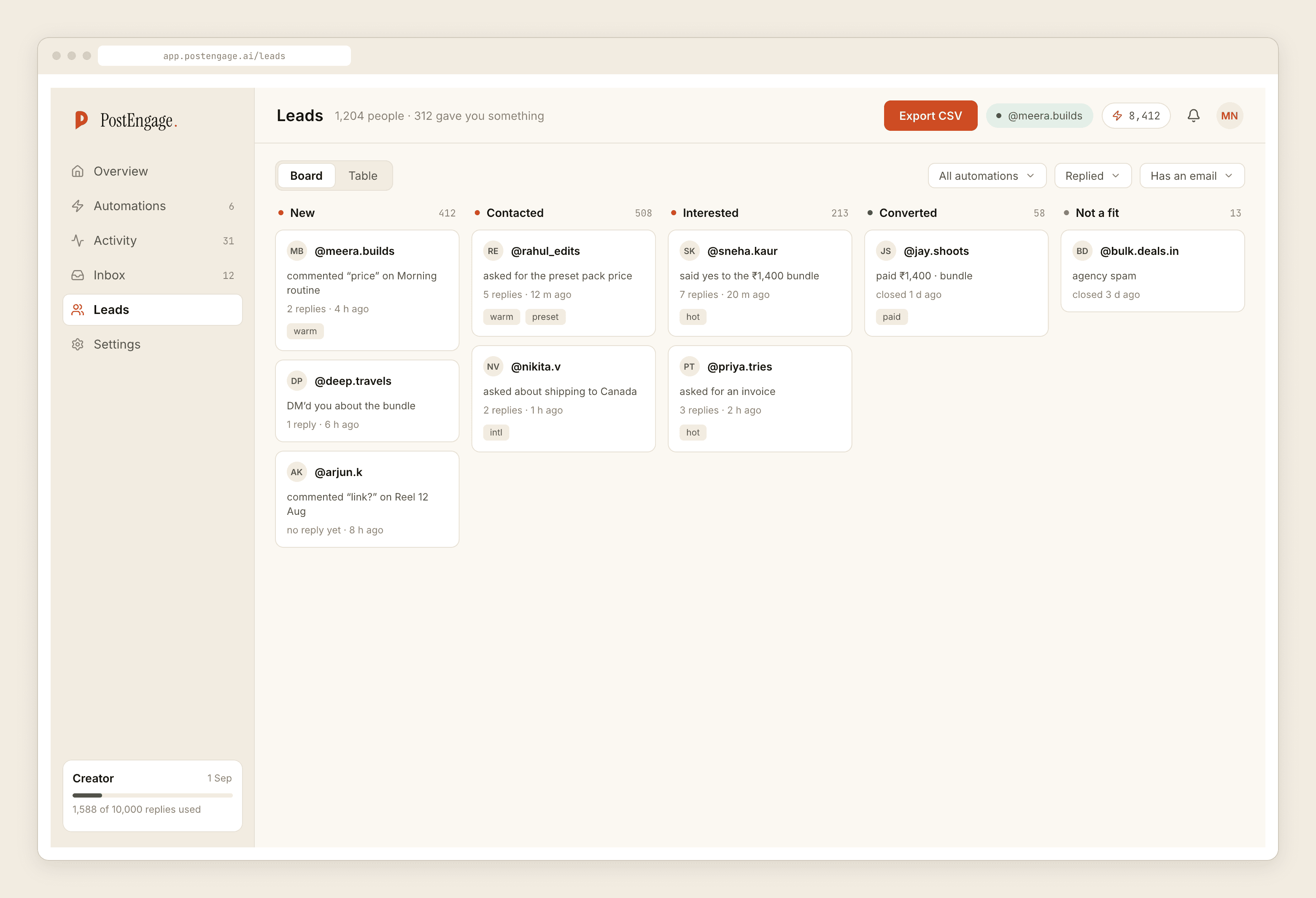
Leads export as CSV, from the product, without asking us. That is also the entire integration story — there are no one-click connectors into stores, CRMs or ad platforms, which is a real limitation rather than a philosophy. What we hold on a lead is visible on the record itself, and what we do not hold is listed there too.
Templated replies are free and unlimited, a credit is spent only when the model writes something new, the free tier is 100 credits with no card, and packs start at ₹499.
If you are working through a WhatsApp evaluation properly, what is metered is the other question to lead with, what the tool refuses to send is the one that matters on a bad day, and migration cost is worth pricing before you commit.