Comparison · 4 min read
Looking for a Wati Alternative? Start With the Meter
If you are here looking for a drop-in replacement, the honest answer arrives first: PostEngage does not ship WhatsApp. We are not an alternative to Wati or to anything else on that channel, and a page that let you believe otherwise for four paragraphs would have wasted your afternoon.
What this page is instead: the single question that predicts more about a WhatsApp bill than any feature comparison. Every other page in this series points back here for it.
The meter, not the price
Two tools can quote numbers that look close and produce bills that are not. The reason is almost never the rate. It is the unit being counted.
Metered by who you hold
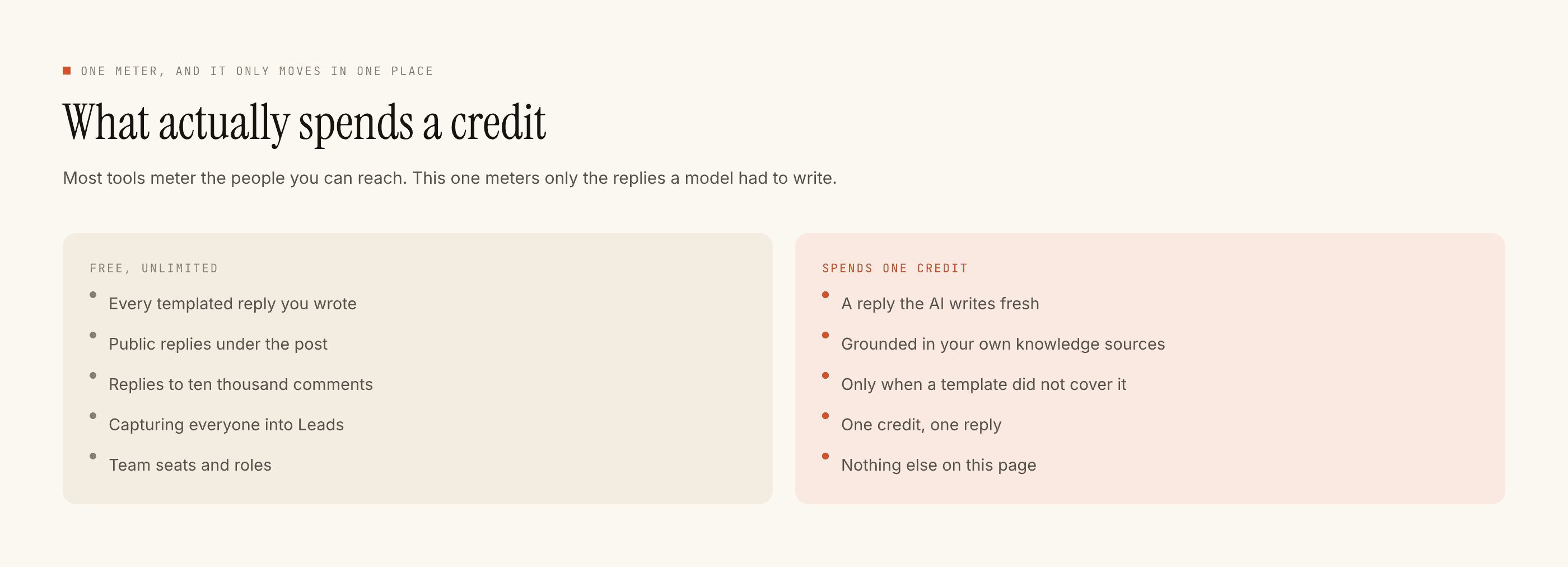
Metered by work performed
Neither shape is dishonest. They suit different businesses. A held-contact meter is predictable and rewards a stable audience; a work meter is volatile and rewards an inbox where the same four questions repeat.
The mistake is comparing a per-unit rate across the two, which is arithmetic on different things.
WhatsApp has two meters, and vendors describe one
This is the part people find out on the second invoice. Meta charges for certain categories of message on the Business API itself. That charge is upstream of whatever your vendor adds, it depends on category and destination, and Meta revises how it works.
So your monthly cost is Meta's meter plus the vendor's meter, and a vendor pricing page is usually a complete description of only the second one.
The question to actually ask a vendor
Not "what is your rate". Ask this instead, and ask it with your own numbers:
Here is a month. This many conversations, roughly this mix of kinds, this many contacts held at the end of it. What is the total, including what Meta charges, and what would it be if the volume doubled?
A vendor who can answer that in a few minutes has thought about your case. A vendor who redirects to a pricing table has answered a different question.
Ask for the second number too — the doubled month. That is where the shape of the meter becomes visible, and it is the month you are hoping for.
- Count your own inbox first. Two weeks of real messages, sorted into repeated questions and genuinely unique ones. That ratio decides which meter is cheaper for you and it is the only input the vendor cannot supply.
- Separate the two bills on paper. Write Meta's charge and the vendor's charge in different columns from the start. Merging them is how a cheap-looking tool becomes an expensive month.
- Find the cliff. Most plans have a threshold where the next contact or the next conversation costs a step change rather than an increment. Ask where it is.
- Ask what happens at the ceiling. When you exceed the plan, does it stop sending, auto-upgrade, or bill overage? All three are defensible; only one of them is what you assumed.
Cheapest per unit and cheapest per month are answers to different questions, and vendors are asked the first one.
Where cheap turns expensive
Two patterns, both common.
A work meter gets expensive when your inbox is genuinely varied — every message is a new situation, nothing repeats, so nothing is ever answered from something you already wrote. A held-contact meter gets expensive when you have a good month in public and pick up a large number of people who each asked one question and never came back.
You can tell which risk is yours from your own inbox in an afternoon. Nobody else can tell you.
What we meter, for whatever it is worth
On Instagram — the only channel PostEngage runs — templated replies are free and unlimited, and a credit is spent only when the model writes something new. One credit, one reply. The free tier is 100 credits with no card and packs start at ₹499.
That shape is cheap for a repetitive inbox and expensive for a varied one, and we would rather you worked that out before paying us than after. If your revenue arrives on WhatsApp, none of this helps today and the right move is to buy a WhatsApp tool with your eyes open on both meters.
The rest of the framework lives elsewhere: what a tool refuses to send, whether you can get your data out, and what the cost model looks like in India specifically.