Lead generation · 5 min read
Qualifying an Instagram Lead With the One Question You Get

Nothing here computes a score for you. There is no intent model, no hot-or-cold label, no number in a column that says this person is worth calling. If you were expecting the inbox to sort itself, it does not.
Qualification here is something you do in writing, once, inside a message you were sending anyway. That sounds like less than a scoring engine and in practice it is more, because a question that a human answers produces a fact, and a score produces an opinion about a fact you never collected.
Qualification is ruling out, not ranking
The useful definition is the boring one. Qualifying is finding out, as early and as cheaply as possible, whether this conversation can end in a sale.
Most of the value is negative. The person is in a city you do not ship to. The budget is a third of the price. They wanted the thing you stopped making. Learning any of those in message one saves the twenty minutes you would otherwise spend being charming at somebody who was never going to buy.
That is a very different job from sorting your best leads into an order. Scoring as a system has its own post, including the honest part about the inbox size below which it costs more attention than it saves.
You get one guaranteed turn, so the question is the instrument
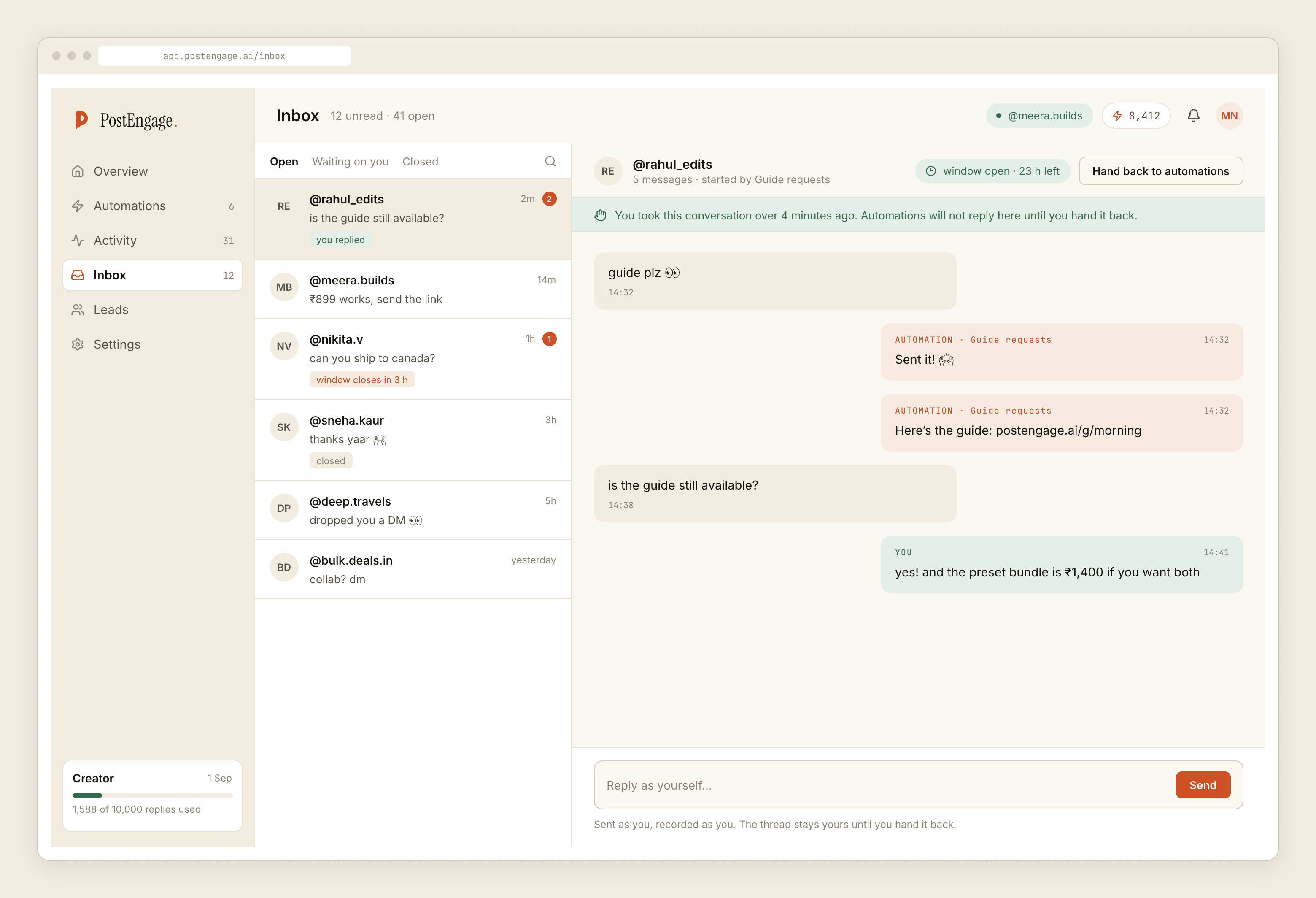
The mechanics decide the shape here. A comment gives you seven days to respond. A DM thread gives you twenty-four hours from their last message, and their reply is the only thing that buys you another turn.
So the qualifying question is not an extra thing you add to the conversation. It is the same question that keeps the conversation alive. One sentence doing two jobs is why this works at all.
What makes a question a qualifier
Three properties, and a question missing any of them is decoration.
- Answerable in one word or one tap. "Delhi", "M", "next month", "UPI". If answering takes thought, most people do not, and a question nobody answers has cost you your turn and your window.
- It discriminates. The answers have to lead somewhere different. If both possible replies get the same next message from you, you did not qualify anything, you made small talk.
- It is a normal thing for a seller to ask. "Which city?" is service. "What is your monthly income?" is an interrogation, and people close the app.
The good ones are almost always a choice between two named options, a place, or a time. "Kaunsa size chahiye, M ya L?" "Shipping Mumbai ke liye chahiye ya bahar?" "Is it for this month or later in the year?"
The bad ones are the ones every account sends. "Let us know your requirements." "How can I help you today?" "Are you interested?" Each of those asks the customer to do the work of structuring the conversation, which is your job, and each of them is answered by silence more often than by anything else.
A question that both parties can answer with nothing is not a question, it is a pleasantry with a question mark.
Half the qualifying is already done before they type
The trigger carries information you did not have to ask for, and most accounts throw it away.
Which post they commented under is a qualifier. Somebody who typed the word under a bulk-order reel is a different lead from somebody who typed it under a single-piece sale post, and you knew that before you wrote a word. Build separate automations on separate posts and the first cut happens for free.
The words they chose are a second cut. wholesale, bulk, dealership, for my shop mean one conversation. gift, for my sister, anniversary mean another. Any-of keyword lists let you route on that without any model reading anything.
And the disqualifier is a list too. Negative keywords are the cheapest qualification in the product: words that mean this person should not receive an automated reply at all. not interested, just asking, only checking price, refund. Free, instant, and you wrote them yourself, so you can explain every one.
What to do with the answer
The answer arrives as a message, which means it can trigger an automation of its own. Build one keyed on the answers you invited — the cities you ship to, the sizes you stock, bulk and single — and the next reply is already waiting.
For the part that is not automatic, the lead record holds a stage, tags, a replied flag, interaction counts and notes. Tag on the answer, not on your impression. mumbai, bulk, budget-under, next-month. Tags you can define in one word stay consistent six months later; a tag like promising does not survive its author's mood.
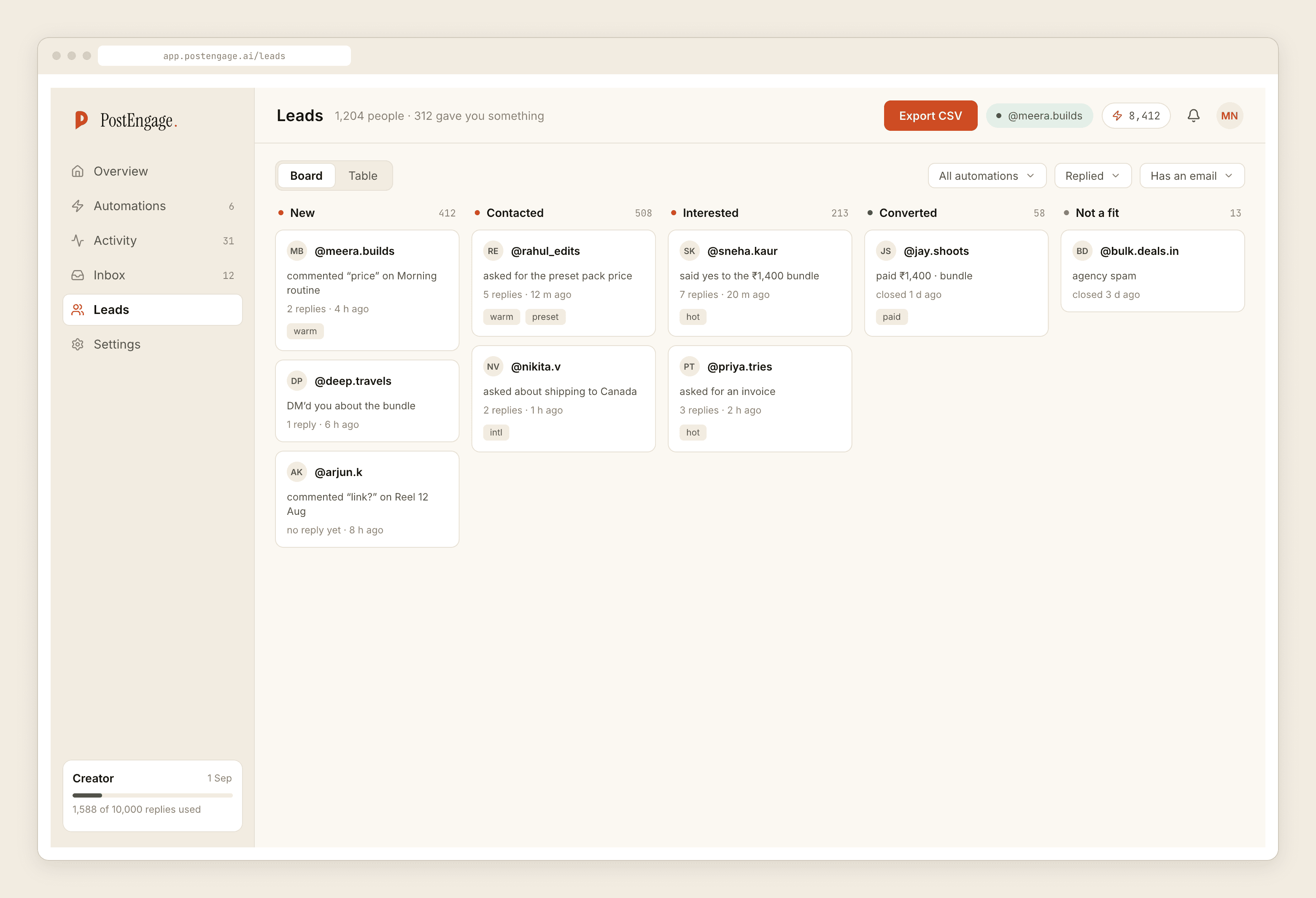
Leads export as CSV. There is no CRM sync and no one-click integration; the file is the handoff. If a salesperson is going to work these, they work them out of the export.
The part that stays a judgement call
A qualified lead is not a hot one. Somebody can be in your city, in your budget, in your size, and simply not in a hurry — and on this platform, urgency expires fast, because the window closes and the thread goes cold. What actually makes a lead hot is a separate question with a separate answer.
And nothing above tells you when to stop qualifying and start selling. Some enquiries deserve one question and an answer. Some deserve a phone call, immediately, before the window runs out. That call is yours, it is invisible in the transcript, and no product on this platform is going to make it for you.