Playbooks · 5 min read
The Only Kind of Persuasion That Survives a Direct Message
Most of the influence material people bring to Instagram was developed for shop floors, sales calls and landing pages. Rooms where the seller sets the frame, the buyer is a stranger, and the interaction ends either way.
A direct message is none of those. It arrives on a phone, in the same list as the person's mother and their landlord, from an account they chose to follow. The frame is theirs. Tactics built for a webinar registration page do not translate into that space; they land as spam, and the reader has been trained by years of it to recognise them in one line.
Why pressure specifically backfires here
Three reasons, all mechanical rather than moral.
The reader controls the channel. They can mute you, block you, or report the message. A report is not a shrug — repeated ones affect whether your messages get delivered at all. In email a pressure tactic costs an unsubscribe. Here it can cost the channel.
Your claims are checkable in two taps. "Only 3 slots left" sits next to your grid, which the reader can scroll. If the same line appeared in March, they will see it. Scarcity is the easiest claim in marketing to falsify and the DM is the worst place to make it, because the evidence is one swipe away.
One-to-one makes mass-market language obvious. A line written for a crowd, delivered into a private thread, tells the reader they were mistaken for a crowd. The specific insult of a template is not that it is automated. It is that it was not about them.
What actually moves a conversation
Four things, none of which are tricks, all of which are harder than a scarcity line and more durable.
- Speed. Answering while the person is still holding the phone is the strongest signal available to a small business, and it is the one thing automation genuinely provides. It is not psychology. It is being there, which reads as competence and as care at the same time.
- Specificity. A number, a date, a name, a real detail. Vagueness reads as evasion, and evasion reads as expensive or unreliable. "2,499 se start" moves a conversation. "DM for details" ends one.
- Naming the next step. People stall far more often from not knowing what happens next than from insufficient desire. One sentence — what you need from them, what you will do, roughly when — removes more friction than any amount of encouragement.
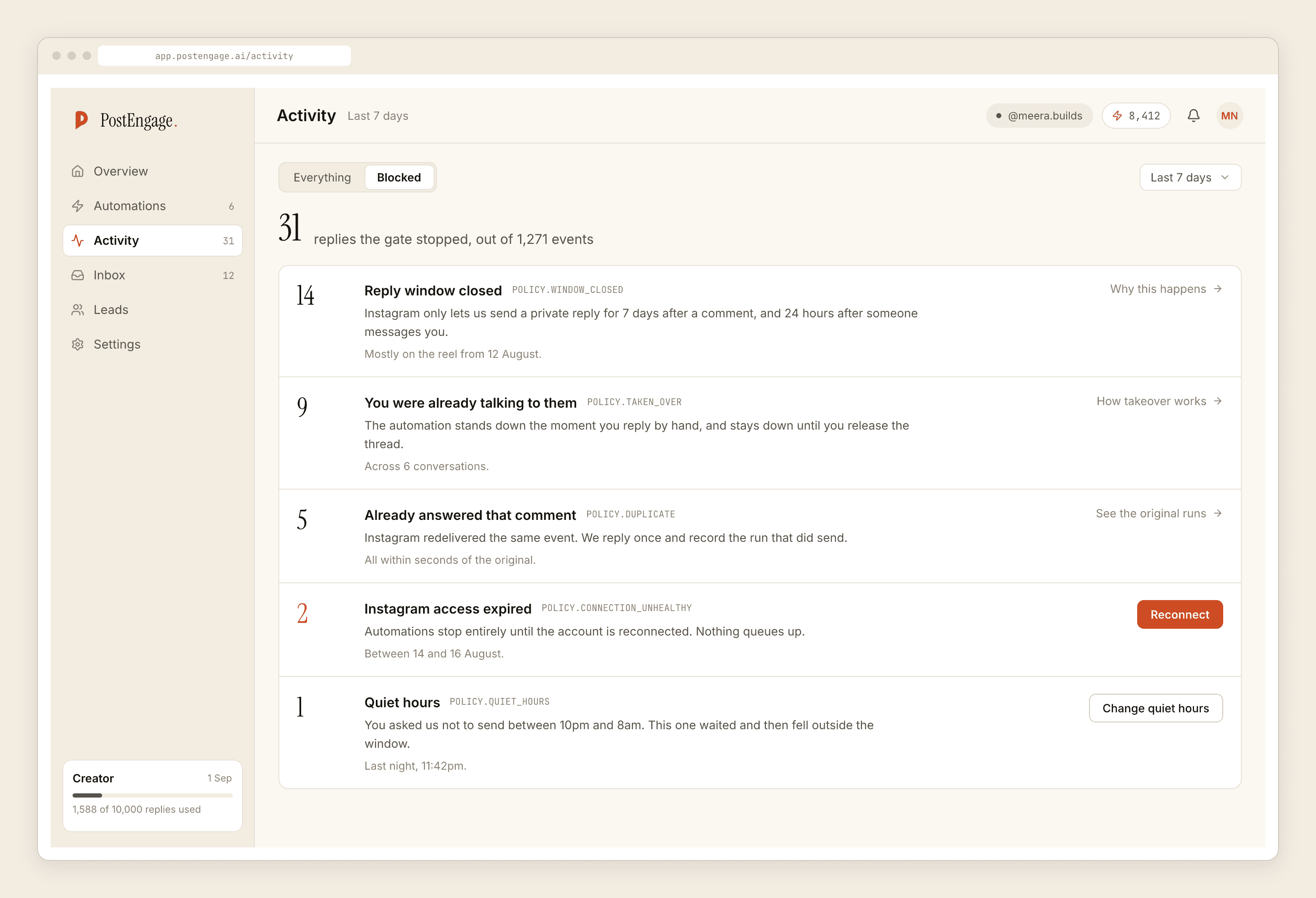
- Being answerable. A real person visibly available at the other end. The moment you reply by hand the automation stands down for that conversation, and the shift from template to human is felt immediately by the reader even when neither message is remarkable.
Speed is the only advantage on this list that a machine can give you. The other three you have to write yourself.
Reciprocity, done honestly
The genuine version of reciprocity is giving somebody the actual answer before they have committed to anything. The counterfeit version is a teaser that withholds the answer to force a reply.
The counterfeit fails in this channel for a boring reason: you get one message inside a window the other person controls. A teaser spends your one turn on nothing. The person who receives the real answer is more likely to reply, which restarts the window and gives you a second turn you would otherwise not have had.
So the manipulative move is also the one that gives you fewer conversations. That happens more often than people expect, and it is the most persuasive argument for honesty available.
Social proof without inventing anything
Proof works. Fabricated proof works until somebody checks, and in a DM the check is easy.
Say what you have actually done, specifically. "We did four weddings in Jaipur last season" is checkable, concrete and modest. "Trusted by thousands" is a category that means nothing, and numbers you cannot source are a liability you are typing into a machine that will repeat them.
The best proof available to a small account is usually the referral arriving in the message itself. Somebody who opens with "my cousin got hers done here" has brought their own proof; the correct response is to answer them as a person and not as traffic.
The register problem
A template written formally is the most common self-inflicted wound in this whole channel. Writing a template feels like writing a document, so people produce sentences they would never say aloud, and the reader's frame breaks the moment it arrives.
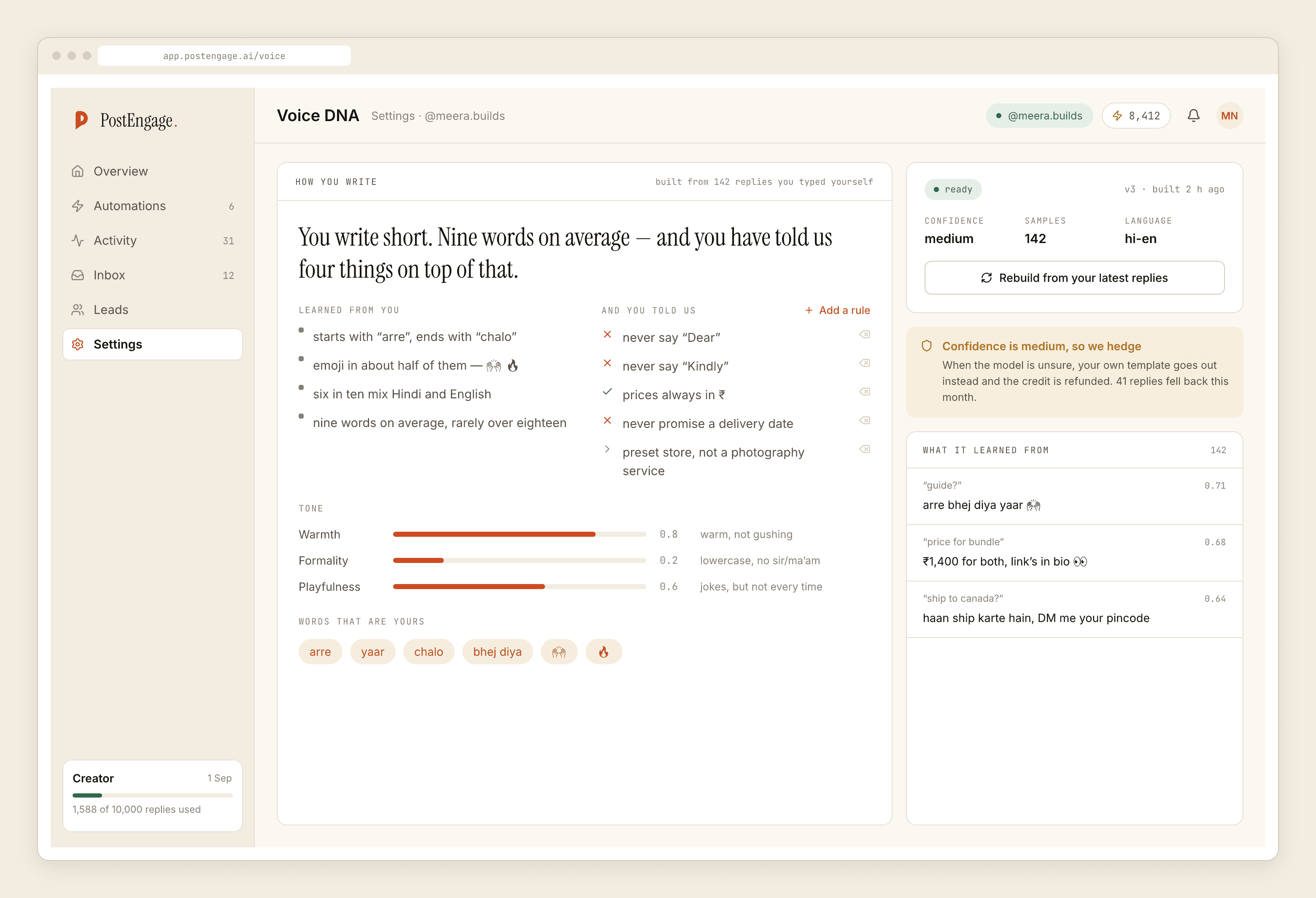
If you would normally say "haan available hai, 2-3 din mein bhej denge", write that. Voice DNA here is built from replies the account owner actually wrote, which means the honest source material is your own messages rather than your marketing copy.
What the automation itself communicates
Two signals, and both are read unconsciously.
An instant reply reads as an attentive business. A reply at 3:40am reads as a machine no matter how well written, because people know when other people are awake. Quiet hours in your audience's timezone are worth more than any word choice inside the message.
Repetition is the other tell. The same follower receiving the same greeting under every post learns that nobody is there. First-time senders only, under Advanced, fixes it in one click.
A short standard
Would you say this sentence, in this tone, to this person, standing in front of them? If yes, send it. If it only works because they cannot see your face, it does not belong in a channel this personal.
The wider version of that question — what disclosure you owe, what a comment does and does not consent to, and which uses are wrong even where the platform permits them — is set out in the ethics guide. And the place this comes up first in practice is almost always the price question, where the temptation to add pressure is strongest and answering plainly works better.