Playbooks · 5 min read
Law Firms on WhatsApp: The Facts Arrive Before You Do

Somebody finds a firm's number, opens a chat at eleven at night, and types four hundred words about a property dispute. Names, dates, what the other side did, what their brother-in-law said, and a photograph of an agreement.
Nobody has been engaged. No check has been run. No terms have been sent. And the firm now holds a detailed account of a matter it may already be acting against.
That is the problem this post is about. Everything else — reminders, directions, document checklists — is ordinary admin that any business could automate. This part is not ordinary.
The conflict check happens after the message, always
In every other vertical the risk of an automated inbox is that it says something wrong. In a law firm the risk is what it receives.
An enquiry arrives instantly and unfiltered. The firm cannot control what a stranger discloses, cannot know in advance whether the matter touches an existing client, and cannot un-read it. On a messaging channel this happens faster and more casually than it ever did by letter or even by email, because people type to a chat the way they talk.
An automation makes this sharper in one specific way: an automated reply is a response from the firm. A warm, helpful, conversational reply to a detailed fact pattern is capable of reading, to the sender and later to a third party, as though somebody at the firm engaged with the substance.
The first automated message a firm sends is not a greeting. It is a boundary.
Which means the first reply should try to stop the flow, not encourage it
The intake automations most businesses build are designed to gather more. A law firm's should be designed to gather less.
- Say what the message is not. That contacting the firm does not create a client relationship, and that nothing sent before terms are agreed should be treated as confidential or as instructions. Word it with your own compliance people; the point is that it goes first, before anything friendly.
- Ask for the minimum. A name, a way to be contacted, and a one-line category — property, employment, family, criminal, commercial. Not the story.
- Explicitly ask them not to send documents yet. Most people send the agreement in message two. Saying "please do not send documents until we confirm we can assist" prevents a file you did not want.
- Route to a human quickly, and log the arrival time. If a matter is time-sensitive, when it landed may become relevant, and "the bot had it" is not a good answer.
Never give advice, and never imply it
The obvious refusal, with a less obvious edge.
Nobody is going to build a bot that says "you should sue". What firms do build, without meaning to, is a set of helpful templates that answer questions like "how long do I have to file", "is a notarised copy enough", "can they terminate without notice". Those read as general information. Applied to the person asking, on a channel where they asked about their own situation, they read as advice — and limitation periods, requirements and procedure vary by jurisdiction, by forum, and by facts nobody has verified.
We are not lawyers and this post is not legal advice. Neither is an automated reply, and the difference is that the recipient may not know that.
If you publish general information, publish it as a page and link to it, with whatever disclaimer your regulator requires you to carry. A link is a different act from an answer.
Advertising and solicitation rules are not ours to summarise
Professional conduct rules on how lawyers may advertise, solicit work, and communicate with the public differ substantially between jurisdictions, and in some places they are strict about things that other businesses do without thinking — proactive messaging, promotional content, claims of expertise, testimonials.
We are not going to tell you what is permitted where you practise, because we do not know and getting it wrong is a regulatory matter rather than a marketing one. Before any outbound messaging, promotional template or "we noticed you enquired" follow-up exists, that question goes to whoever advises your firm on conduct. It is the first question, not the last.
The client who is already a client
The other half of a firm's inbox is existing matters, and it is a different problem.
Clients message for status. "Any update?" "Next date kab hai?" That is genuinely tiresome and genuinely automatable in only one narrow way: confirming a listed hearing date that is already recorded in the firm's system, sent by somebody who is accountable for it. Anything about strategy, prospects, what a development means, or what to do next is a conversation.
And the practical hygiene: a matter thread on a personal phone belongs to whoever holds the phone. Associates leave. A firm that runs client communication through individual numbers has a records problem and a confidentiality problem, and it surfaces at the worst possible time. Whatever channel you use, the record of it should belong to the firm.
The platform, and what we run
The WhatsApp Business Platform requires a Meta Business account, verification and templates Meta reviews. Categories, rules and pricing are Meta's, vary by country and change; read their documentation, not a summary.
PostEngage answers Instagram comments and DMs on the official Graph API, and that is the whole product. There is no WhatsApp in it. This post is about the channel because firms search for it and the honest description is the useful one.
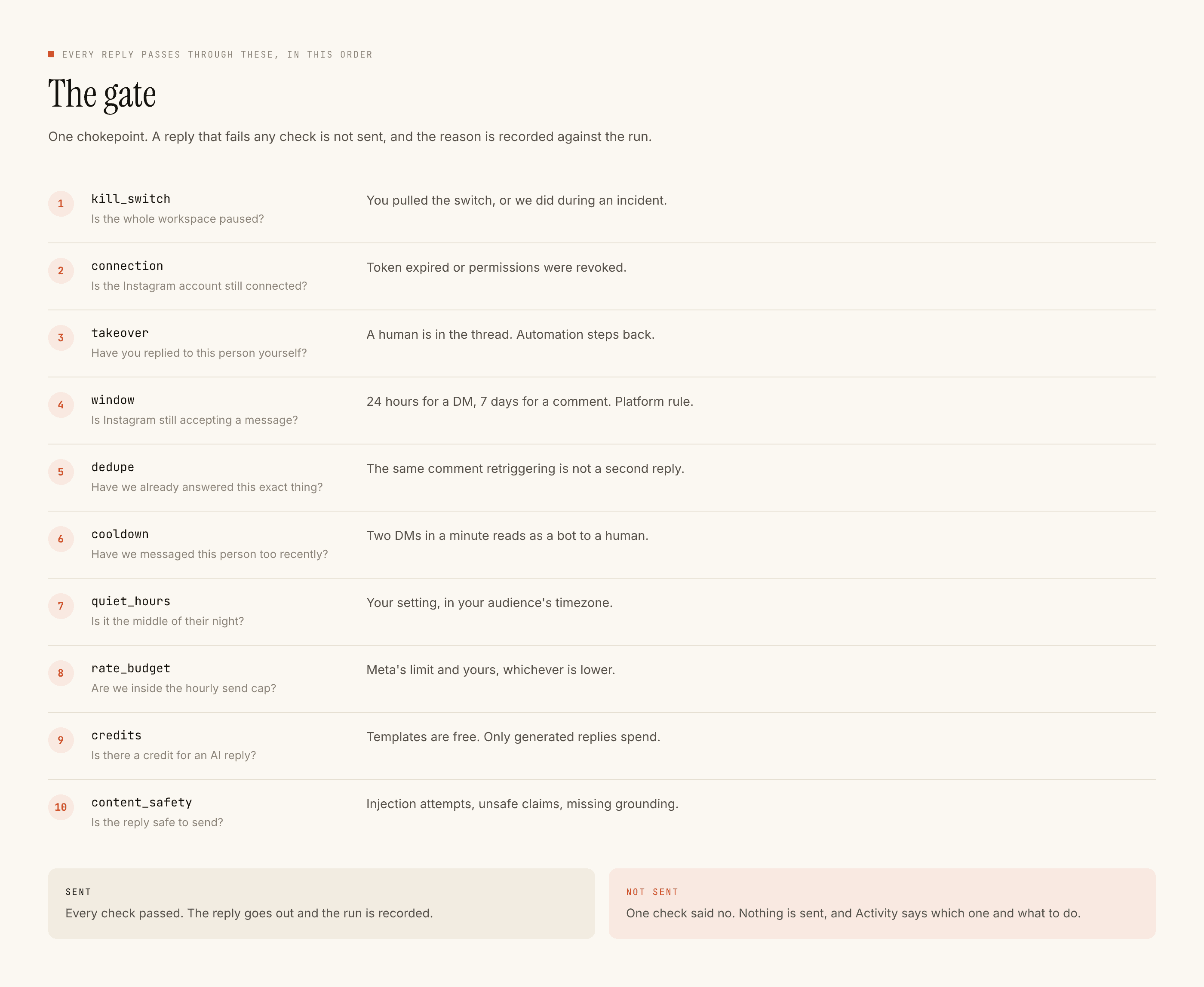
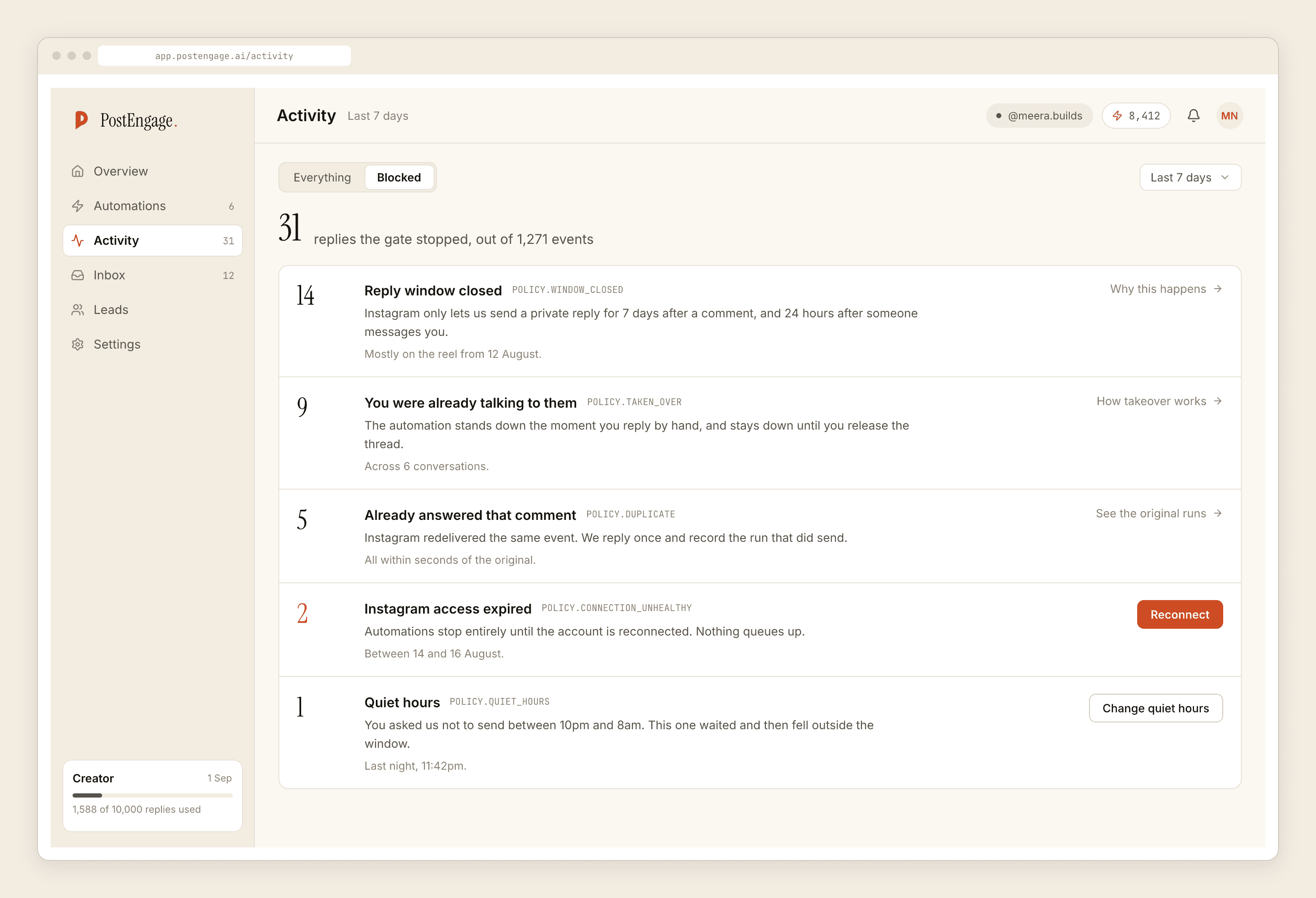
On the channel we do run, the mechanics are fixed: seven days to answer a comment, twenty-four hours in a DM thread, restarted only by their own next message. Templated replies are free and unlimited, a credit is spent only when the AI writes new text, the free tier is 100 credits with no card, and packs start at ₹499.
Related: the Instagram post for lawyers, compliance and privacy, and data protection on this channel.