Playbooks · 5 min read
AI Instagram Tools for Coaches: Where Automation Should Stop

Open any list of AI tools for coaches and roughly nine of the ten make content. Caption writers, hook generators, hashtag pickers, calendars, thumbnail testers. Useful or not, they all sit on the same side of the business: getting attention.
We sit on the other side. Nothing here writes a post, schedules one, picks a hashtag, or predicts how a reel will do. There is no analytics product and no follower-growth feature. What exists replies to people who have already commented on something you made — and for a coach, that half of the day is where the actual decision lies.
So the useful question is not which tool. It is which messages.
Sort by repetition, not by importance
The instinct is to automate the messages that feel low value and answer the important ones yourself. That sorting is wrong, and it is wrong in a way that shows up two weeks later.
A message can be extremely important and completely repetitive. "Do you take online clients?" decides whether somebody becomes a client at all, and the answer is identical every time. A message can also be unimportant and unrepeatable — a rambling question about your podcast setup that nobody will ever ask again.
The test that works is one sentence: would I type the same reply next time? If yes, it is a template, and a template that arrives in forty seconds beats the same words arriving at eleven at night when you finally clear the inbox.
Template it
Answer it yourself
The four things that should never be automated in a coaching inbox
Not because a rule forbids it. Because each one is a judgement, and a language model will produce a fluent version of a judgement it is not in a position to make.
- Whether your programme suits this person. "Will this work for me?" is a question about them, and the honest answer is sometimes no. An automated reply says yes with total confidence, every time, which is how you end up with a refund conversation instead of a client.
- Any number that is not on your public page. Fees, discounts, EMI, a special rate because they are a student. If it can be negotiated, it is a conversation, not a template.
- Anything that arrived as a disclosure. People tell coaches things. The moment a message contains a personal circumstance rather than a query, an automated reply reads as though nobody was there.
- Outcome promises. "Kitne din mein result aayega" has no honest template answer, and a generated one will sound certain because most fitness and business content on the internet sounds certain.
The mechanism for all four is the same and it is unglamorous: negative keywords. Words that mean do not reply, route this to me. Build that list before you build a single automation. If you coach on health or the body specifically, the fitness coaching post goes considerably further into what has to be refused and why.
The value of a coaching automation is not the replies it sends. It is the ones it declines to send while still capturing the person.
Takeover is what makes the split safe
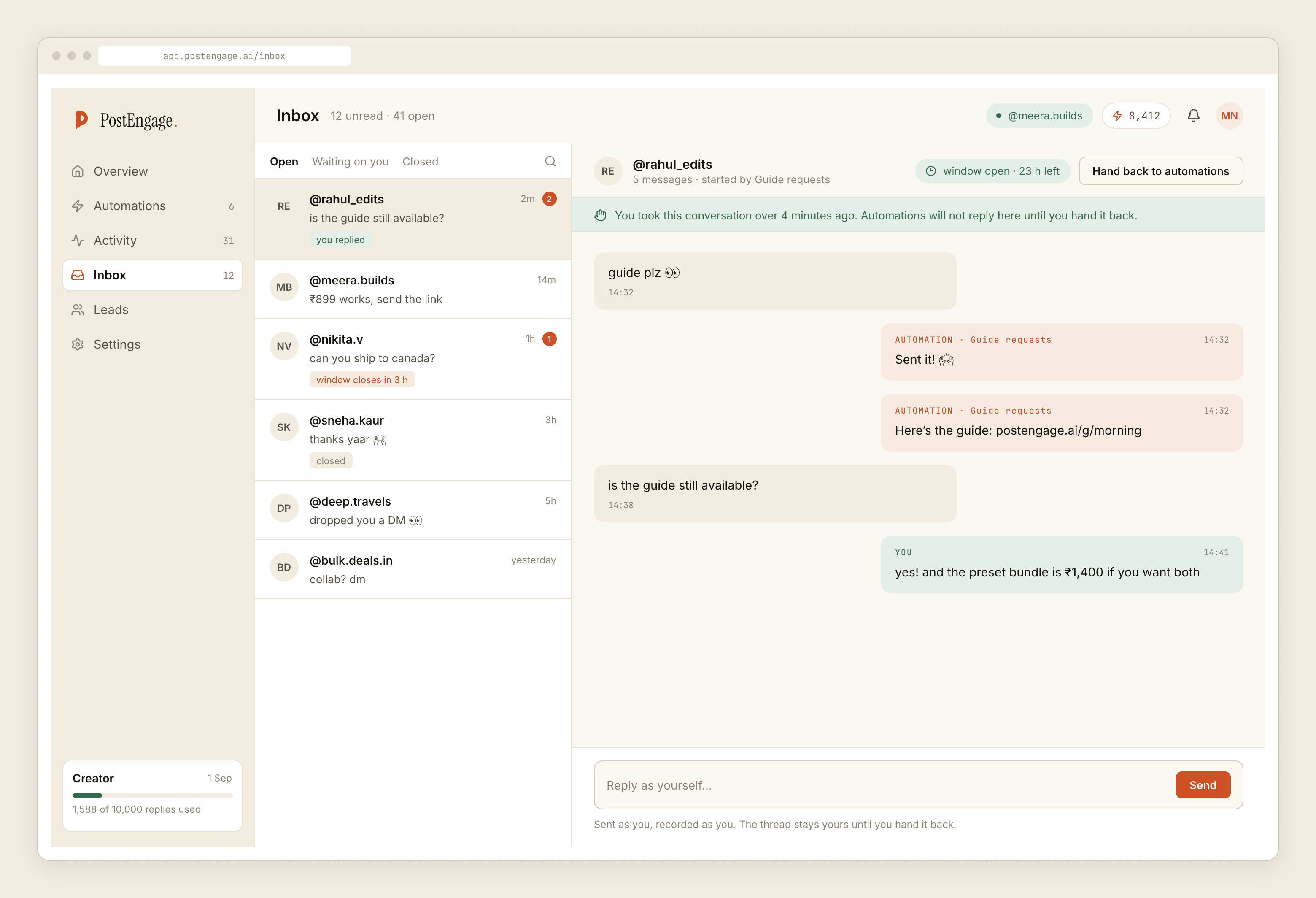
The reason you can automate the first reply without it becoming your voice by default: the moment you reply by hand in a thread, the automation stands down for that conversation. It does not queue behind you, does not add a cheerful follow-up after your considered answer, does not interrupt.
That single behaviour is what lets a coach run automation at all. You are not committing to a bot conversation. You are committing to a fast first line that you can take over from at any point, including mid-sentence from your phone between sessions.
What it costs, which is less than the tool lists imply
Templated replies are free and unlimited. A credit is spent only when the AI writes a new reply, one credit per reply. The free tier is 100 credits with no card, and packs start at ₹499.
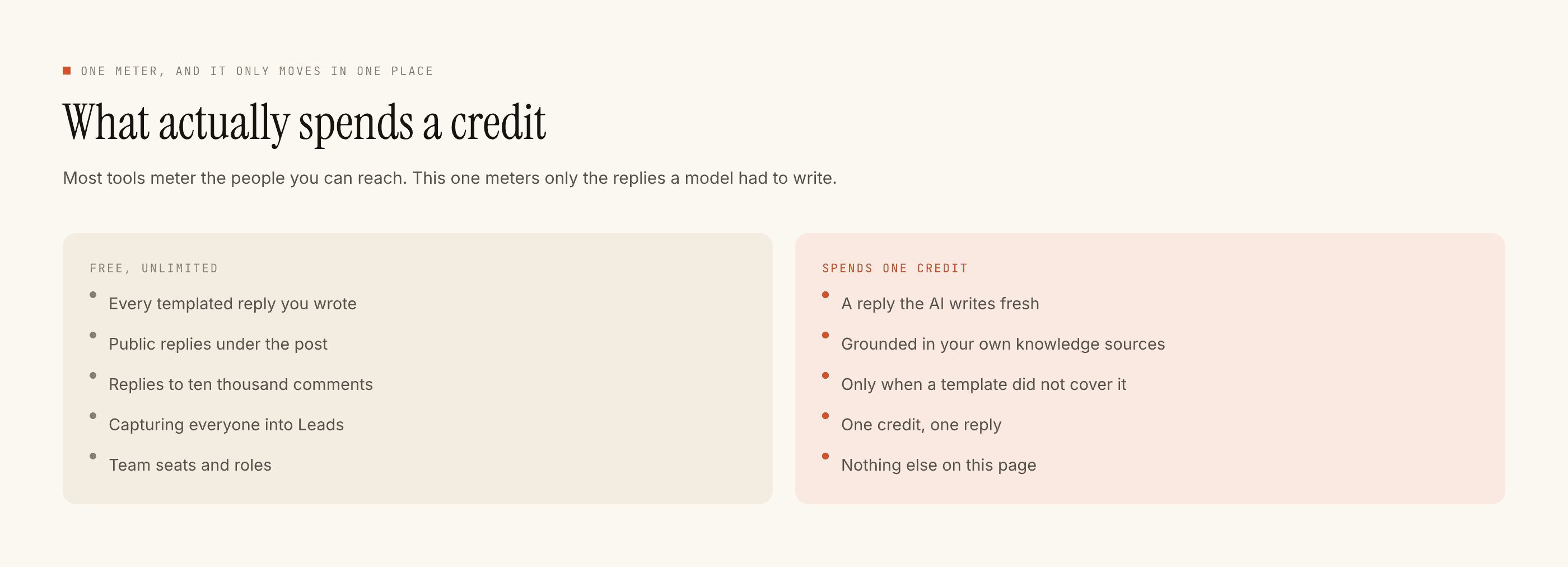
Which means the ledger above is also a cost decision. The more honestly you sort, the less you spend, because the messages that genuinely differ from each other are the ones you were going to write yourself.
What it will not do
It will not message anybody who has not messaged you first. Instagram does not permit that, and no tool on the official API can.
It has no calendar and no booking. It cannot take a payment or send a payment link. There is no CRM sync — captured leads leave as a CSV that you import wherever you actually work. There is no WhatsApp. It does not run multi-step nurture sequences and it cannot broadcast.
The two clocks are the platform's: seven days to reply to a comment, twenty-four hours to reply inside a DM thread, and only their next message restarts the second one.
If you are starting, write the refusal list first, then one automation on your best-performing reel, then read what got blocked after a week. The paced setup guide is the right order for the rest, and Voice DNA is worth reading before you write a single template, because a coach is bought as a person and a template in the wrong register is worse than a slow reply.