Lead generation · 4 min read
Getting Instagram Leads Into Your Email List, Honestly
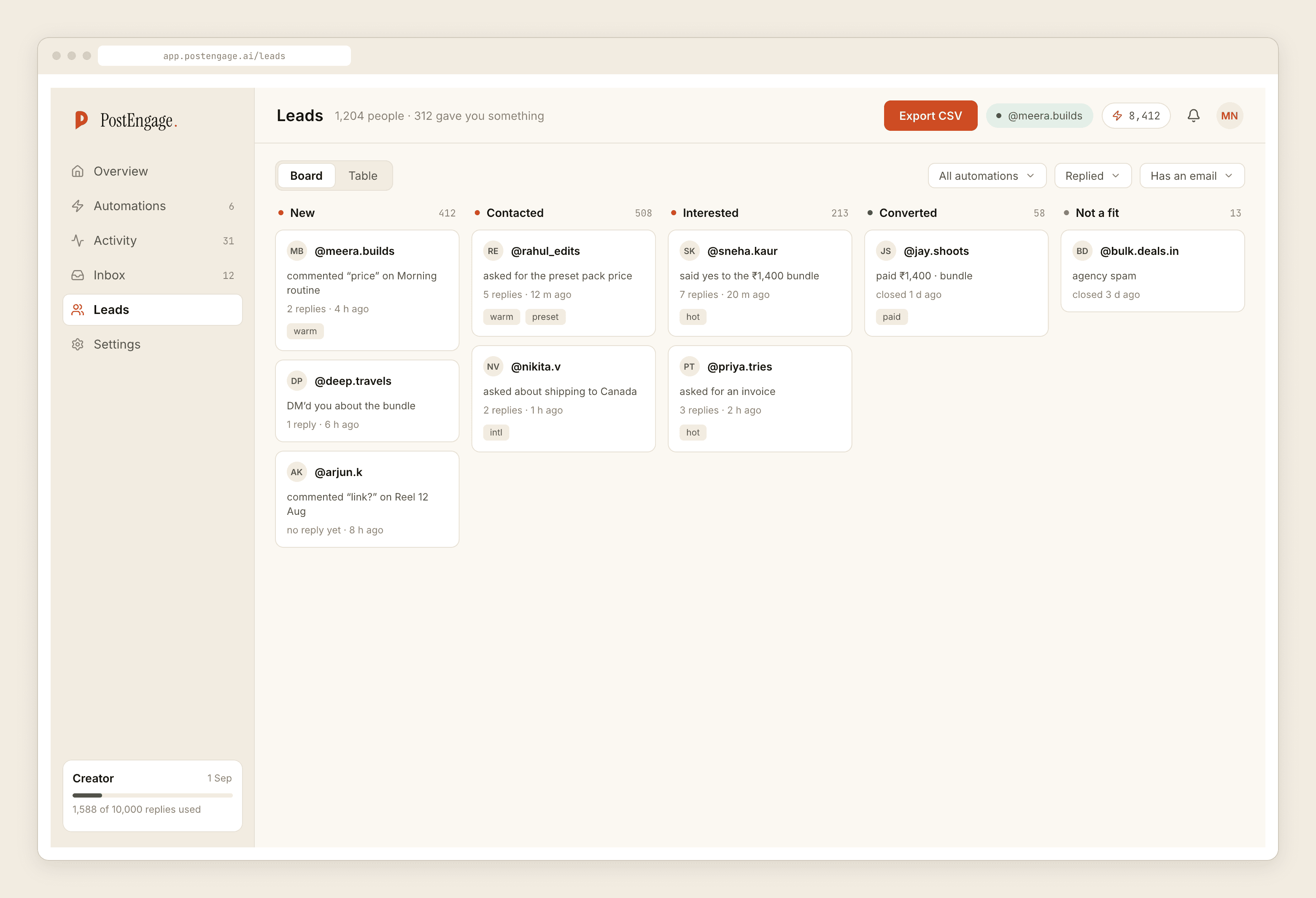
There is no email integration in this product. No Mailchimp connector, no ConvertKit sync, no Klaviyo app, no Zapier, no outbound webhook. Leads export as a CSV file and that is the entire bridge.
That is worth saying in the first paragraph because most posts on this topic open by assuming the connector exists and spend their length on segmentation strategy. The connector is the easy part anyway. The part that matters is whether you are allowed to email the person at all.
Why you want them off Instagram in the first place
Not because email converts better — that depends entirely on your business, and anyone quoting you a number for it is quoting a number they did not measure on your list.
The reason is structural. On Instagram you may reply to somebody for twenty-four hours after their last message, and only their next message restarts that clock. You do not own the ability to contact them; you borrow it, briefly, each time they speak. An email address is a thing you hold.
Every Instagram conversation is a permission that expires. An address is one that does not.
The consent question, which is the actual work
Somebody typing their email into a DM so you can send them a price list has consented to receiving a price list. They have not consented to a weekly newsletter, and in most jurisdictions those are genuinely different things.
The practical version most businesses land on is simple enough: if you want to add someone to a mailing list, ask for that specifically, in the message where you send them the thing they asked for. One sentence, plainly worded, with a real answer required. A silent add is the version that generates complaints.
What actually leaves in the file
The export carries what the person typed and where they typed it. Their handle, the exact comment or message, which post it came from, when, and what was sent back.
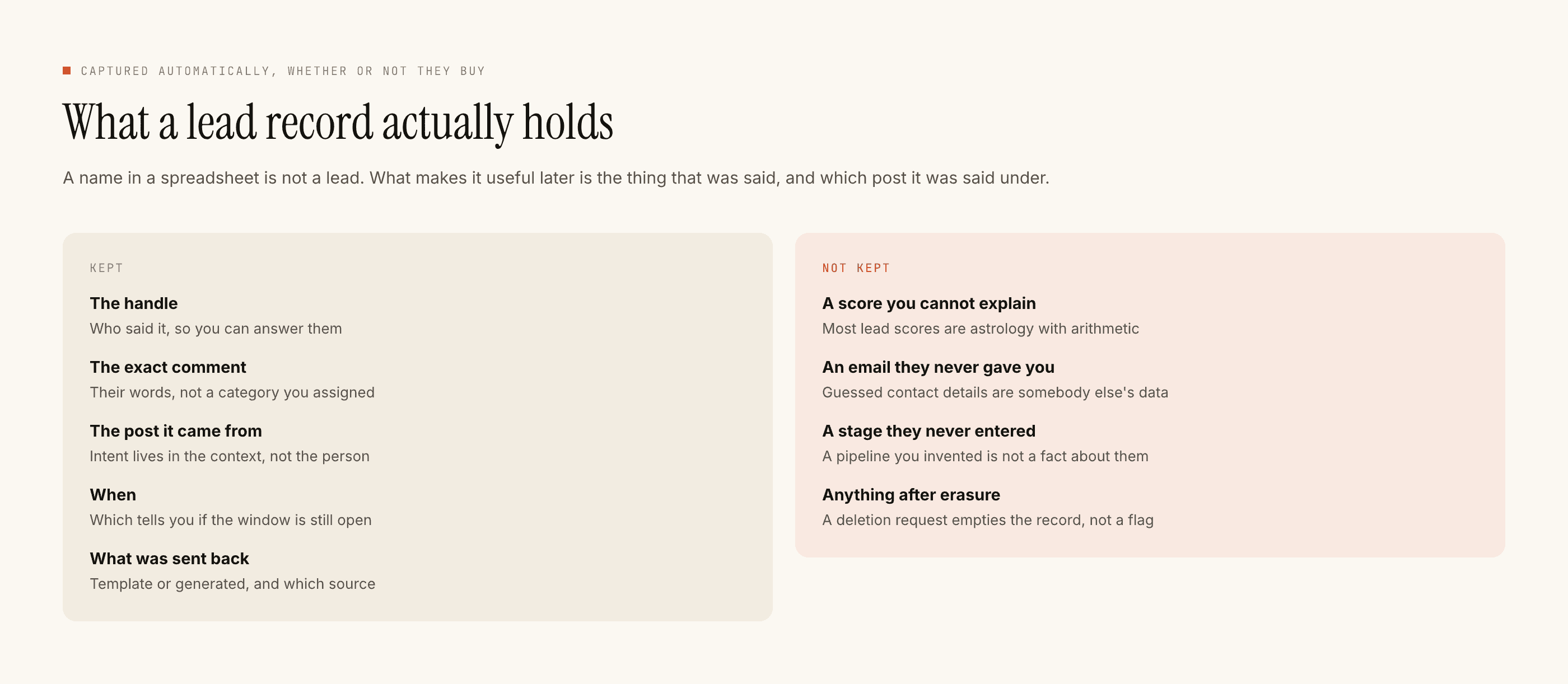
An email address is captured only when somebody wrote one in a message to you. It is found with a conservative pattern match, not a model, and it is stored with the message it came from so you can see the context in which it was given.
There is no enrichment. Nothing looks a person up, buys a matching record, or guesses an address from a handle. If that sounds like a missing feature, it is worth considering that a guessed address is somebody else's data and emailing it is the thing that gets a sending domain blocked.
The handoff, in practice
- Ask for the address inside the open window. The moment they have what they came for is the moment they are most willing, and it is also the moment you are still permitted to write.
- Say what the list is. "Want the monthly one? It's one email a month about new drops." A reader can evaluate that. "Join our newsletter" cannot be evaluated.
- Export on a schedule you actually keep. Weekly is fine. The file is not live, so a lead captured today is not in last week's export.
- Import with the source recorded. Keep the post it came from in a field. Six months later that is the only thing that tells you what the person was interested in.
- Delete the file afterwards. A CSV of people's messages sitting in a downloads folder is the least protected copy of that data anywhere.
What breaks if you skip the asking
Two things, and one of them is expensive.
The recoverable one: people mark it as spam, your open rates fall, and you spend a quarter working out why.
The expensive one: a complaint from a person who never agreed, in a jurisdiction where that is actionable. The CSV does not distinguish between an address somebody offered for a specific purpose and one they offered for any purpose. Only your record of what you asked does, which is why the asking should be a message you can point at afterwards.
What this rules out
No live sync, so your list and your leads drift between exports. No automated double opt-in from here, because that would require sending mail we do not send. No suppression list flowing back — if someone unsubscribes from your email, this product does not know, and it will still reply to them on Instagram, which is correct because those are different permissions.
And no re-engagement of Instagram conversations that have gone cold. Once the window shuts, the DM route is closed regardless of what your email platform knows.
The honest summary
The bridge is a file. The work is asking properly, exporting on a rhythm, and keeping the source attached so the record still means something later.
If you want the argument about what a lead record should and should not hold, that is here. If your question is what happens to a conversation once the window closes, that is here.