Voice DNA · 5 min read
Voice Drift: Keeping One Register Across Staff and Seasons

Nobody writes about this part, because the interesting article is the setup one. But the setup is an afternoon and the voice is a running state, and things move underneath a running state.
Six months after switching automation on, the replies going out are the same ones you approved. The question is whether they still match the business that is sending them.
Four things drift, and they drift differently
You changed. Register shifts as a business matures. People who started with "hehe thank you so much!!" narrow it down over a couple of years, usually without noticing. The reference is a record of who was writing then.
The reference aged. Voice profiles are built from replies the account owner actually wrote, which means they contain the world as it was when those replies were sent. Old prices. A product you discontinued. A shipping promise you no longer make. The register is still yours; the content around it has expired.
The people changed. The community manager who wrote the reference left. Two new people are answering DMs in their own registers. The automated replies are now imitating somebody who does not work here.
The calendar moved. Festive sale, launch week, a delay you are apologising for. The inbox changes shape for two weeks and then changes back.
Those need different responses, and the common mistake is applying the fix for one to another — usually rebuilding the whole voice because a price went stale.
How you find out
Four signals, in roughly the order they show up.
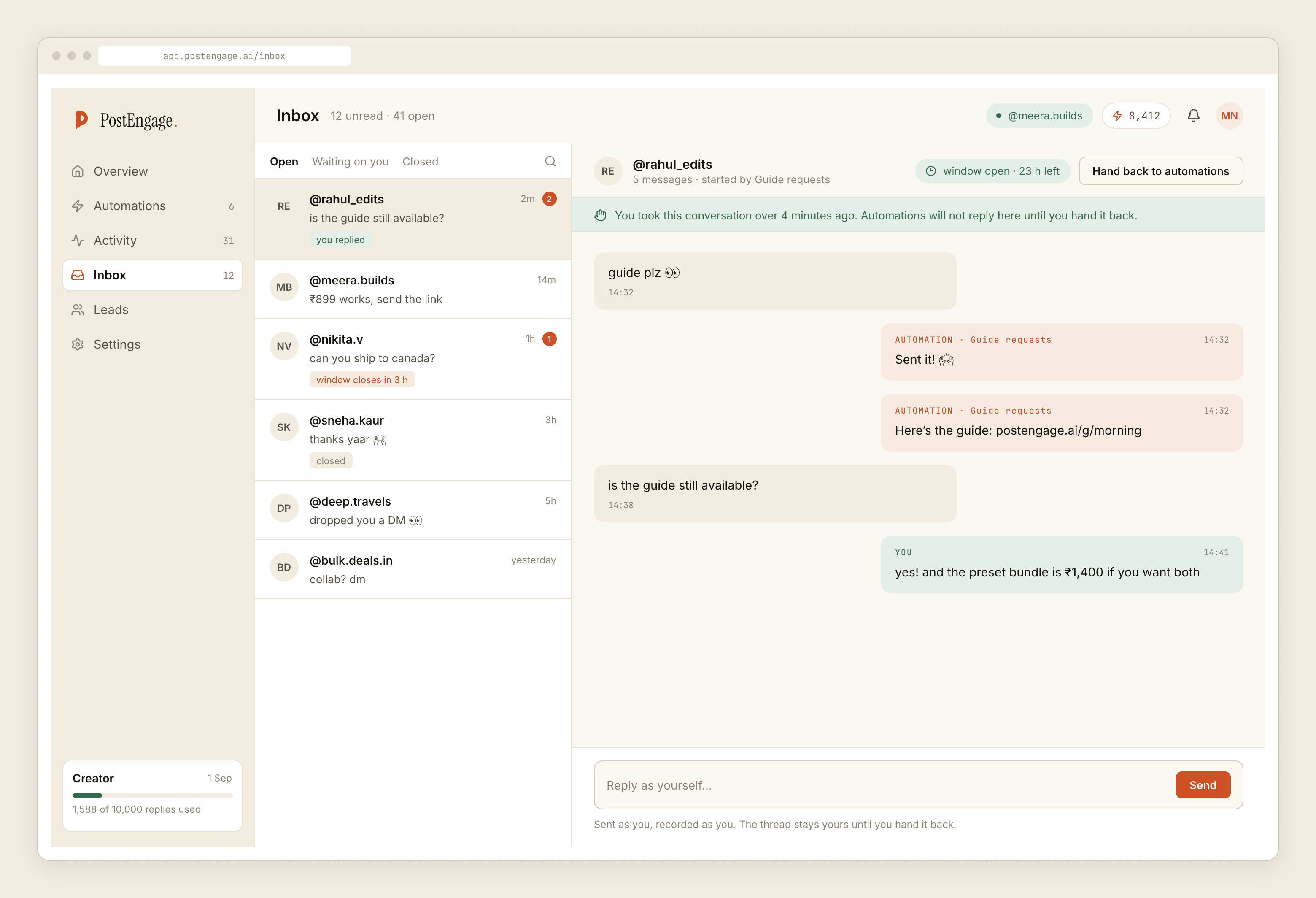
- You start editing drafts again. The most reliable one. If replies were going out unchanged and now your instinct is to rewrite the second sentence, something moved. Trust that instinct before you trust anything on a dashboard.
- A reply says something that is no longer true. Not a voice failure — a content failure — but it surfaces here first because generated replies are where stale facts get repeated back to customers.
- Customers start asking a follow-up they never used to. "So is it ₹1,499 or ₹1,699?" means two sources disagree and one of them is you.
- The blocked list changes shape. More
content_safetystops than usual, or a lot more takeovers, means the automated replies and the humans are pulling in different directions. Ten checks run before every send and each refusal is recorded with its reason, so this is readable rather than felt.
Seasonal campaigns are not a voice change
This is the one that causes the most avoidable damage. A festive campaign arrives, the language is different — offer, deadline, discount code — and somebody decides the voice needs to change for two weeks.
It does not. Campaign language is content. Voice is register. The same person sells at full price in October and at forty per cent off in November, and they sound like themselves both times.
So put the campaign in templates, where it belongs. Templated replies are free and unlimited and they send instantly, which is what you want during the two weeks when volume triples. A credit is spent only when the AI writes something new, so a campaign built on templates costs nothing extra at exactly the moment volume peaks.
Then, and this is the step everyone forgets, take the campaign templates down when it ends. Half of all stale automated replies are last quarter's offer, still going out in January because nobody switched it off.
Several people, one inbox
The instinct is to build a voice that averages everyone. Do not. An average of three registers is a fourth register that belongs to nobody, and it reads exactly like what it is.
Pick one person's replies as the reference — ideally the same decision made when the brand voice was first settled — and let the automated replies become the shared standard. That is the unusual and genuinely useful side effect: an automation that answers in one person's register is a style guide that actually gets read, because everybody sees its output in the inbox all day. New hires converge toward it without being asked to read a document.
A style guide nobody opens loses to an automated reply everybody sees fifty times a day.
When the reference person leaves, you have a decision rather than an emergency. Either the profile stays as it is — perfectly viable, the voice belongs to the account now rather than to them — or somebody new answers by hand for a while and their replies become the record. Both are defensible. What is not defensible is quietly letting three people's replies pile up and hoping the average is fine.
Re-test after anything you change
Whatever you adjust, run Test on myself before it goes live again. It runs the complete pipeline and delivers to your own account, which is the only way to read a reply as its recipient rather than as its author.
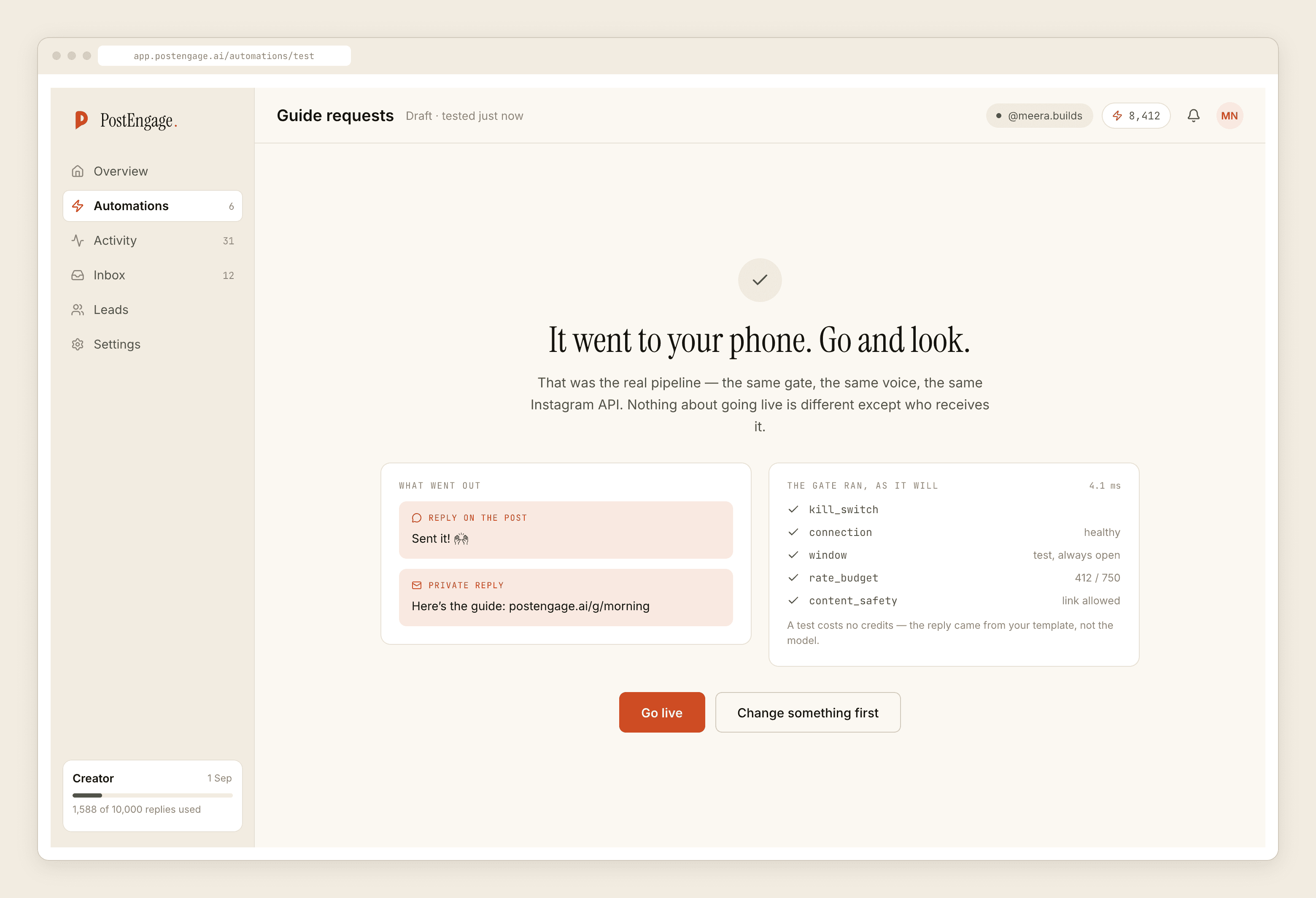
Test the awkward case, not the easy one. If you updated the reference because refusals were reading wrong, test a refusal.
The realistic version
Voice maintenance is not a quarterly ritual. It is noticing when you start editing again, and responding to what you noticed rather than rebuilding everything.
Most accounts need to touch this two or three times in a year, all of them triggered by something that happened in the business rather than by anything about the automation. And the maintenance is usually a template edit — a number, an offer, a policy — not a change to the voice at all.
If the replies are landing wrong from the very beginning rather than drifting there, the problem is the input and the training post is the right place. If they are landing wrong only on hard messages, the advanced post covers refusal, low confidence and the review queue.