Comparison · 4 min read
WhatsApp vs Email Marketing: Reach You Rent or Own

PostEngage does not ship WhatsApp and has never shipped email, so there is no product being sold underneath this comparison. It runs on Instagram, and the reason we care about this argument at all is that Instagram is a third kind of thing again.
The comparison is usually framed as which channel performs better. That is the wrong frame — they are different instruments, and the interesting question is what each one is structurally good at.
Ownership is the whole difference
An email address in your database is yours. You can export it, move providers in an afternoon, and send tomorrow without anyone's approval. If your email vendor doubles its price or disappears, you take the list somewhere else and carry on.
A WhatsApp audience is not like that. It sits on a platform, subject to rules Meta writes and revises, with certain messages requiring approval before they can be sent and certain categories carrying a charge from Meta itself. You have permission to reach those people, which is real and valuable, and permission is not the same as ownership.
Email: owned
WhatsApp: permitted
Email is reach you own and nobody reads carefully. WhatsApp is reach you rent and cannot afford to waste.
What each is genuinely good at
Email is good at length, at record, and at things that are not urgent. An invoice. A monthly note. Something with three links and a picture that somebody might come back to in September. It is also the only one of the two where sending to ten thousand people costs roughly what sending to one thousand does, which changes what you are willing to try.
WhatsApp is good at short, timely and expected. An order update. A booking confirmation. An answer to a question somebody just asked. Things where being seen in the next ten minutes is the point.
Using each for the other's job is where it goes wrong. A newsletter on WhatsApp is an intrusion; a time-critical delivery update by email is a message nobody sees until tomorrow.
The costs behave differently
Email's marginal cost is small enough to ignore for most small businesses; the real cost is the list going stale and people quietly not opening things.
WhatsApp has two meters — Meta's charge on certain conversations, and whatever your vendor charges on top. That makes volume a budgeting decision rather than an afterthought, and it changes behaviour in a healthy direction: when sending costs something, you send less and mean it more. The two-meter problem in detail is the companion to this paragraph.
The handoff is the actual strategy
The useful arrangement is not choosing. It is knowing which channel each job belongs to, and getting people from one to the other deliberately.
- Use the conversation to earn the email. Someone who has just asked a question is more willing to give an address than a stranger reading a landing page. That is the moment, and it is the argument for treating conversations as a list-building surface at all.
- Ask separately, and say what for. Consent to be messaged on WhatsApp is not consent to be emailed, and neither is consent to be sent offers. What proper opt-in looks like applies in both directions.
- Keep the urgent things on the fast channel. If it matters today, it is not an email.
- Keep the record in the thing you own. When the platform changes its rules, your email list is the asset that survives it.
Where we sit
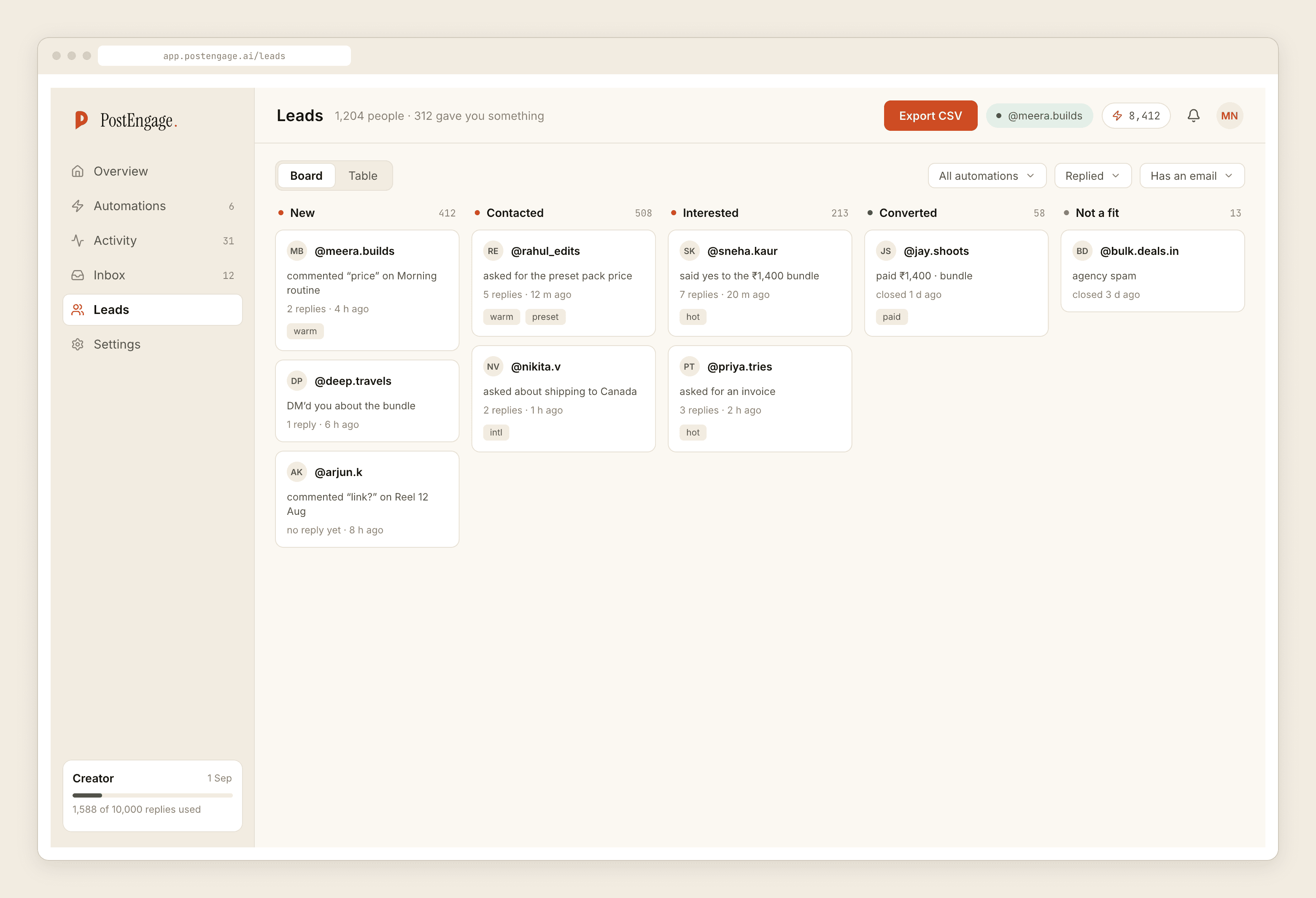
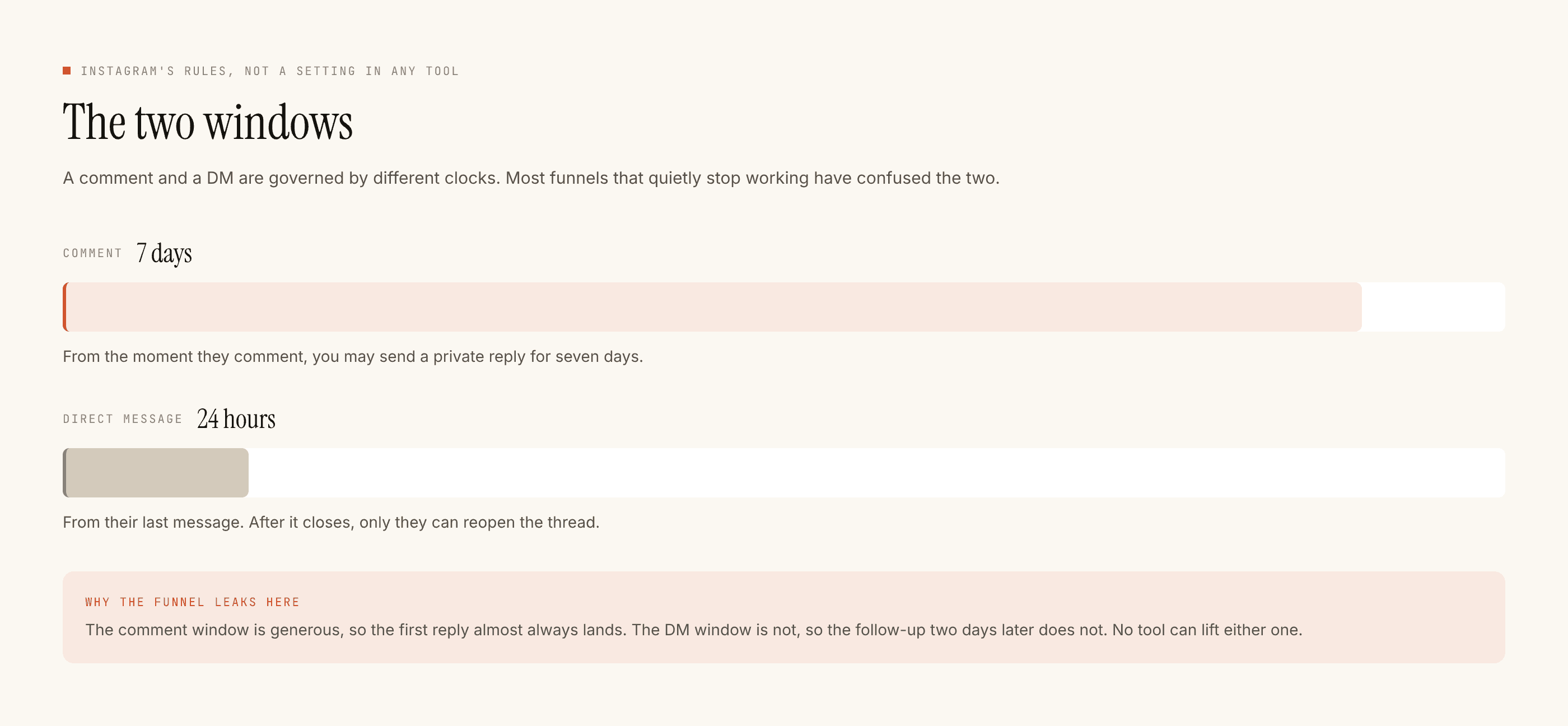
PostEngage answers Instagram comments and DMs, on the official Graph API, inside a seven-day comment window and a twenty-four-hour messaging window that only the other person's message restarts. It captures leads to a list you can export as CSV. It does not send email, does not run broadcasts and does not build sequences.
Templated replies are free and unlimited, a credit moves only when the model writes something new, the free tier is 100 credits with no card, and packs start at ₹499.
The Instagram version of this same argument — permission versus ownership on a channel with a twenty-four-hour clock — is here in full.