Playbooks · 5 min read
Retargeting Is an Ads Product, and This Is Not Ads

We do not retarget. Not on a higher plan, not with a setting switched on, not through a clever configuration. There is no audience, no pixel, no visitor list, no abandoned-cart trigger, no "message everyone who watched the reel".
The reason is structural. On the official Instagram Graph API, a business can reply to people who have contacted it. That is the permission. Somebody who watched your video, saved your post, visited your site or looked at a product has not contacted you, so there is no thread, no window and no send.
Retargeting — putting a message in front of somebody because of something they did earlier — is an advertising product. It lives in Meta's ads system, it is paid, and it works because ads are delivered into a feed rather than into a private inbox. It is a different building. This post is about what exists on our side of that wall.
Why the wall is hard rather than soft
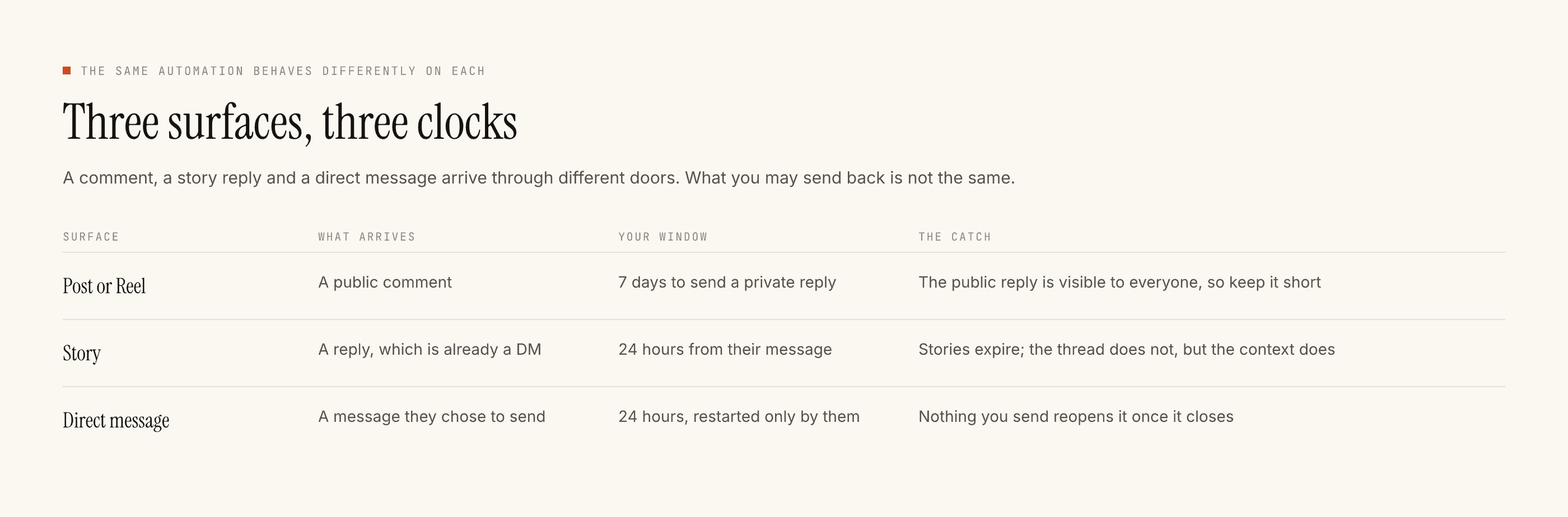
People assume a rule like this has an exception somewhere — an enterprise tier, a partner programme, a verified-account allowance. It does not work that way. The window is a property of the conversation, not of your account.
Two clocks, both started by them. Seven days to respond to a comment they left. Twenty-four hours to reply inside a DM thread, restarted only by a new message from them. Silence closes it and nothing reopens it from your side.
The genuine re-engagement mechanic: post again
If you want to reach somebody who engaged and did not convert, you have exactly one route, and it is the one that existed before any of this software did. Put something in front of them that they will respond to.
This is less of a consolation prize than it sounds. The person who watched your reel in March and did nothing is still following you. When you post in June and ask for a comment, they are among the people most likely to leave one — and that comment opens a seven-day window during which you can genuinely have the conversation you wanted in March.
So the practical version of retargeting here is a content decision:
- Post the objection, not the offer. The people who did not convert usually stalled on one specific doubt. A post that names it — the price, the timeline, whether it works for their skin, whether you deliver to their city — pulls exactly those people back into the comments.
- Ask for the word in the caption. They will not DM you unprompted. "Comment SIZE and I will tell you honestly" gives the hesitant person a low-cost move.
- Run the automation on that post specifically. Scoped to one post, with its own reply, so the message they get is about the doubt they had rather than a general greeting.
- Leave it live for the week. The seven days run from each comment, so a post that keeps collecting comments keeps producing conversations well after you have stopped thinking about it.
Abandoned carts, since it always comes up
There is no cart recovery here. We do not receive order events, we have no Shopify or WooCommerce connection, no webhook from your store, no browsing data, and no way to know that anybody added anything to anything.
Even if that data arrived somehow, the wall above still applies: a person who abandoned a cart on your website has not messaged your Instagram account, so there is nobody to message.
The whole product is a reply. If nobody wrote to you, there is nothing to reply to.
The one paid route that ends in your inbox, described honestly
Meta runs ad formats that open a direct message when somebody taps them. The person taps, and they send the message — which is why it is permitted, and it is a neat illustration of the rule rather than an exception to it. Once that message exists, it is an ordinary inbound conversation with an ordinary twenty-four hour window.
We do not run ads, do not integrate with Ads Manager, cannot create or target an audience, and cannot see anything about a campaign. If you decide to spend money that way, the spending happens over there and the conversation lands over here. That is the entire relationship.
What to do instead, in order
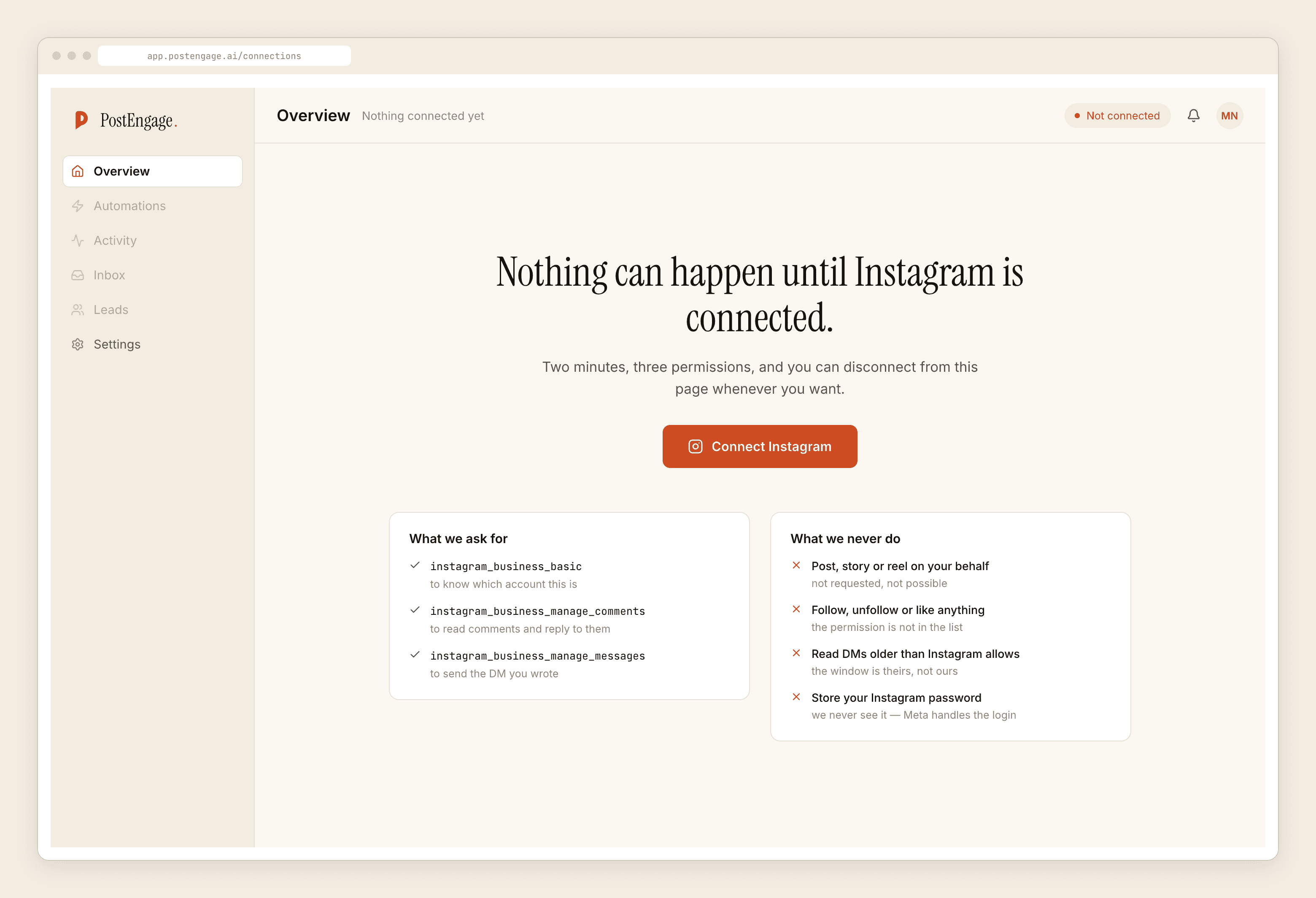
Stop trying to reach the people who left. Start by not losing the ones currently writing to you, because the loss you can actually fix is the reply that came too late or read like a form.
Then treat your posting as your only outbound channel, which it is. Then keep a record good enough that when somebody comes back after two months, the conversation starts warm — that record is the honest replacement for a nurture track.
The broader version of the same wall, covering cold outreach to people who never engaged at all, is set out here. And if you want to see exactly where a send gets stopped and why, the checks are documented — window is the one that would catch every retargeting message you are imagining, every time.