Playbooks · 5 min read
The Six Numbers Worth Writing Down Every Friday
On this page
- Column one: posts carrying a live automation
- Column two: leads captured
- Column three: the trigger word that produced the most of them
- Column four: credits spent
- Column five: the refusal reason that appeared most in Activity
- Column six: threads you answered by hand
- The seventh column, which is not a number
- What does not go in the logbook

There is no analytics screen here, and the more useful way to say that is: nothing in this product remembers last month. Activity shows you what was decided recently. Leads shows you who raised a hand. The credit ledger shows what the model wrote. None of the three puts April next to May, because none of them was built to.
So a trend is not something you go and look at. It is something you keep. This post is the shape of the record we would actually keep, which is a spreadsheet, filled in once a week, in about ten minutes.
Six columns. Every one of them is a count you can point at, and every one of them is attached to something you would do differently if it moved.
Column one: posts carrying a live automation
Start with the surface, not the result, because the result is meaningless without it.
This is the honest stand-in for a denominator. You cannot know how many people saw your posts — reach lives in Insights and never reaches an automation tool. What you can know exactly is how much of your account was armed: how many posts had a trigger switched on that week.
If leads fall and this column fell first, nothing is broken. You just posted less, or you tidied up and switched old automations off. That second one is the most common self-inflicted wound in this product, because a comment's seven days are counted from the comment, so a two-year-old Reel that resurfaces is live inventory.
Column two: leads captured
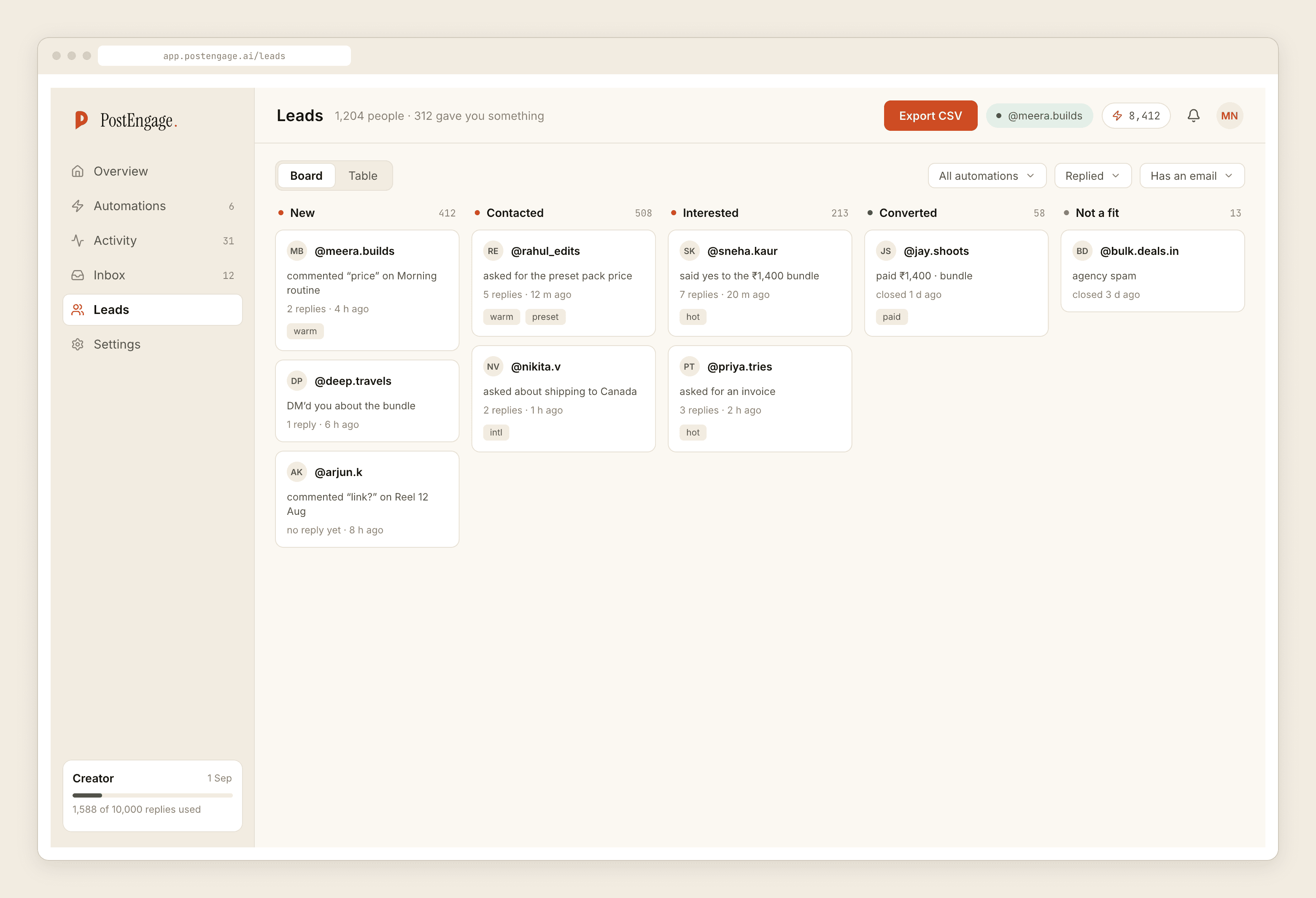
The closest thing to an outcome that exists here. One row per person who typed something and got written down with what they said and which post caught them.
It is not a sale and it should never be presented as one. It is a hand raised. What it is good for is comparison against itself over time, and against column one, which tells you whether more hands went up because more people wanted something or because you simply had more automations running.
Column three: the trigger word that produced the most of them
Not how many words you have. Which one won.
This is the column that changes what you build, and it is nearly always a surprise for the first month or two. You launch a campaign around BOOK and discover your audience mostly types price, or daam, or the misspelling of the word you chose. A keyword you invented ranks below one they already had.
When the winner changes, that is real information about intent, and it is worth acting on immediately: write the template for the intent that is actually arriving. Choosing words your audience already types is the longer version of this argument.
Column four: credits spent
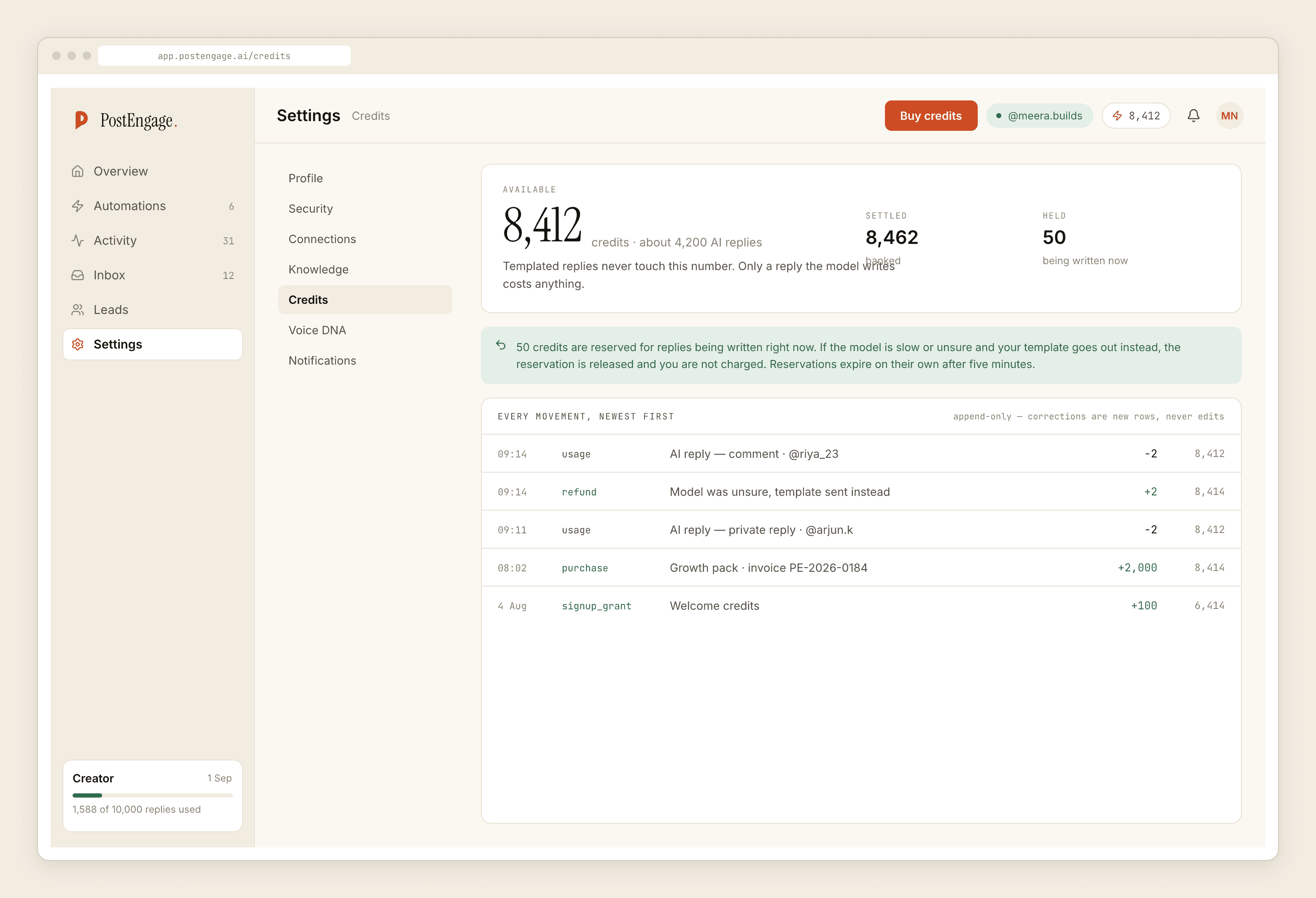
One credit, one generated reply. Templated replies are free and unlimited, so they never appear here at all.
Which makes this column something better than a bill. It is a coverage report. Every row in the ledger is a moment your templates did not cover the question that arrived and the model had to write something new.
Read the direction rather than the level. Climbing steadily on the same intent means a template is missing and writing it takes the cost to zero permanently. Flat and low means your library is doing the work. A spike on one day usually means a post travelled and brought questions you have never been asked before.
Column five: the refusal reason that appeared most in Activity
Every candidate reply runs the same ordered checks — kill_switch, connection, takeover, window, dedupe, cooldown, quiet_hours, rate_budget, credits, content_safety — and the first failure stops the send and writes its name on the row.
You are not recording how many were blocked. You are recording which reason was on top, because the reason is the instruction.
window on top means comments are arriving on posts past seven days, or you are trying to answer DM threads that went quiet. dedupe means two of your own automations are arguing over the same person. rate_budget means a post travelled and the cap held the queue, which is a good outcome that reads like a problem. connection on top is the only genuine emergency: nothing is sending.
Column six: threads you answered by hand
Count the conversations where you took over. Takeover stands the automation down the moment you type, so these are the threads that needed a person.
Rising is not failure. It usually means the automation is doing its job of starting conversations that are worth your time. It becomes a problem when it rises and column two does not, because that means you are now doing the work manually and the automation is producing traffic rather than leverage.
Every column here is a count. The moment you divide two of them, ask which platform owns the denominator, and stop if the answer is not you.
The seventh column, which is not a number
Write down what you changed that week. New automation, rewritten template, new keyword, a post that unexpectedly travelled, a festival, a stockout.
Without it, six months of numbers is a set of movements with no causes attached, and you will invent causes for them. With it, the log becomes the only honest record of what you did and what followed, which is a before-and-after rather than a test — a distinction worth keeping straight.
What does not go in the logbook
No conversion rate. No engagement rate. No open rate. No cost per acquisition. Each of those needs a denominator that lives inside Instagram or inside your bank account, and this product touches neither. The grain of what we do store is the piece to read before you design your own template, because it explains exactly which questions a single row can answer.
Six columns, ten minutes, every Friday. After a quarter it is a real time series about your own operation with nothing invented anywhere in it, which is smaller and more useful than a dashboard.