Playbooks · 5 min read
What Breaks When an Agency Runs Ten Instagram Accounts

The first client is easy because you are still interested. You read every blocked reply, you notice the token going stale, you rewrite the template the week their offer changes. None of that is a system. It is attention, and attention does not divide by ten.
Before any of the rest of this, the concession, because it decides whether you should keep reading. We have no white-label. Your clients see our product, our name, our login screen. There is no agency dashboard that shows fifteen accounts on one page. There is no multi-client billing, no reseller programme, no partner tier. What exists is workspaces and team seats. That is the entire agency story, and our own review says the same thing in fewer words.
If that is disqualifying, stop here and buy something built for resale. If it is merely annoying, the rest of this is about the part that is actually hard, which was never the software.
One workspace per client, with no exceptions
The rule sounds obvious until the third client, when someone on your team decides it is simpler to run two brands out of one workspace because they share a niche.
It is not simpler. A workspace is where an Instagram connection lives, where the automations for that account live, and where its Leads accumulate. Merge two clients and you have merged their lead lists, their reply templates and their blocked-activity history. Untangling that later is a manual export and a difficult email.
The five things that break between one client and ten
- Nobody reads Activity any more. At one account you check the blocked list daily. At ten it becomes a screen you have not opened since onboarding. This is the failure that hides all the others, because every other failure appears there first.
- Connections go stale silently. An expired token still shows the account name. The automation simply stops sending, and the client does not notice because from their side nothing visibly happened. They notice a month later, when someone asks why nobody replied to a comment in March.
- The voice becomes your agency's voice. Voice DNA is built from replies the account owner actually wrote. If your team writes all the replies for all the clients, you are training ten profiles on the same house style, and every client ends up sounding like your junior copywriter. What the voice profile is actually built from matters more here than anywhere.
- Templates outlive the offer. The client runs a festive price in October and forgets to tell you. The automation is still quoting it in January, in public, under their post.
- Access sprawls. Three account managers, two interns and a freelancer have seats. One of them leaves. Nobody removes the seat, because removing seats is nobody's job.
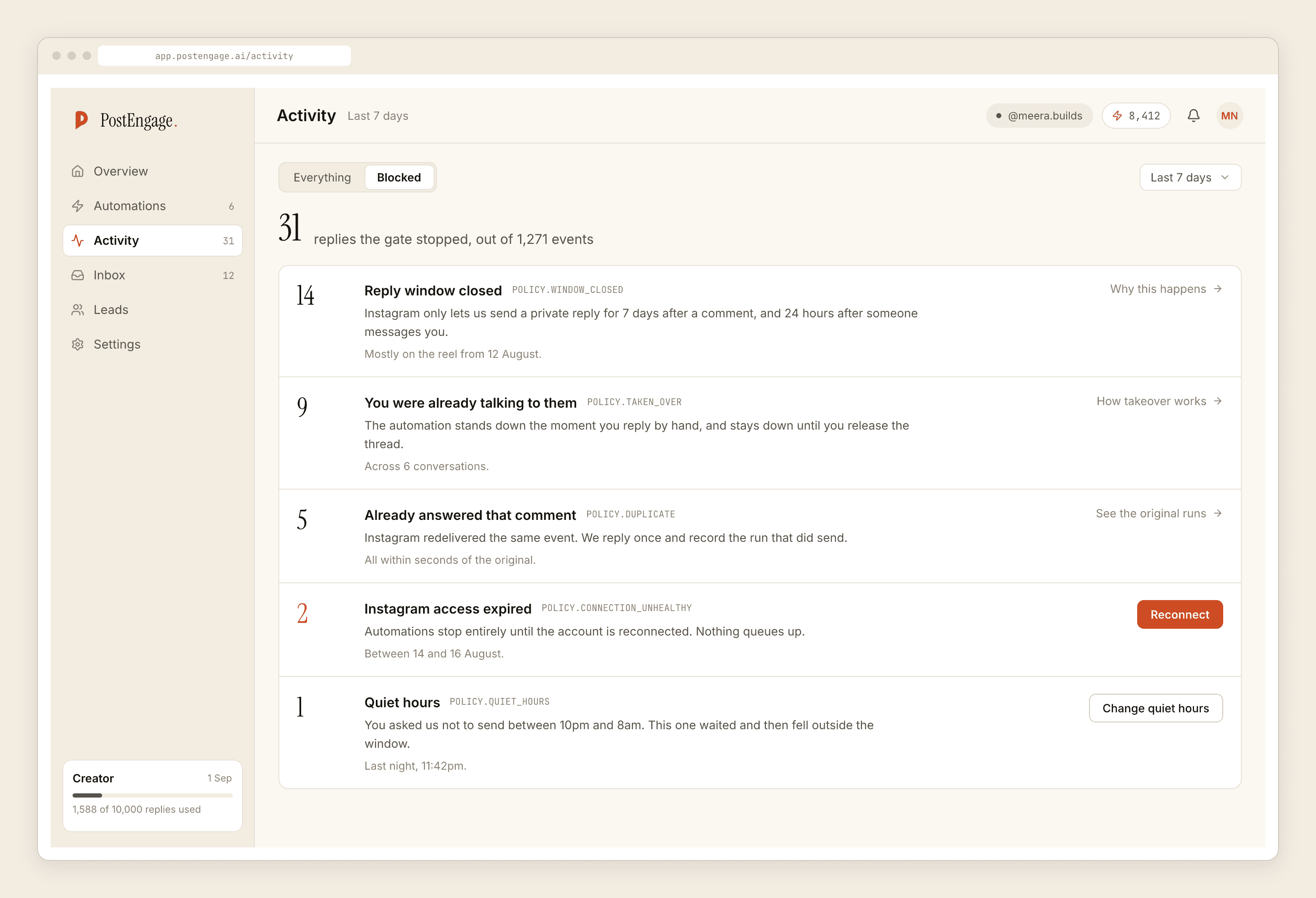
The weekly pass, which is the whole system
There is no dashboard that aggregates this for you, so the operational answer is a rota. One person, one afternoon, one workspace at a time. It takes a few minutes per account once you know what you are looking for.
Expected, move on
Stop and fix
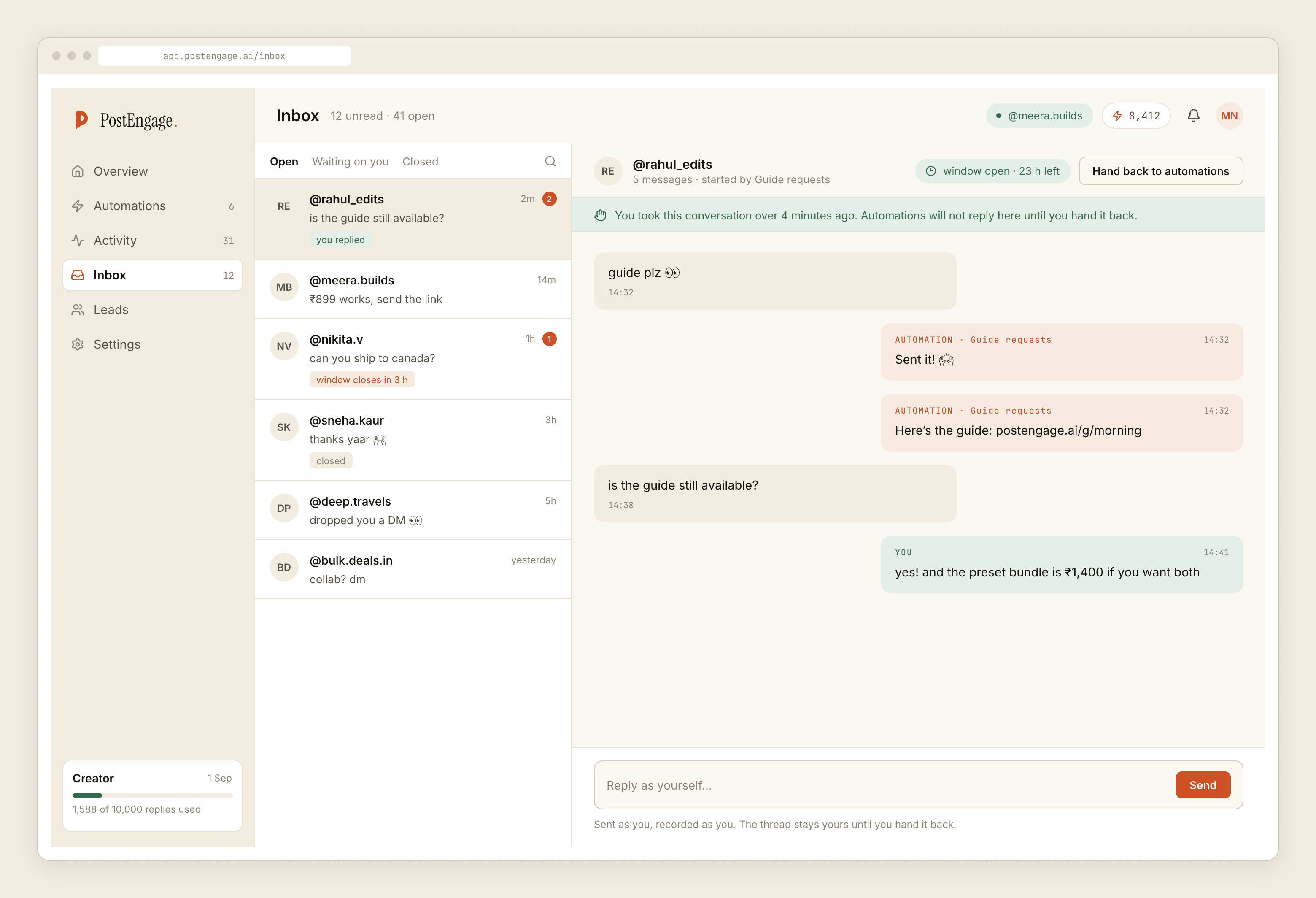
The takeover pile is the interesting one. Takeover stands the automation down the moment a human replies to a thread by hand, which is correct behaviour and also a signal. If a client's social person is beating the automation to every DM, you have not automated their inbox. You have added a second thing that occasionally speaks for them, which is worse than nothing, and the honest move is to narrow the automation to the questions they genuinely do not want to answer.
An automation nobody audits is not an asset you manage. It is a message you sent to strangers and forgot about.
Who has access, and who gets told
Team seats are the mechanism. The policy is yours to write, and most agencies do not have one until something goes wrong.
Three decisions worth making before the fourth client rather than after:
- Does the client get a seat in their own workspace? Usually yes. They own the account and the relationship with Meta, and a client who can see Activity is a client who stops asking whether it is working. It also means they can change a template without telling you, so say out loud who owns the reply set.
- Who is allowed to press Go live? Test on myself sends the full pipeline to your own account and changes nothing for the public. Going live under a client's post is a different act. Make it a named person's job.
- What happens when a connection breaks at 11pm? Nothing pages you. There is no alerting product here. So either the client watches it, or your morning routine catches it, or it sits broken. Pick one honestly and tell the client which.
What to promise, and what not to
Do not promise coverage. Promise a reply set, a review rhythm and a named person. Coverage implies you are watching, and at ten accounts nobody is watching; they are reviewing on a schedule, which is a different and more honest thing to sell.
Say the refusals out loud in the kickoff, because they will otherwise arrive as complaints. Ten checks run before every send and a blocked reply is recorded with its reason. Quiet hours mean a 2am question waits until morning. Dedupe means the person who commented twice gets one reply. A client who has heard this in week one reads the blocked list as the tool working. A client who has not reads it as breakage.
The commercial side of this — what any of it is worth and what you can defensibly charge for — is a separate argument with a separate answer.